Hargeisa (PP Comment) — A new paper by a French political scientist reveals how Israeli recognition of Somaliland has exposed deep Gulf rivalries and raised concerns in the Horn of Africa.
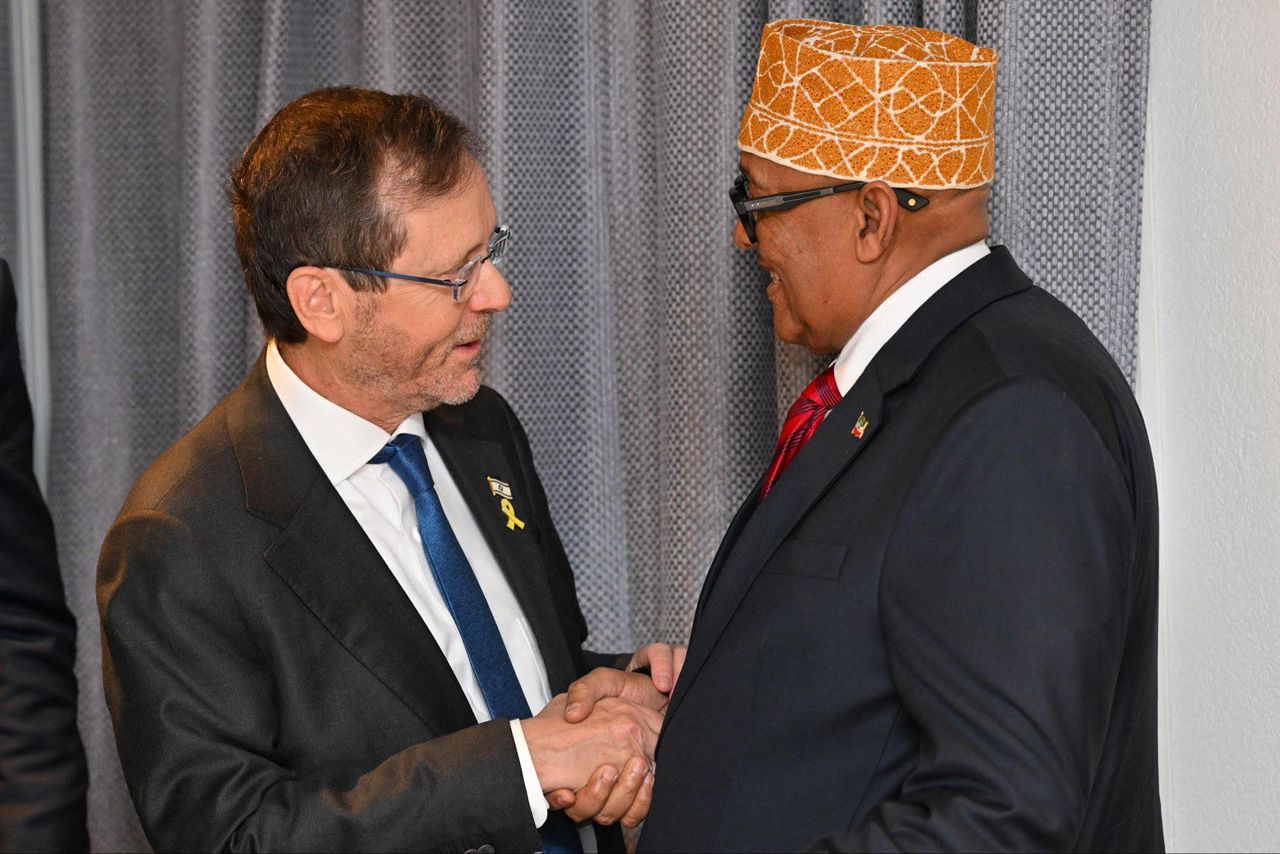
On December 26, 2025, Israeli Prime Minister Benjamin Netanyahu formally recognised Somaliland Administration as an independent state in violation of the sovereignty of the Federal Republic of Somalia. However, according to the paper by Roland Marchal of France’s CERI at Sciences Po, this decision has more to do with regional power struggles between Gulf states.
His analysis highlights a crucial distinction between the United Arab Emirates and larger regional powers. While the UAE has positioned itself as a security player through investments in defence, it fundamentally lacks the military capacity of Saudi Arabia, Egypt and Turkey, three countries President Trump wants to include in his planned but flawed Gaza stabilisation force.
Marchal notes that the UAE “has neither the capacity nor the willingness” to fulfill such major peacekeeping tasks. Instead, Abu Dhabi operates primarily through supporting regional clients and building intelligence facilities rather than deploying large-scale military forces. This explains why the UAE, despite its close alliance with Israel, cannot contribute meaningfully to Trump’s Gaza plans in the way Riyadh, Cairo and Ankara potentially could.
Contrary to Somaliland supporters’ expectations, the United States has shown minimal interest in establishing a military presence at Berbera Port. Marchal explains that the US already has “all necessary facilities” at its base in neighbouring Djibouti, located just miles away.
“Despite the assertions of some Somalilanders, the USA has minimal interest in operating a military base in such proximity to Djibouti,” Marchal writes. The Trump administration’s policy of avoiding new permanent bases makes acquiring one in Berbera contradictory to current US military strategy. American military site at Balidoogle in southern Somalia is not even designated as a full base.
Marchal’s use of the term “colonial Somaliland” reflects a critical perspective on the territory’s legitimacy claims. The analysis notes that Somaliland’s claim is based on colonial borders, a claim which runs counter to the Charter of the African Union.
Despite predictions that Ethiopia, Kenya and other African states would quickly follow Israel’s lead, none have recognised Somaliland.
The most concerning, Marchal reports that “some observers in Hargeisa have falsely claimed that the North-East State is a fabrication of the Somali Jihadists” in what he describes as a “quite erroneous analysis.”
These voices have proposed “that Israel should consider providing support for a military campaign to eradicate the North-East State”, an attempt to frame internal Somali political disputes as terrorism and potentially drag Israel into Somalia’s conflicts.
Professor Marchal warns this rhetoric could lead to serious escalation: “These initiatives will likely lead to an escalation of violence, thereby disrupting the peace that has been in place for many years.” Marchal points out that the conflict in Awdal, within the Dir clan family, compounds the problems faced by the secessionist administration in northern Somalia.
© Puntland Post, 2026.
The Recognition of Somaliland by Israel as
An indicator of a Geopoli;cal Dynamic Between the Horn and the Gulf by Roland Marchal