– Advertisement –
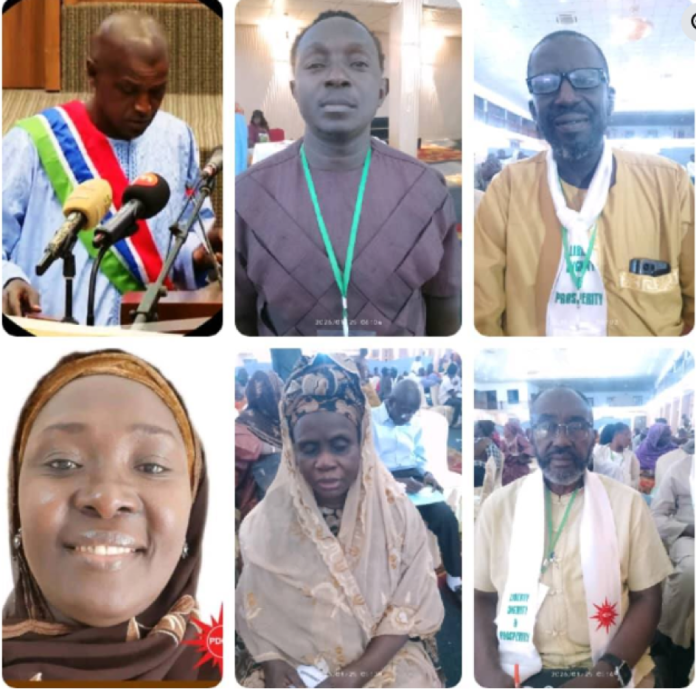
After four decades at the helm, members of the People’s Democratic Organisation for Independence and Socialism (PDOIS) have replaced Sidia Jatta and Halifa Sallah as Chairperson and Secretary General, respectively. This change is long overdue, but it is both necessary and welcome.
The critical question now is whether the new leadership will be sufficiently independent of the old guard, capable of charting its own course, and proactive in driving the transformation and progress that PDOIS urgently needs. There is no doubt that PDOIS’s ideological agenda is sound, pragmatic, and relevant, not only for the Gambia but for Africa at large. Yet, despite this strength, the party has failed to achieve electoral success and assume state power after two generations.
This failure is not because the party’s message is too sophisticated, nor because its agenda is misplaced. Rather, it stems from decades of weak leadership and poor political strategy operating within an already fragile governance environment. It is neither reasonable nor democratic for an individual to lead a political party continuously for forty years. Just as no one should be president in a democracy for more than two terms, no one should serve as party leader, whether Chairperson, Secretary General, or otherwise for an indefinite period. Five years should be the upper limit.
– Advertisement –
Political parties are the primary engines of democratic governance. In a democracy, the legislature, executive, and local governments are populated largely by party-affiliated representatives. This makes political parties national institutions that must themselves be governed according to democratic principles and standards. Where internal party democracy is weak or absent, national governance inevitably suffers, undermining institutions, lowering service delivery, weakening accountability, and producing poor outcomes.
Since independence, the Gambia has been afflicted by a political culture in which parties are created, dominated, and controlled by one or a few individuals who remain at the helm indefinitely. Such arrangements breed personality cults, concentrate power, stifle internal participation, drive away capable members, lower morale, and ultimately stagnate party growth and effectiveness. This problem is not unique to PDOIS; it is a systemic national challenge affecting virtually all political parties.
While I commend PDOIS for finally undertaking this leadership transition, even if late, I must stress the historic responsibility now resting on the new leadership to fully democratize the party from within. I urge the new leadership, some of whom, including the new Chairperson Suwaibou Touray, Sam Sarr, and Adama Bah have served on the Central Committee since the party’s inception, to foster constructive dialogue, inclusivity, tolerance for dissenting views, and a culture of open debate. PDOIS must adopt effective political strategies to communicate and sell its agenda successfully, while remaining flexible in tactics without compromising core principles and objectives.
– Advertisement –
In this regard, I reiterate my call for all political parties to institutionalise term limits. No individual should hold a party leadership position for more than five years, and no individual should be fielded as a presidential flag bearer for more than two electoral cycles. Democratic renewal is impossible without leadership renewal.
The leadership change in PDOIS should have occurred decades ago, certainly no later than 2017, when dictatorship was dismantled and a new democratic dispensation began. Indeed, all pre-2016 political parties should have undergone deep structural reforms since then. Parties such as PPP and NCP have already taken steps in this direction. Now that PDOIS has followed suit, other parties such as UDP, NRP, GPDP, GMC, and GDC must do the same. These parties remain under long-standing leadership arrangements that are incompatible with democratic governance.
We cannot build a transparent, accountable, and effective democratic government while political parties themselves remain stagnant, undemocratic, and controlled by a few individuals. The underdevelopment and persistent poor governance in this country are not solely the responsibility of ruling parties whether PPP under Jawara, APRC under Jammeh, or NPP under Barrow. Opposition parties have also been enabling factors, weakened by internal governance failures, poor leadership renewal, and chronic divisions rooted in self-perpetuating control.
Democracy begins within political parties. Without democratic parties, democratic governance will remain elusive.
I wish the new PDOIS leadership every success in discharging this historic responsibility.
For The Gambia, Our Homeland
Madi Jobarteh
EFSRC