The ‘everyday’ alternative to the purist favouring six-speed manual was assigned long hauling duty over the past festive season.
In a comparatively short time, the GR Yaris has become a hot hatch icon in a manner not seen by any other global Toyota product.
‘Proper’ hot hatch
The personal project of CEO Akio Toyoda under his motorsport pseudonym, Morizo, the GR Yaris become a yardstick for its quintessential hot hatch must-haves.
Aside from a trick four-wheel-drive system, it has a manual gearbox, an interior designed around the driver, and the now rarity of three-doors.
Arrival of DAT
A refresh in 2024, though, brought not only the usual exterior and interior changes, but also a first-time automatic gearbox.
Described as a “game-changer”, the eight-speed DAT or Direct Automatic Transmission features predictive software supposed to shift gear based on driver behaviour.
ALSO READ: Upgrades help Toyota GR Yaris’ fun factor reach new heights
Said to swap gears faster than the six-speed manual and other torque converter ‘boxes using the paddle shifters, the DAT’s key attribute is everyday usability.
Unsurprisingly, the removal of a clutch pedal comes with a perceived lack of driver engagement, irrespective of there being paddle shifters or not.
GR Cup experiment
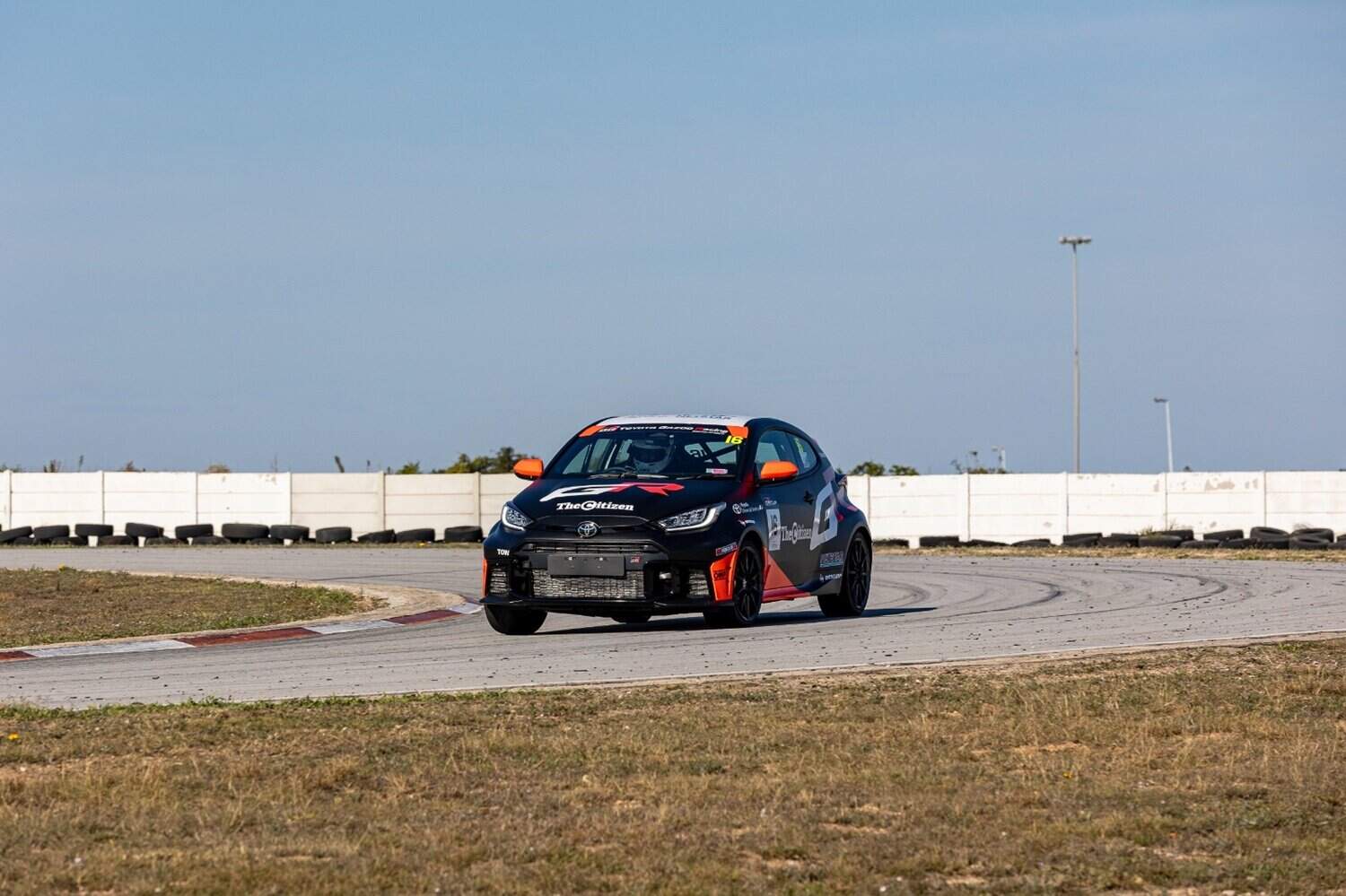
As a way disproving this, Toyota selected the DAT as replacement for the pre-facelift manual GR Yaris from the third round of last year’s media division of the annual GR Cup.
Prone to not always wanting to relinquish the gear it was in, or downshifting when you didn’t need it, its advantage was the lack of momentum loss out of corners.
From track to road
Debuting on track six months before its availability in the road-going model, the end of the GR Cup in October came with a secondary question: how would the DAT fare in reality?
Answering this came in the form of Toyota, surprisingly, handing a GR Yaris DAT over to its now ex-GR Cup exponent for the festive season.
Line-up shuffle
Being an update of the original that went on-sale in 2021, the inclusion of the DAT also involved a range shuffling, which sees the removal of the previously unbadged base trim grade.
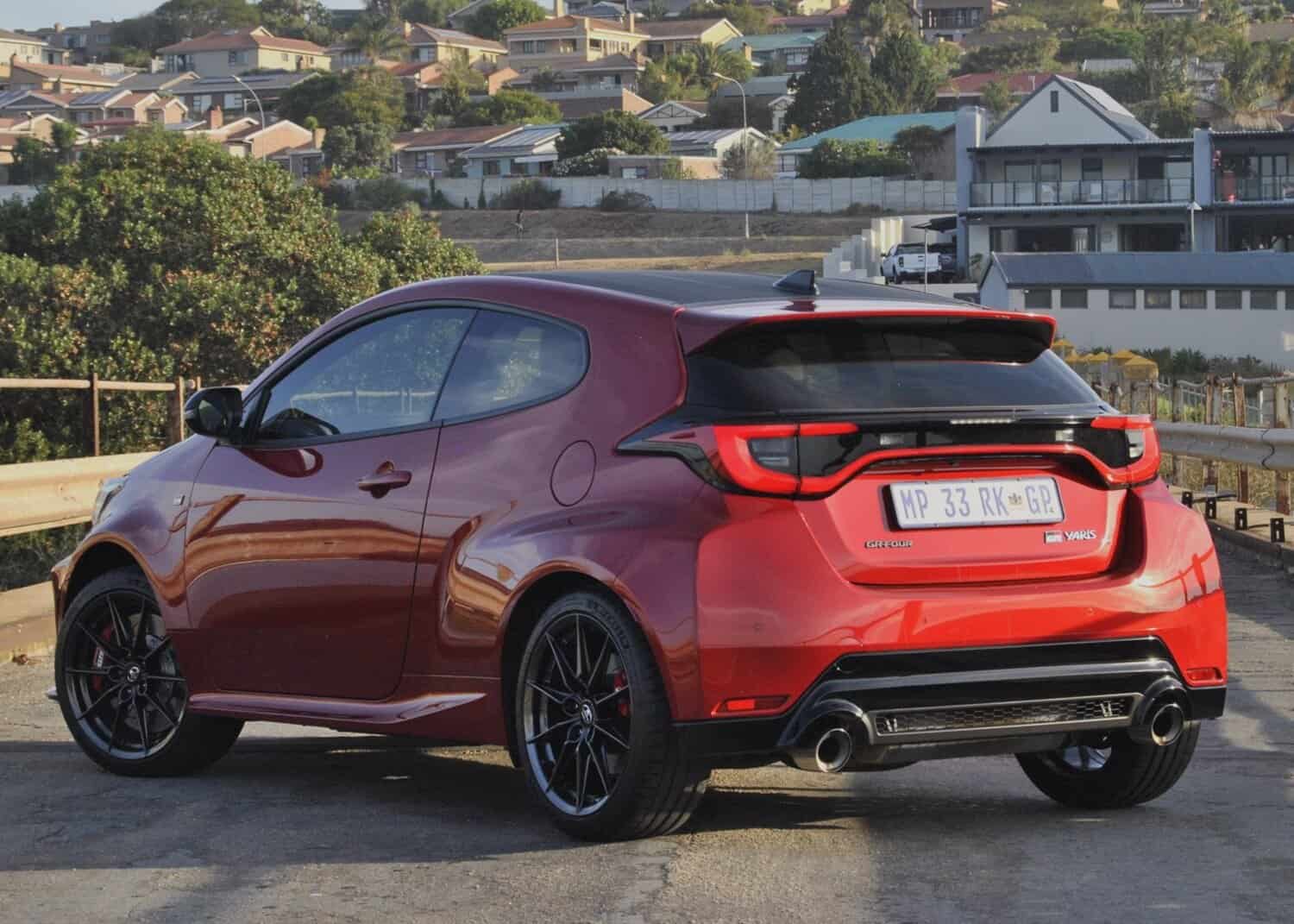
This leaves the Rally version as the sole derivative available – the only difference being the choice of transmission.
Styling changes
Visually, the exterior’s redesign are small, but as explained in great detail after setting sights at the mentioned GR Cup round, with reason.
Beside a slimmer upper grille, the front bumper has been changed to accommodate a pair of vents for the intercooler and transmission cooler. Previously, these were occupied by the fog lamps.
Also new is a steel mesh pattern for the GR-Four branded lower air intake, the LED headlights, and relocated fog lamps.
As before, the Rally keeps the 18-inch BBS alloy wheels as well as the Michelin Pilot Sport 4S tyres.
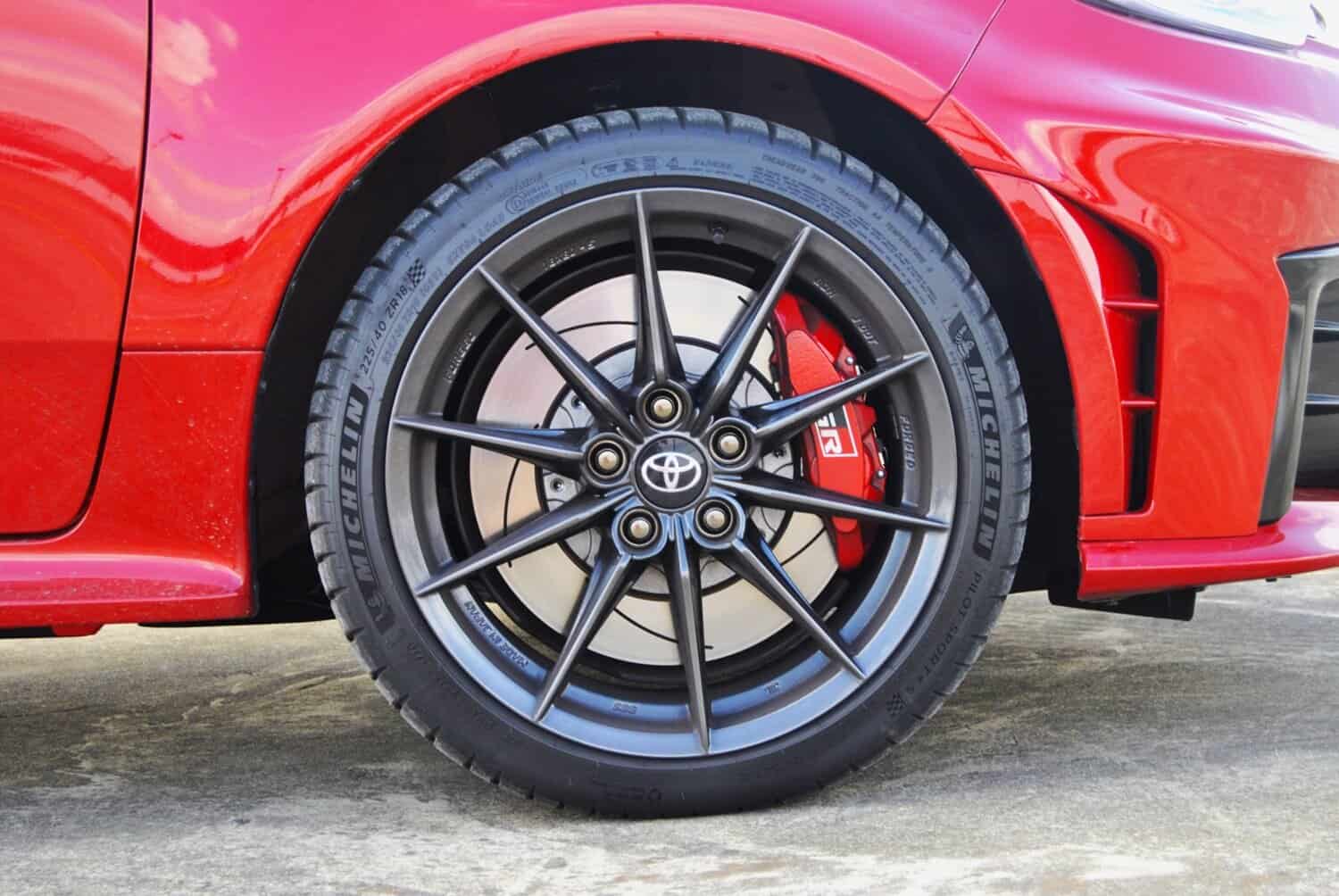
At the rear, Toyota has made restyled the light clusters, now connected by lower mounted LED light bar.
Finally, the GR Yaris badge moves to the lower right-hand corner of the tailgate, while the GR-Four script moves to the left having previously been on the right.
Change only keen observes are likely to notice, the restyling hasn’t, however, resulted in a loss of aggression.
Combined with the test unit’s Fierce Red paint option, it remains a purposeful, obnoxious and no comprising looker that makes no apologies.
No more race car inside
Opening the door came as something of a shock as, unlike our racing machines, a fully trimmed interior without the racing seats, six-point harness and roll cage made for a strange look.
Significantly easier to get into, the interior tweaks is also the GR Yaris’ main point of contempt.
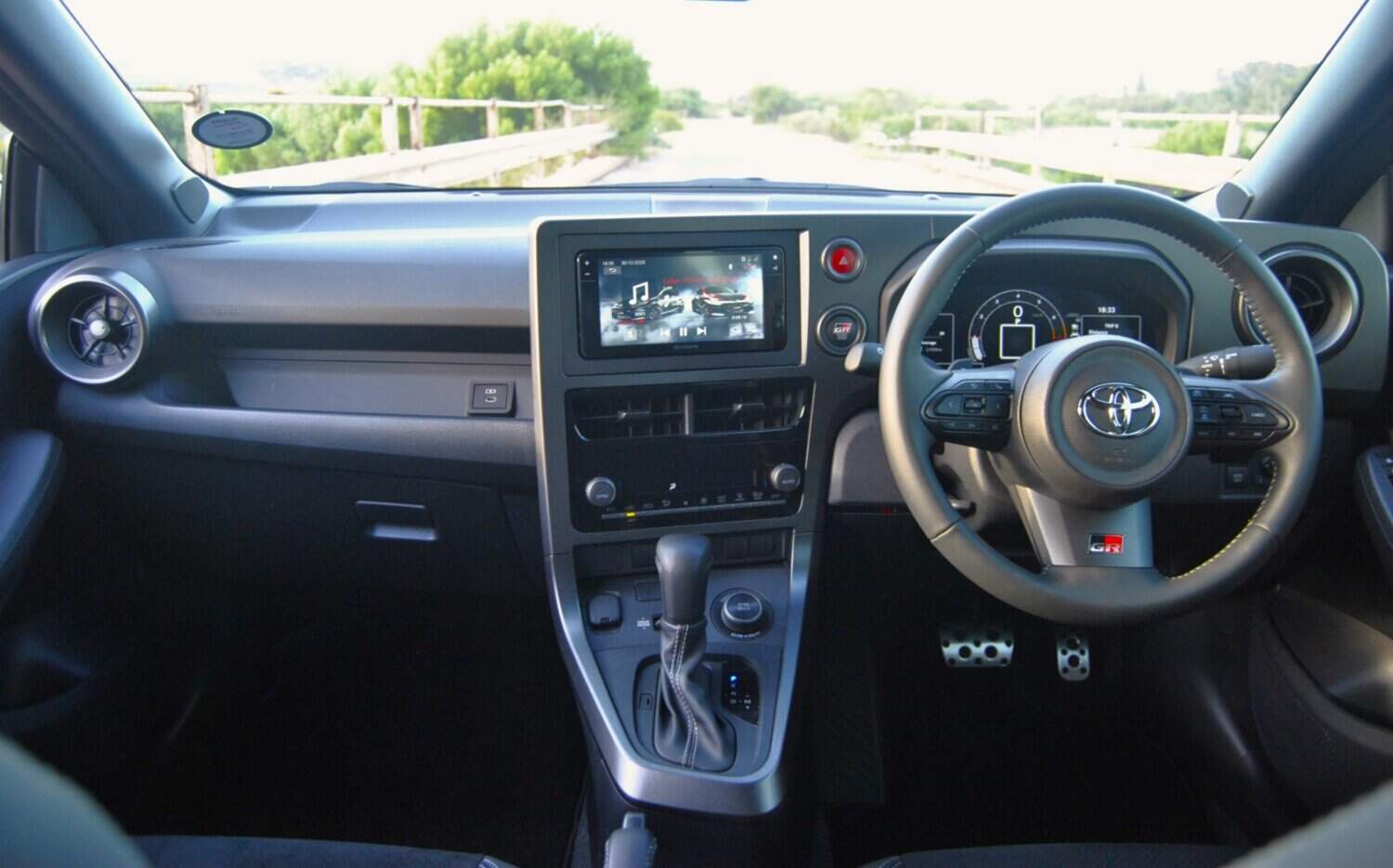
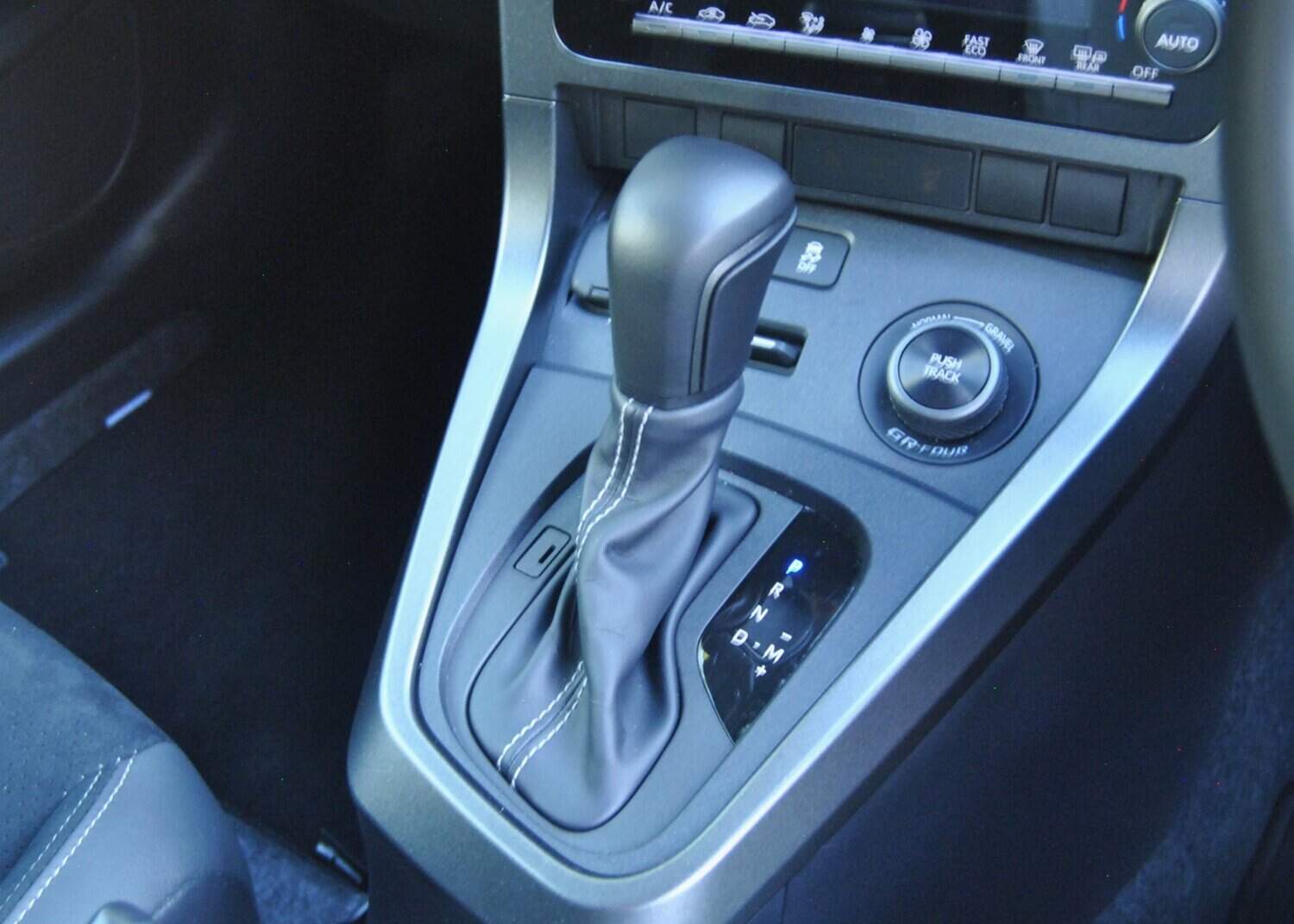
While the centre console has been changed to accommodate the gear lever for the DAT, the central hangdown section now faces the driver at a 15-degree angle and isn’t as clean as the old “curved” layout.
This means the seven-inch infotainment display no longer sits atop the dashboard.
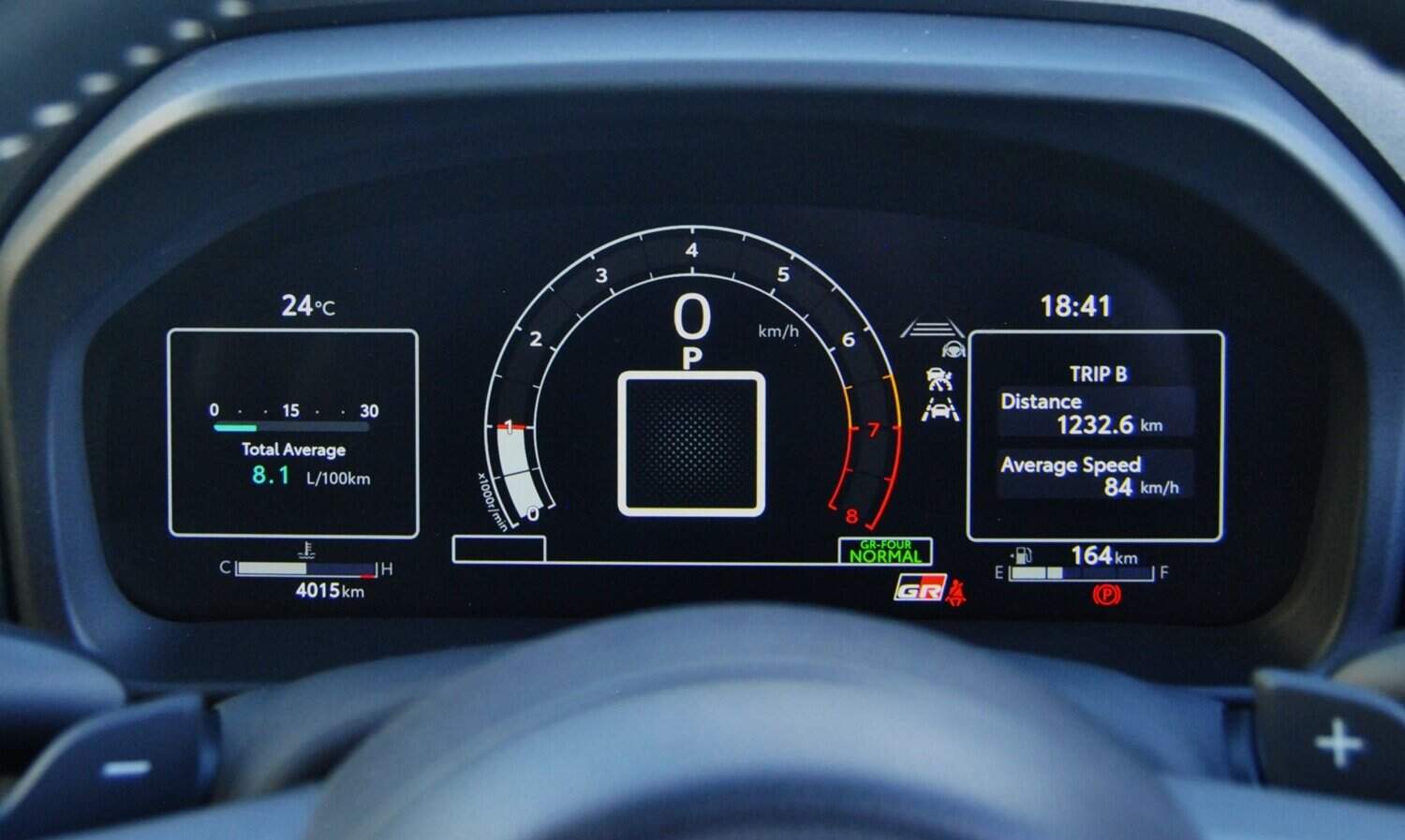
Instead, it now sits within the dash, and opposite the new 12.3-inch digital instrument lifted from the GR Corolla.
Simply put, the setup isn’t as eye-pleasing as before. However, the retention of physical switches – especially for the climate control – is praiseworthy.
Ergonomics
For the final adjustments, Toyota has lowered the seats by 15 mm, relocated the starter button and hazard light switch, and added a new button to the lower right of the steering wheel for the intercooler sprayer.
As before, the cabin’s ergonomics are easy to master from the buttons on the steering wheel to the GR-Four selector dial in front of the gear lever.
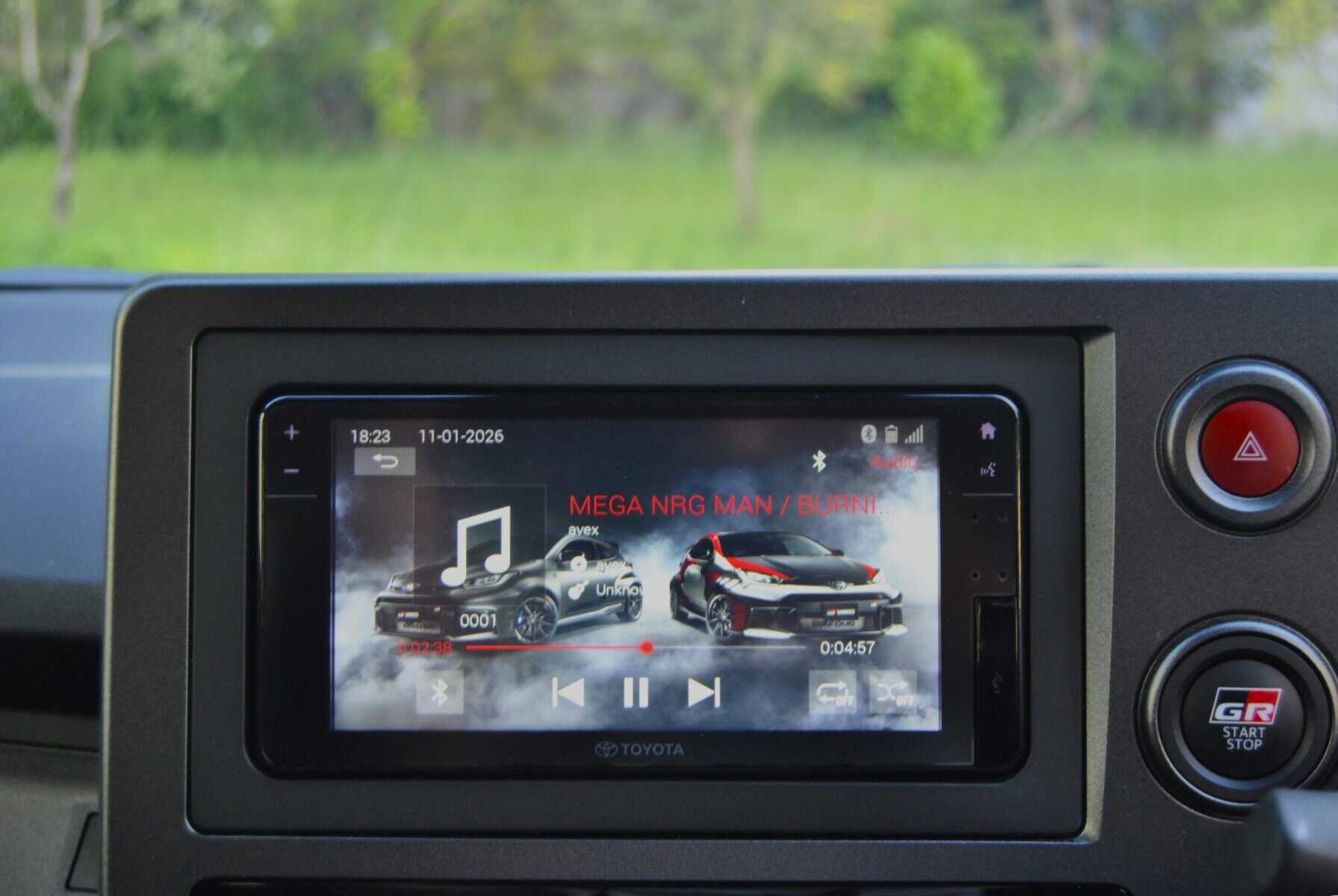
“Hidden” by the Garmin Catalyst Driving Performance Optimiser on the racing cars, the infotainment system is still not the most high-tech.
Fiddly to use, it is also hamstrung by dated graphics, too small icon touch points and poor reverse camera resolution.
Equipped with Apple CarPlay and Android Auto, plus a single type-A USB port mounted on the outer edge, the setup, admittedly, will be of little concern to buyers considering the GR Yaris isn’t about thrills in the connectivity department.
Practical… for two
The same goes for practicality. From the tiny boot, which can only accommodate 174-litres, to the cramped rear quarters, the slanted rear seats still don’t alleviate the fact that the GR Yairs isn’t much of a hauler for more than two.
Not helping either is entry to the rear. Whereas only the backrest of the driver’s chair folds forward, it doesn’t slide “automatically” forwards on its runners.
By comparison, the passenger’s seat does slide all the way forward, but won’t return to its previous “set” position when sliding back.
In the bluntest terms, perched in the rear and expecting GR Corolla-levels of comfort and space isn’t what the GR Yaris was designed for either.
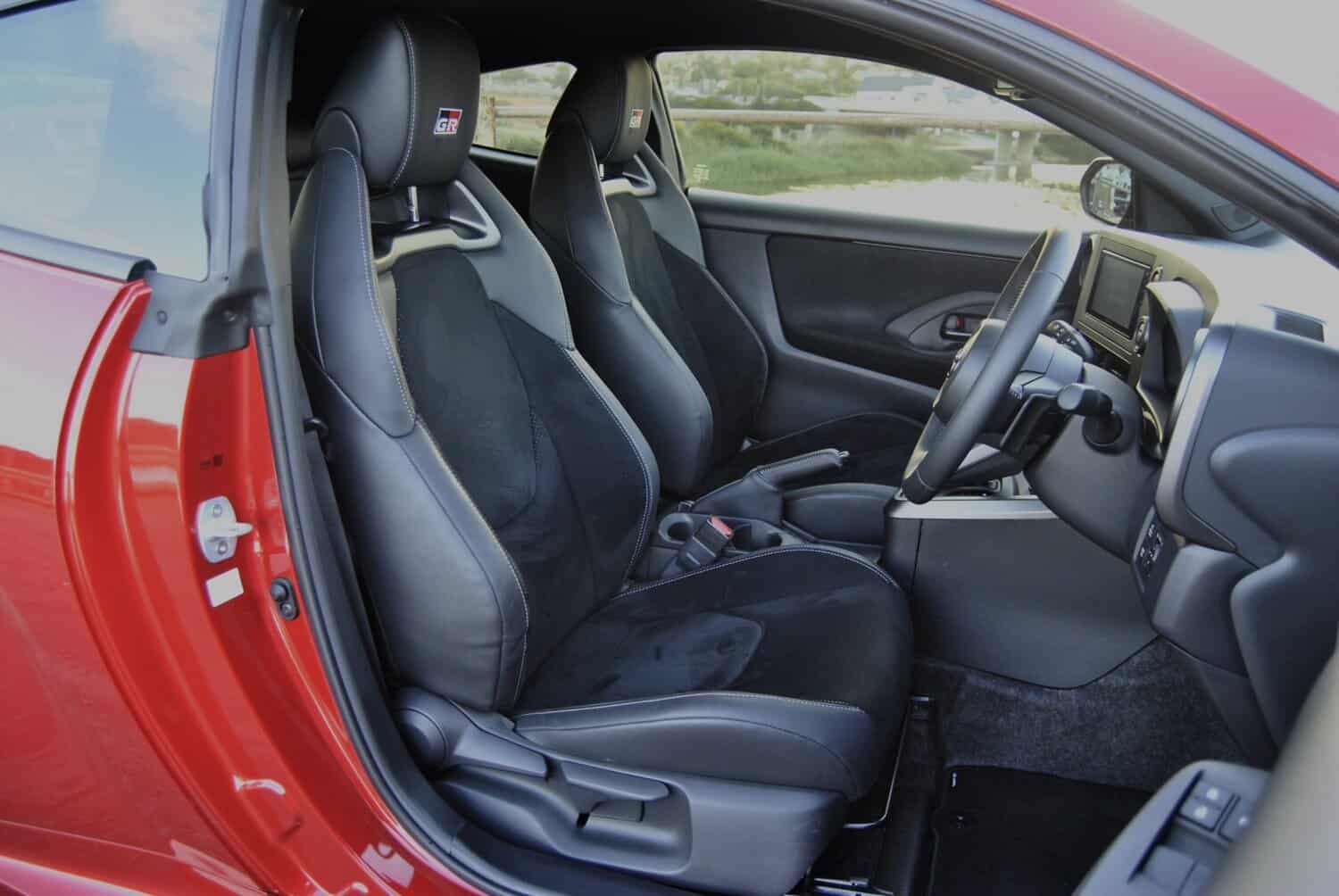
Up front, the seats are thoroughly supportive but, unsurprisingly, firm.
While a bit more height adjustment on the steering column would have been welcomed, seated behind the wheel, as on the track, remains the biggest thrill at the press of the starter button.
Detuned fun?
Firing up to its rhythmic thrum that echoed through from to the pits to the track, the three-cylinder turbocharged 1.6-litre G16E-GTS engine still makes for a big giggle.
Holder of the world’s most powerful three-cylinder engine crown since its unveiling in 2020, South Africa’s supposed sub-standard fuel quality left Toyota with no option but to detune the engine.
As on the track, the engine makes 210kW/400Nm instead of 198kW/360Nm. Tipping the scales at 1 325 kg, the result is still explosive.
Complete with a Group B-style turbo pop-off noise, the response is still instant and intoxicating, but not as brutal as the manual.
Gearbox hits and misses
In this regard, the DAT is somewhat to blame. Undeniably more useable than the manual, it simply lacks the engagement of the three-pedal layout.
Proving this was letting Road Test Editor Mark Jones loose at Gerotek weeks prior to going on holiday.
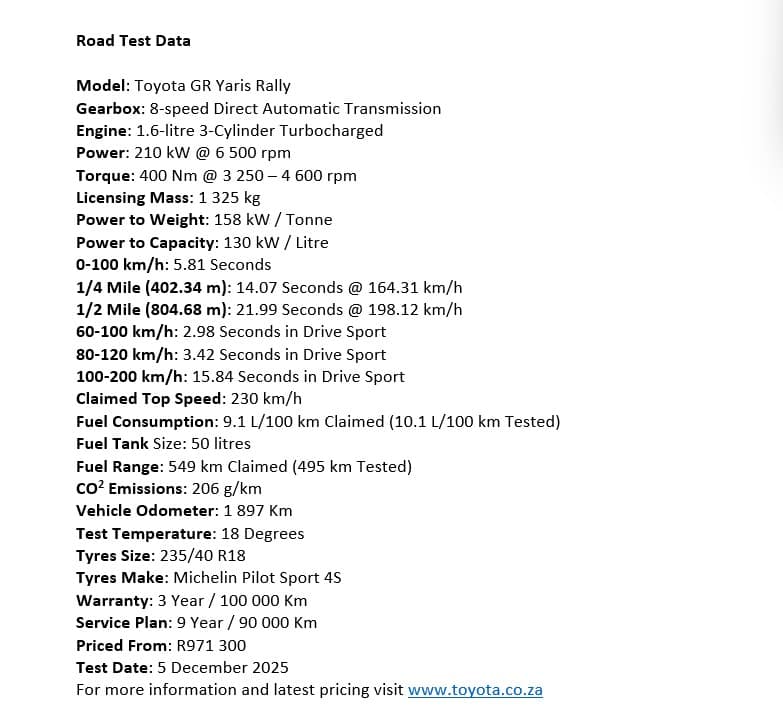
Despite his best efforts, Mark could only amass 0-100 km/h in 5.8 seconds – 0.6 seconds down on Toyota’s claim, and five-tenths slower than the less powerful manual tested in 2021.
On par with the outgoing Volkswagen Golf 8 GTI, the gearbox and the laggy launch control was cited as some of the reason for the GR Yaris failing to improve on the times set by the manual.
Admittedly, it does become more responsive and immediate with the paddle shifters in use, and even more so in Sport mode.
However, the element of fun and involvement provided by the manual is unmatchable.
Road trip
Putting useability to the test meant the open road down to the Western Cape a few days before new year.
In-line with its softer side, selecting Sport mode, putting the GR-Four selector in Track and switching the Vehicle Stability Control to Expert mode as per the on-track procedure, didn’t happen.
Instead, Comfort mode was selected and the GR dial left in Normal, with Sport mode selected on a few occasions.
Heading for Mossel Bay on a road frequented by a few mountain passes, the GR Yaris’ agility made the biggest impression.
Even in its less raciest setting, it felt nimble, agile and the steering beautifully balanced and quick.
Taking on the sweeping Outeniqua Pass outside George, the GR-Four system never braked traction, resulting in the GR Yaris feeling surefooted and confidence inspiring on twisty sections.
Despite the half cloth/Alcantara seats being more race than comfort biased, the provided support was still enough not to result discomfort.
Understandably, noise inside the cabin levels are high and the ride unashamedly hard. Admittedly, these proved liveable unlike the manner in which it tended to obliterate the fuel inside its 50-litre tank.
An aspect that caused a few nervous moments on-track, careful driving, with the climate control almost on permanently in the scorching Western Cape heat, resulted in an indicated best figure, after an eventual 4 062 km, of 7.9 L/100 km against Toyota’s 9.1 L/100 km.
Conclusion
Similar to the Volkswagen Polo GTI, the benefits of the DAT-equipped Toyota GR Yaris is undisputable.
A move that has opened-up its appeal to buyers adverse to shifting gears manually, it still is a real deal hot hatch, even with its practical limitations and iffy interior.
At R971 300, it is nonetheless expensive and, arguably, not the best equipped from a value for money standpoint.
Thrill, excite and impress it still does, however, when all is said and done, taking the R29 100 credit that goes with the manual still makes this the ultimate pocket rocket.
Road Test Data
NOW READ: Toyota unleashes updated GR Yaris with auto box and more oomph