By Amin Kef Sesay
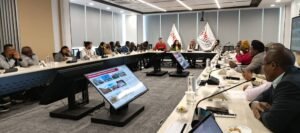
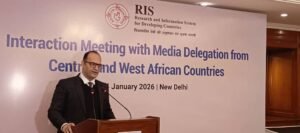
Three Sierra Leonean journalists, alongside colleagues from West and Central Africa, on Wednesday, January 14, 2026, visited the Research and Information System for Developing Countries (RIS) and later held high-level discussions with officials of the Coalition for Disaster Resilient Infrastructure (CDRI) in New Delhi, India, as part of an engagement aimed at strengthening knowledge exchange and improving media understanding of development policy and resilient infrastructure initiatives.
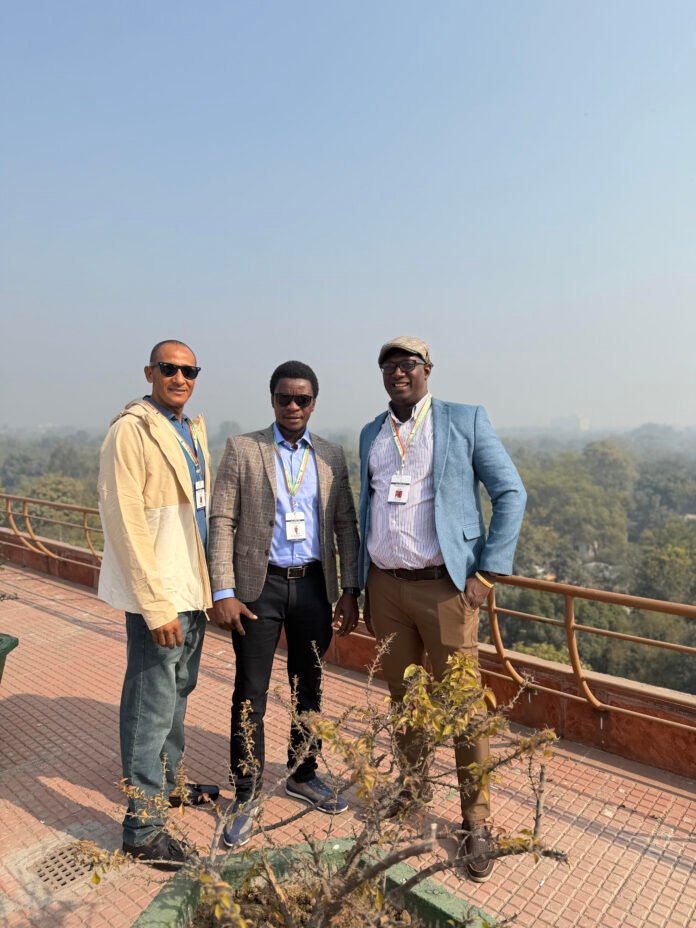
The Sierra Leone delegation included Alhaji Manika Kamara, President of the Sierra Leone Association of Journalists (SLAJ); Amin Kef (Ranger), Managing Editor of The Calabash Newspaper; and Thomas Dixon, Managing Editor of The New Age Newspaper.
The day’s programme formed part of an ongoing media familiarisation and professional exposure initiative designed to deepen collaboration between African media professionals and key Indian institutions supporting global development dialogue, research-driven governance, and international cooperation.
At RIS, the visiting journalists were briefed on the institution’s mandate and role as a New Delhi-based autonomous policy research organisation focused on key issues shaping international economic development, including trade, investment, technology, sustainable development, and regional integration.
RIS officials explained that the institution serves as a policy dialogue and capacity-building platform for developing countries, with a strong emphasis on South-South cooperation and supporting emerging economies in global and regional economic negotiations.
During the interaction session, the delegation engaged RIS representatives on topical issues shaping the global development agenda and the rising importance of research-driven policymaking in addressing economic transformation challenges confronting developing nations.
Journalists posed questions and exchanged views on key themes including inclusive growth strategies, how evidence-based research can better support national planning, and the role of policy institutions in strengthening regional integration and competitiveness in the global economy.
Officials further highlighted that RIS is recognised as one of India’s leading policy research institutions, operating as an independent research and advisory body supported by India’s Ministry of External Affairs—an arrangement that strengthens its ability to connect academic research to practical policymaking and international development cooperation.
In their presentations, RIS experts outlined the institution’s objectives, which include supporting decision-making in developing countries through policy research and analysis, advancing regional and international economic integration, and providing evidence-based advisory services across several development themes.
Areas of work discussed included trade and multilateral negotiations, Sustainable Development Goals (SDGs) implementation, digital transformation and the knowledge economy, as well as emerging conversations around climate change, energy, and global governance reform.
The institution was also described as a regular convenor of high-level policy dialogues, conferences, workshops, and training programmes aimed at strengthening capacity for both researchers and policymakers while producing reports, policy briefs, and strategic studies in collaboration with regional and global partners.
Participants described the RIS engagement as insightful and relevant, noting that Africa’s development trajectory can benefit significantly from research-backed policymaking, institutional partnerships, and stronger cooperation among countries of the Global South.
Following the RIS engagement, the delegation proceeded to the headquarters of the Coalition for Disaster Resilient Infrastructure (CDRI), where journalists met with authorities and held discussions on global efforts to promote infrastructure resilience amid climate threats and disaster risks.
CDRI officials explained that the organisation is an international initiative established to strengthen infrastructure resilience against natural disasters and the increasing risks posed by climate change.
Headquartered in New Delhi, the coalition brings together member countries, international organisations, and institutional partners to reduce human and economic losses caused by disasters by supporting knowledge exchange, policy reforms, and capacity-building, particularly in high-risk and developing regions.
The officials highlighted CDRI’s international partnership model, which unites national governments, United Nations agencies, multilateral development banks, the private sector, and knowledge institutions in a coordinated effort to strengthen the resilience of both new and existing infrastructure systems.
They further stated that CDRI’s work aligns with broader sustainable development imperatives by promoting the rapid development of disaster-resilient infrastructure capable of supporting universal access to essential services, sustaining economic prosperity, and promoting decent work opportunities.
In the briefing, participants were also informed about the coalition’s work on policy support and technical engagement designed to improve how countries plan, finance, and implement safer infrastructure projects, particularly in areas vulnerable to floods, storms, earthquakes, and other climate-related shocks.
Stakeholders say the coalition’s expanding partnerships and global programmes are contributing to better planning for safer infrastructure systems while helping vulnerable nations build long-term resilience against recurring disasters.
Journalists present at the meeting described the engagement as timely, especially for African countries where infrastructure vulnerabilities remain a major challenge, often worsened by weak systems, limited financing, and frequent climate-related shocks.
Participants noted that engagements of this nature strengthen media understanding and improve reportage on infrastructure planning, disaster preparedness, climate adaptation strategies, and development policy frameworks across developing regions.
They emphasised that journalists require practical institutional exposure and access to credible technical knowledge in order to interpret development policies accurately and communicate their relevance to citizens in a way that strengthens accountability and promotes informed public debate.
The delegation added that the experience broadened their understanding of how research institutions, global coalitions, and development partners collaborate in shaping national and international responses to development challenges.
Observers say initiatives linking journalists to policy research institutions and disaster resilience mechanisms are critical in today’s fast-changing world, where climate threats and economic uncertainties continue to pressure developing countries to adopt stronger frameworks for sustainable development.
The RIS and CDRI engagements were also viewed as part of broader efforts to expose visiting journalists to key Indian institutions that contribute to global policy thinking and international development cooperation.
According to the visiting team, the programme provides opportunities for professional exchange, knowledge-building, and stronger media-to-media relationships between African journalists and Indian strategic institutions.
Such engagements, they said, help deepen mutual understanding while promoting collaboration and long-term partnerships that can contribute to improved reporting, stronger people-to-people ties, and better appreciation of development strategies.
Beyond policy and institutional learning, the visiting journalists later undertook a cultural experience tour in New Delhi, including a scheduled visit to Dilli Haat INA, a popular craft and cultural market known for showcasing traditional products, handicrafts, and food from across India.
Participants said the cultural experience forms an important part of the broader exposure, enabling visitors to engage with India’s cultural diversity while building professional connections in an atmosphere of mutual respect and learning.
For the Sierra Leonean delegation, the visit underscored the importance of strengthening policy literacy within the media profession and ensuring that journalists covering governance and development issues are equipped with deeper insight into global economic realities and climate resilience solutions.
Alhaji Manika Kamara, President of SLAJ, noted the importance of partnerships that support professional development, institutional learning, and the strengthening of journalism standards through exposure to global best practices.
Amin Kef (Ranger), Managing Editor of The Calabash Newspaper, described the engagement as valuable in expanding regional media perspectives, particularly on how research-driven policy institutions such as RIS influence development planning and how coalitions like CDRI drive global action toward climate-resilient infrastructure.
Thomas Dixon, Managing Editor of The New Age Newspaper, also welcomed the engagement, noting that the discussions provide context for better analysis of development interventions and policy decisions that affect emerging economies.
The journalists concluded that visits to institutions such as RIS and CDRI present a practical opportunity for African media professionals to deepen their understanding of development policy systems, strengthen international networks, and improve the quality of reporting on governance, climate resilience, and sustainable economic growth.
As the media exposure programme continues, participants say the engagements have strengthened their commitment to producing informed, balanced, and development-oriented journalism that supports national progress and regional cooperation across Africa and beyond.