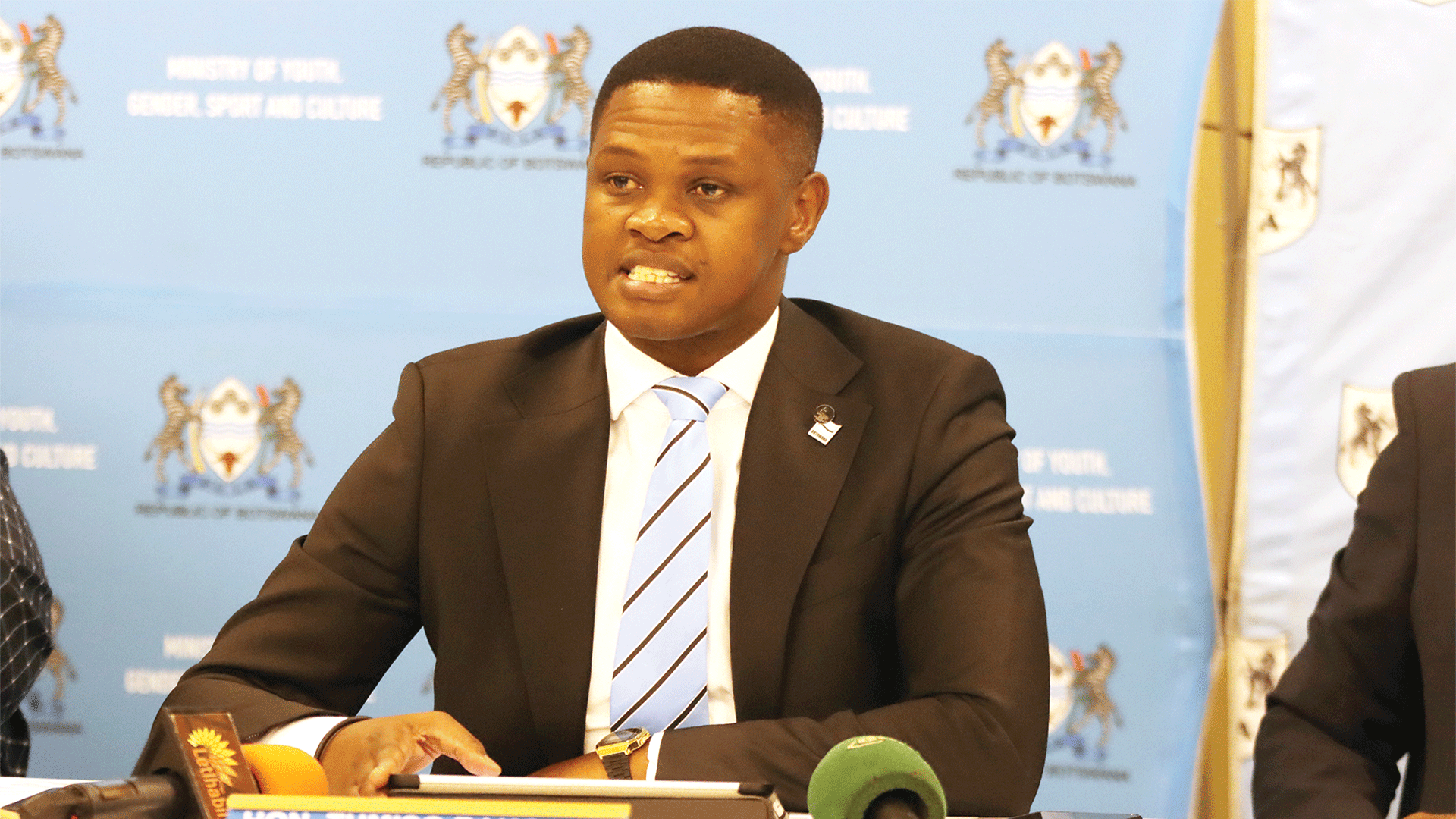
The controversy surrounding Botswana’s failed bid to host the 2027 Africa Cup of Nations (AFCON) has erupted into a fierce political confrontation, with former Minister of Youth, Gender, Sports, and Culture Tumiso Rakgare at the epicenter. Amidst a parliamentary investigation into the P65 million expenditure on the bid, Rakgare has openly challenged the current government to take legal action if any wrongdoing is uncovered, a bold move that underscores the high stakes of this dispute.
Rakgare, who served under the previous administration, has been a vocal defender of the decision to pursue hosting the continental tournament. In a recent political rally, he dismissed accusations that the bid was mired in corruption, accusing some members of parliament of misleading the public. “The government is free to arrest me if there is any evidence of wrongdoing,” Rakgare declared, emphasizing that the decision to bid was made after extensive consultations with experts and with the country’s best interests at heart. For Rakgare, hosting AFCON represented an opportunity to create jobs and spur the development of sporting infrastructure, including the construction of new stadiums across Botswana.
The former minister’s defense draws parallels to ambitious sporting preparations seen elsewhere. He pointed to Qatar’s successful buildup to the 2022 FIFA World Cup, where initial doubts about infrastructure readiness gave way to world-class facilities. Rakgare argues that Botswana could have followed a similar trajectory, transforming the country’s sporting landscape and signaling its arrival on the international stage. This vision, however, clashes with critics who argue Botswana was ill-prepared and that the bid was premature given the country’s current capabilities.
The investigation gained momentum after Molepolole North MP Arafat Khan tabled a motion in parliament calling for a thorough probe into the P65 million spent on the bid book. Khan’s motion demands scrutiny of whether the expenditure aligns with international standards, an audit of the procurement process that selected the winning bidder, and a deep dive into all processes surrounding the tender award. The number itself has drawn intense public scrutiny, with some reports alleging the bid book cost over P60 million. Rakgare has consistently challenged these figures, stating the actual spending was closer to P41 million, a significant discrepancy that fuels the controversy.
Minister of Sport and Arts Jacob Kelebeng, representing the current government, acknowledged the need for an investigation, describing it as justifiable given the public concern. Yet Kelebeng also cautioned that there was never a guarantee Botswana would secure the hosting rights, suggesting that government resources might have been better spent on a comprehensive national hosting strategy that would encompass multiple sporting codes rather than focusing exclusively on AFCON. His comments highlight a broader debate on priorities and the management of public funds in Botswana.
A key element complicating the bid was Botswana’s agreement to pursue a joint bid with neighboring Namibia. Under the terms, Botswana was to shoulder 60 percent of the preparations, with Namibia covering 40 percent. Namibia’s sudden withdrawal, citing financial constraints, left Botswana to pursue the bid alone. This last-minute pullout added stress to the bid’s viability and raised questions about the partnership’s management. Namibia’s exit has been a subject of scrutiny in its own right, with some reporting that the joint bid’s collapse has sparked suspicions of financial mismanagement on both sides.
The parliamentary investigation now extends beyond Botswana’s borders, with authorities probing potential corruption linked to the failed joint bid. The Directorate on Corruption and Economic Crime (DCEC) is reportedly involved in examining the bidding process, an indication of the seriousness with which the government is treating the allegations. This probe coincides with a forensic audit initiated to uncover irregularities and ensure full transparency.
Public reaction to the inquiry has been mixed. Some view the investigation as an overdue effort to hold officials accountable, while others see it as political maneuvering aimed at discrediting the former administration. The debate has sparked discussions on the value and risks of hosting major international sporting events in Africa, where infrastructure challenges and financial constraints often pose formidable hurdles.
The saga also spotlights Botswana’s broader ambitions in sport and development. While the AFCON bid has faced setbacks, Botswana continues to express a desire to bring international sporting events to its shores. Rakgare insists that losing the bid will not deter the country’s efforts to elevate its sporting profile, signaling that the debate over AFCON 2027 is part of a larger narrative about Botswana’s place in African sports.
As parliament’s investigation unfolds, it carries implications beyond just the financial figures and procedural details. It raises fundamental questions about governance standards, the role of oversight in public spending, and how emerging economies like Botswana balance aspirations with fiscal responsibility. The outcome of this inquiry will likely shape not only Botswana’s sports policy but also public trust in government institutions.
Post Views: 345