Since gaining independence in 2011, South Sudan has continued to suffer immense political instability, economic collapse, and social fragmentation. For years, these crises have been conveniently explained away as tribalism. While tribal identity has been manipulated and abused, the harsh truth is this: what South Sudan is facing today goes far beyond tribalism. At the heart of our struggle lies greed deeply entrenched within the political, social, and economic systems of the country.
Independence was meant to innu mark the beginning of justice, accountability, and shared prosperity. Instead, it became an open gate for political elites to capture state institutions for personal enrichment. Public offices quickly turned into private businesses. National resources meant for development, education, healthcare, and infrastructure were diverted to serve individual interests and patronage networks.
This greed did not wear tribal clothes at first but when accountability was demanded, tribalism was weaponized as a shield.
Politically, greed dismantled the foundations of good governance.
Leadership became less about service and more about access to power and wealth. Political loyalty was rewarded not with policies or performance, but with money, positions, and protection. As corruption flourished, state institutions weakened, and the rule of law collapsed. Those who spoke against corruption were silenced, intimidated, or branded enemies of certain communities.
Socially, greed poisoned coexistence. Communities that once lived together peacefully were pulled into conflicts they did not create. Youth were mobilized and armed to defend political interests they do not benefit from.
The social fabric was torn apart as suffering citizens were told to blame each other instead of questioning those looting their future.
Economically, the impact has been devastating. Despite being rich in natural resources, South Sudan remains one of the poorest countries in the world. Civil servants go unpaid, soldiers lack welfare, hospitals have no medicine, and schools operate without basic materials. This is not because the country is poor but because greed has drained the nation dry.
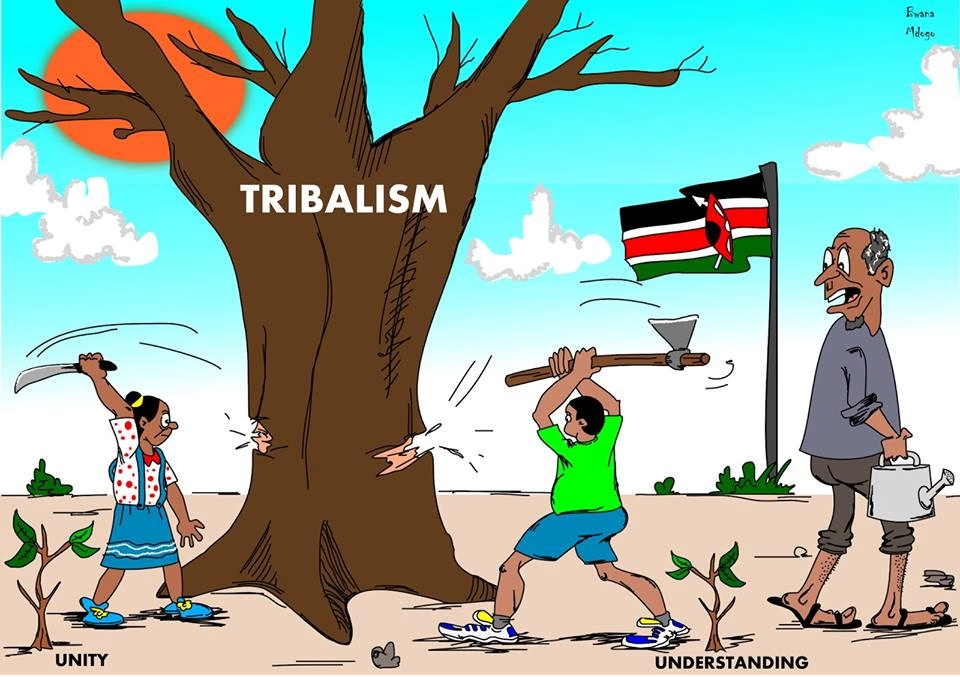
Blaming tribalism alone is a dangerous oversimplification. It allows the real culprits to escape accountability while ordinary citizens continue to suffer. Greed cuts across all tribes, regions, and political affiliations. It lives in the systems that reward corruption, protect impunity, and punish honesty.
If South Sudan is to move forward, the conversation must change. We must confront greed directly through strong institutions, accountability, transparency, and genuine national dialogue. Unity cannot be built on lies, and peace cannot survive in a system designed to benefit a few at the expense of millions.
Our struggle as South Sudanese should not be against tribes. Our struggle is against greed that hijacked our independence and continues to hold the nation hostage. For any crospondance
manyielmichael72@gmail.com
Pro-activists advocating for advancement of the Republic of South Sudan and Pan Africans