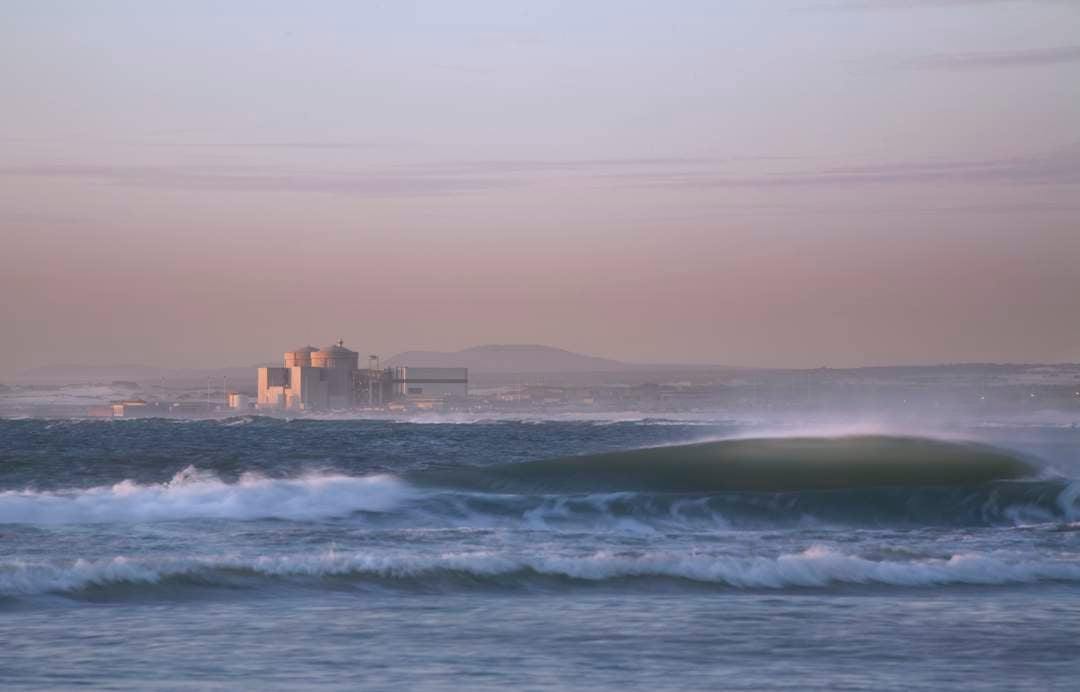
The Koeberg nuclear power station near Melkbos in Cape Town.
Stuart Apsey/ Getty Images
Power generated by the Koeberg nuclear station near Cape Town was cut by almost 90% after a fault at a substation on Tuesday afternoon.
Eskom said that electricity from each of the two units, which deliver 920MW at full power, was cut to only 100MW after a fault at Pinotage transmission substation near Stellenbosch.
An Eskom spokesperson told News24 that veld fires may have triggered the fault, which caused a “disturbance” on the 132kV transmission lines that connect to the national grid.
“Koeberg’s reactors are designed to react when grid voltage changes go beyond safe limits. The disturbance at the Pinotage substation exceeded these limits, which triggered the plant’s protection systems and caused both units at Koeberg to reduce their power output,” the spokesperson said.
This was an expected response under such circumstances, designed to protect the integrity of the power station and the national grid.
Eskom said the incident did not affect the nuclear reactors and that the National Nuclear Regulator (NNR) has been informed of the incident.
“Importantly, there is no risk of load shedding due to adequate national generation reserves and the National Transmission Company South Africa (NTCSA) has given approval for Koeberg Nuclear Power Station to begin increasing the power output of both units.”
Just before 22:00 on Tuesday evening, Unit 1’s output had already increased to 755MW, while Unit 2 increased to 146MW, Eskom confirmed.
The utility said Koeberg continues to operate safely and securely.
In November last year, just days before its 20-year licence was set to expire, Koeberg’s Unit 2 was granted an extension to operate another 20 years.
READ | Koeberg Unit 2 has its life extended by 20 years – just days before expiry of licence
The NNR approved Unit 1’s extension earlier in 2025.
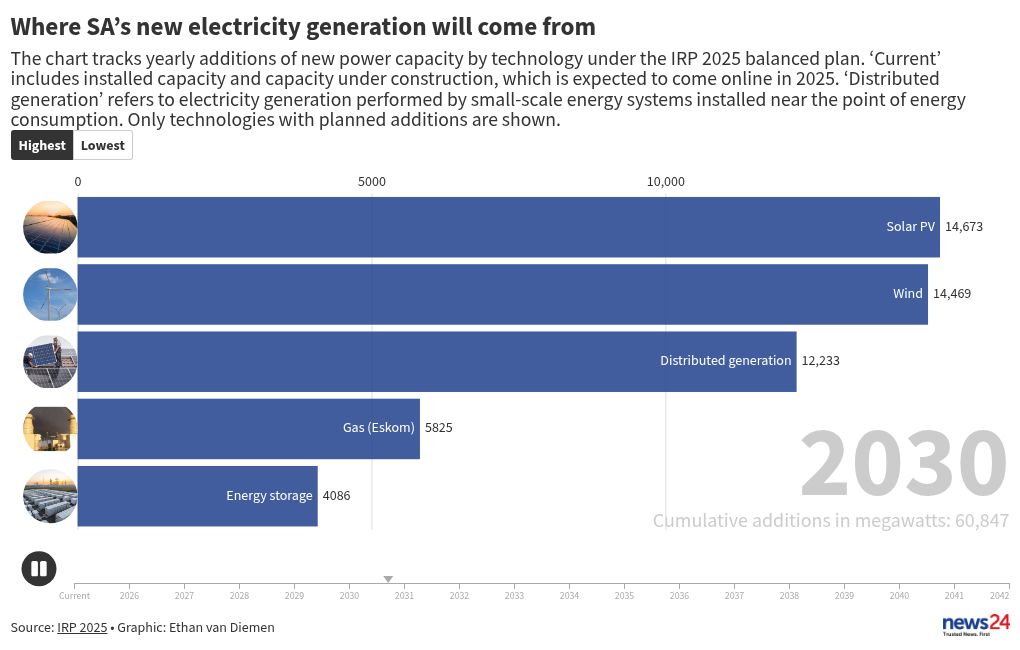
Government’s Integrated Resource Plan envisions another 5 200MW of nuclear capacity after 2030 – the equivalent of almost three new Koeberg power stations.
The article has been updated with new information from Eskom.