By Alvin Lansana Kargbo
The National Civil Registration Authority, in collaboration with the International Organization for Migration, has announced that it will issue National Identity Cards and birth certificates to Sierra Leoneans who travelled out of the country and later returned through the Migration Protection, Return and Reintegration Programme for Sub-Saharan Africa.
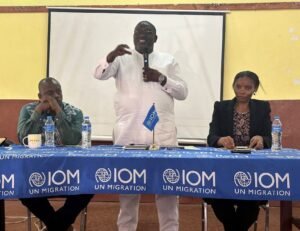
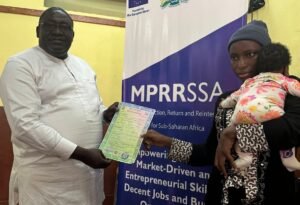
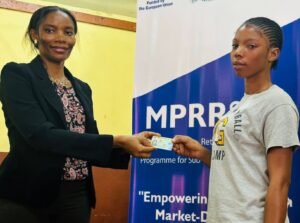
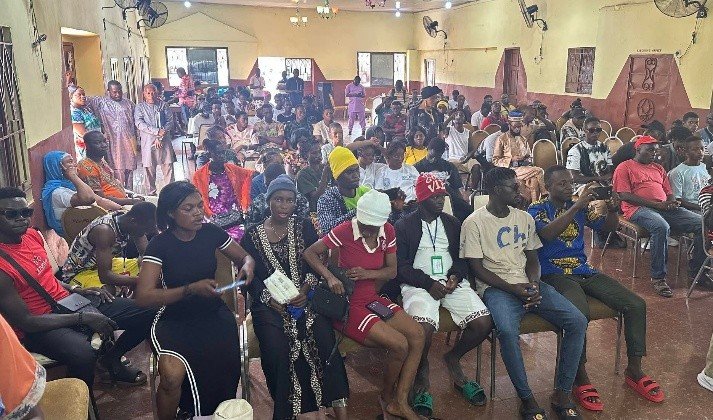
That disclosure was made on Friday, 16 January 2026, at the Scout Hall in New England Ville, Freetown, where officials revealed that 700 National Identity Cards and approximately 300 birth certificates will be provided to returnees as part of efforts to restore their legal identity and strengthen their reintegration process.
Funded by the European Union, the initiative forms part of a broader programme designed to support returning migrants through skills development, entrepreneurship training and access to employment opportunities. The project aims to promote sustainable reintegration by ensuring returnees are equipped with market-driven skills while also providing the legal documentation required for full participation in national life.
Speaking at the event, Director General of the National Civil Registration Authority, Mohamed M. Massaquoi, said the Government has a responsibility to identify, protect and care for Sierra Leonean citizens wherever they may be. He commended the International Organization for Migration for its continued support in facilitating safe return and reintegration for migrants, adding that Sierra Leone’s legal framework has evolved in a way that makes it increasingly necessary for every citizen to possess basic legal documents such as a National Identity Card and a birth certificate.
Mohamed M. Massaquoi stressed that national identification is essential not only for national security but also for the personal protection of citizens. He disclosed that 292 identity cards will be issued to returnees, as the first batch, free of charge. He also revealed that birth certificates are being provided for children of returnees who previously lacked documentation, noting that 85 certificates are currently available. He encouraged beneficiaries to make responsible use of the opportunity, describing the intervention as a critical step toward rebuilding lives and restoring full civic recognition.
International Organization for Migration Officer in Charge, Dr. Pauline Macharia, explained that the programme is structured to support returning migrants and ensure their sustainable reintegration into society. She said the organization has maintained continuous engagement with migrants before and after their return by providing protection services, documentation support and reintegration assistance. While acknowledging that migration is not necessarily negative, Dr. Pauline Macharia emphasized the need for safe and regular migration pathways, warning that irregular movement often exposes migrants to serious risks and undermines their chances of rebuilding stable livelihoods.
Deputy Commissioner of the National Youth Commission, Emerson Kamara, praised the collaboration between the International Organization for Migration and the National Civil Registration Authority, describing it as an important intervention that restores dignity and strengthens the sense of belonging for those who have returned home. He said providing National Identity Cards to returnees is not just a bureaucratic process but a meaningful step that reconnects individuals to the state and the opportunities they deserve.
Emerson Kamara cautioned that unsafe and irregular migration makes reintegration more difficult and called for stronger engagement with returnees to help them regain stability and rebuild their lives. He reaffirmed the National Youth Commission’s readiness to play its role in the partnership and urged a shift in the migration narrative toward safe and legal pathways, supported by expanded opportunities for young people in Sierra Leone.
Beneficiaries also shared personal accounts of hardship and survival, offering a human perspective to the programme’s importance. Joseph Moyeba recounted travelling through Niger under extremely difficult conditions and expressed gratitude to the International Organization for Migration and the National Civil Registration Authority for assisting him to obtain a National Identity Card. He advised young people to focus on opportunities within Sierra Leone and avoid risky journeys, especially those undertaken without proper travel documents.
Mariatu Kamara narrated her experience in Nigeria and her unsuccessful attempts to cross into Tunisia, which she said ended in arrest and deportation. She welcomed the issuance of her National Identity Card and warned young people against irregular migration, describing the journey as dangerous, unpredictable and filled with uncertainty.
Participants at the ceremony expressed satisfaction with the programme, noting that the intervention has eased access to legal documentation for returnees and their children. Many described the issuance of National Identity Cards and birth certificates as a crucial step that will strengthen returnees’ long-term reintegration and help them regain full access to services and opportunities across Sierra Leone.