Author: Koang Pal Chang | Published: 5 hours ago
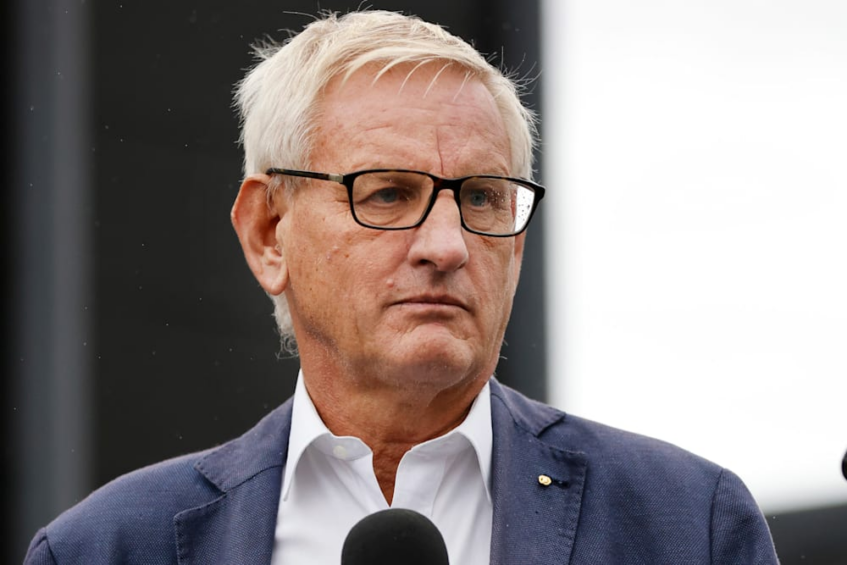
Former Swedish Prime Minister Carl Bildt testifies in court about his time at the oil company Lundin, whose representatives are suspected of having helped commit crimes against international law.
Photo: Christine Olsson / TT
STOCKHOLM, Sweden (Eye Radio) — Survivors of the conflict in Unity State moved a step closer to justice on Thursday as former Swedish Prime Minister Carl Bildt testified in the historic Lundin Oil trial.
According to Swedish media, Aftonbladet reported that the Stockholm District Court is currently hearing testimony on grave human rights abuses and war crimes committed in the oil-rich fields of Unity State between 1999 and 2003, a period marked by mass displacements and violence during the Sudanese civil war.
Bildt, who was a board member of the company, was questioned about his and others’ knowledge of the situation in Sudan when Lundin Oil was operating in the country.
He claimed that the company was a positive force in the area.
Bildt, who was a board member of Lundin Oil from 2000 to 2006, is one of around a hundred witnesses called for questioning in the record-long trial for complicity in serious crimes against humanity in southern Sudan from 1999 to 2003.
The two defendants, Ian Lundin and Alex Schneiter, former chairman of the board and CEO respectively, have, according to the indictment, contributed to the Sudanese regime committing war crimes to secure the company’s oil operations in the southern parts of the country.
During the fighting, many civilians were displaced, injured and killed. Both deny any wrongdoing.
Complicated conflict
Bildt had no in-depth knowledge of the situation in Sudan when he joined the board and had never been to the country, he emphasized in court.
– My understanding of the details of what was going on down there was limited. This was just part of the company’s operations.
However, over time, he learned more and emphasised that it was a deeply complicated conflict with rapidly shifting loyalties among the combatants. Prosecutor Ewa Korpi asked Bildt a series of questions about reports of fighting taking place in Block 5a.
He had difficulty answering detailed questions, citing the fact that so much time had passed, but said that the fighting and bombing that took place were in areas other than where Lundin Oil was.
Reports of abuse were taken very seriously and a lot of resources were invested in investigating, he added. However, many reports of abuse were largely incorrect, according to Bildt, who pointed out that a propaganda war was also underway.
He was asked about emails he had sent to, among others, Ian Lundin in the summer of 2001, warning that the regime had “resumed what is effectively indiscriminate bombing.” However, these were in areas other than where the company was located, Bildt said.
– It was unacceptable in every way. but it was very far away.
“Blessing”
During the break, Bildt answered questions from journalists, saying he did not regret his job at the company. While oil can contribute to worsening conflicts, it can also do the opposite, he said.
– It helps develop countries. Today we have a situation in southern Sudan where oil is also a blessing. It is 90 percent of state income. I have not seen any serious report that says that oil was the cause of war.
When asked by TT whether he believed the company was a positive force in the area, he replied:
– It came to be, absolutely. Roads were built, wells were drilled, doctors arrived. This is an incredibly undeveloped area at the time.
Sweden’s longest trial