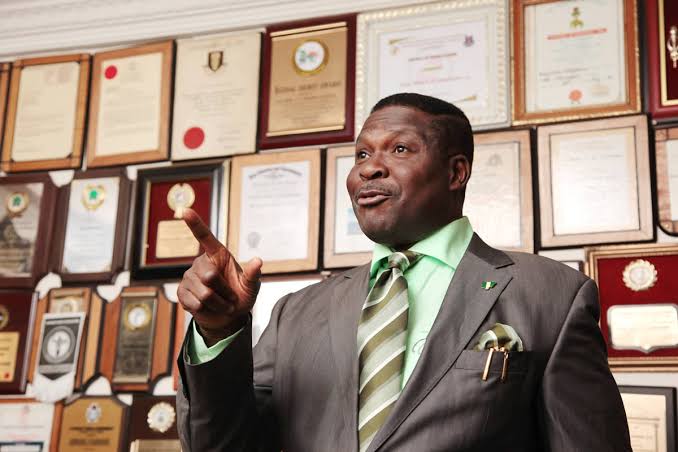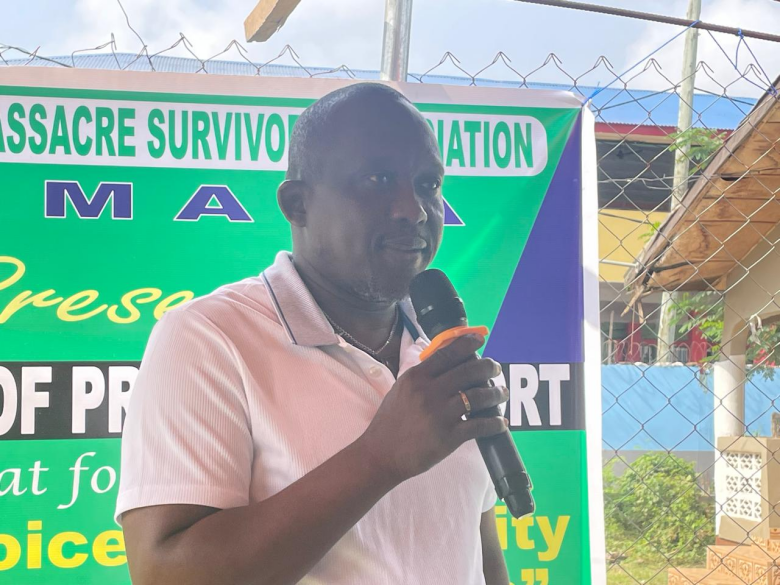
MONROVIA — The long-awaited War and Economic Crimes Court for Liberia has moved beyond political rhetoric and into active implementation, according to Dr. Cllr. Jallah A. Barbu, Executive Director of the Office for the Establishment of the War and Economic Crimes Court for Liberia (OWECC-L).
By Claudius T. Greene, Jr., contributing writer
Speaking during a national engagement organized by the Liberia Massacre Survivors Association (LIMASA), Barbu reassured victims and survivors of Liberia’s civil war that the justice process they have demanded for years is now firmly underway.
“The patience of the victims has not been in vain,” Barbu said. “This process is no longer a promise. It is happening.”
From TRC Recommendations to Action
Barbu recalled that while the Truth and Reconciliation Commission (TRC) had long recommended accountability for war-era crimes, the absence of political will stalled progress for years.
“That chapter remained unfinished for a long time,” he said. “Today, we are turning the page. The time for accountability has come.”
He described the current phase as a historic shift from acknowledgment of past atrocities to the practical establishment of legal and institutional mechanisms to address them.
Government Backing Secured
According to Barbu, both the War and Economic Crimes Court and the proposed National Anti-Corruption Court have the full backing of President Joseph Nyuma Boakai.
“The President is 100 percent committed to this process,” Barbu said. “Those who committed crimes during the war and those who looted this country through corruption will have to answer.”
He disclosed that draft laws establishing both courts have been completed and submitted to the Executive, including the Minister of Justice and the President’s legal and security advisers, placing the process at an advanced stage.
Victims at the Center
Barbu stressed that the court is being designed around the needs, dignity, and protection of victims rather than political interests or public spectacle.
“This is a victim-centered process,” he said. “The goal is to provide relief, restore dignity, and help communities heal.”
He assured survivors that witness protection remains a top priority, noting that OWECC-L is coordinating with national institutions and international partners to ensure safe participation.
“We understand the fear, the trauma, and the pain,” Barbu said. “No one will be forced into a process that causes further harm.”
National and Inclusive Process
Dismissing claims that the initiative is limited to Monrovia, Barbu said the process is national in scope, involving victims from all counties and Liberians in the diaspora.
“This is not a Monrovia process,” he said. “It is a Liberian process, and everyone has a stake.”
He urged victims and civil society organizations to remain actively engaged beyond public events by maintaining direct communication with OWECC-L and LIMASA.
Courts to Be Based in Liberia
Barbu also rejected speculation that the court could be located outside Liberia, stating emphatically that proceedings will be held in-country.
“The court will be in Liberia and nowhere else,” he said. “This is our responsibility as a nation.”
He added that while international partners will provide technical assistance, Liberians will lead and staff the court at all levels.
Legislative Action Crucial
As the process advances toward legislative consideration, Barbu called on victims and citizens to engage their lawmakers.
“The way you show that you want this court is through your representatives and senators,” he said. “Their support will determine how fast this becomes law.”
A Difficult but Necessary Path
Acknowledging the risks associated with pursuing accountability against powerful interests, Barbu described the task as challenging but unavoidable.
“This work carries risk,” he said. “But Liberia is bigger than any individual. We owe it to the victims and to future generations.”
He concluded by reaffirming his commitment to delivering justice.
“The War and Economic Crimes Court is no longer a promise,” Barbu said. “It is a process in motion, and with your support, it will deliver justice.”