Monrovia – In August 2025, when a rape accusation involving a minor surfaced against Bryant McGill, then Deputy Minister for Youth Development, it ignited intense public outrage, polarized opinions, and subjected the country’s justice system to unprecedented scrutiny. For months, the case dominated conversations about women’s rights, child protection, due process, and the presumption of innocence. Now, following a comprehensive investigation by the Liberia National Police, the case has reached a critical turning point, with authorities clearing McGill of any wrongdoing and closing the matter for lack of evidence.
By Jahiem Tumu and Willie Tokpa
On Monday, January 12, 2026, at police headquarters in Monrovia, Inspector General Gregory Coleman announced the conclusion of the investigation.
Speaking to journalists, Coleman said investigators found no credible evidence linking McGill to the alleged crime, despite extensive forensic, technical, and circumstantial inquiries conducted both locally and internationally. According to the police chief, the investigation was exhaustive, impartial, and guided strictly by law and science, leaving authorities with no legal basis to proceed with criminal charges.
“The Liberia National Police has completed a thorough, professional, and impartial investigation into the matter involving Deputy Minister Bryant McGill and found no evidence to warrant criminal charges,” Coleman said. “Based on the totality of evidence, Mr. McGill has been fully cleared of any wrongdoing. The case against him is hereby closed, unless new and compelling information emerges.”
The police report underscored that investigators pursued every available lead. DNA testing, digital and telecommunications analysis, examination of CCTV and electronic data, and verification of McGill’s movements and alibis were all integral parts of the probe.
According to the Liberia National Police, none of these investigative measures produced evidence that connected McGill to the allegation, leading to his formal exoneration.
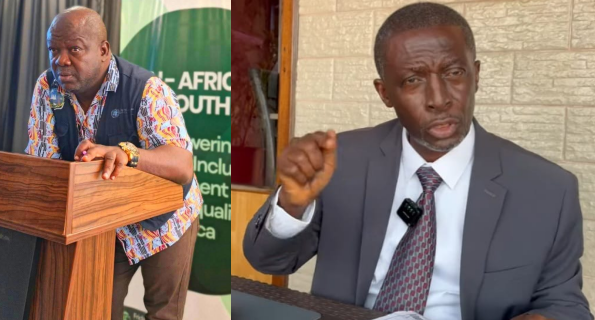
Shortly after the police announcement, McGill broke his silence. Appearing before the press on Tuesday alongside his legal counsel, Cllr. Lafayette O. Gould, he described the months-long ordeal as a sustained public trial marked by intense speculation, moral condemnation, and severe reputational harm.
Still, he maintained a measured tone, emphasizing that the allegation had been thoroughly tested against facts, forensic science, and circumstance and found to be unsupported.
“Following a thorough investigation by the Liberia National Police, under the leadership of Inspector General Gregory O. W. Coleman, I was exonerated of the rape allegation made against me,” McGill said. “The investigation found no evidence to substantiate the claim, and the findings clearly established that the allegation could not be supported by facts, forensics, or circumstance.”
McGill was careful to stress that his exoneration was not the result of political influence, informal arrangements, or personal privilege. Instead, he said it was the product of due process and professional law enforcement work.
At the same time, he acknowledged the seriousness of the allegation and expressed empathy for the minor complainant and her family, emphasizing that genuine victims of sexual violence deserve justice.
“This outcome came through due process, forensic review, and professional investigation,” he said. “We empathized with the victim and her family and we pray sincerely that the perpetrator of this crime would be found and prosecuted, not only to further vindicate me or my reputation, but that justice would be served.”
Reaffirming his innocence, McGill issued what he described as a clear and unequivocal denial of ever meeting or interacting with the alleged victim.
“Since returning to Liberia from the United States on August 8, 2025, I did not meet, see, or interact with the alleged victim at any time, in any place, or under any circumstance,” he said. “That fact was central to the police investigation and was confirmed during the process that led to my exoneration.”
He went further to challenge the factual foundation of the allegation, particularly claims associated with Saturday, August 30, 2025. McGill explained that the date was a non-working day and that he did not report to the SKD Sports Complex, where the alleged incident was said to have occurred. He also clarified that he did not have independent access to his office and that entry required the presence of two assigned staff members, neither of whom was available that day.
“August 30 was a Saturday and a non-working day,” McGill said. “I did not go to the SKD Sports Complex to work on that day. I do not have personal access to my office keys. Access to my office requires the presence of two assigned staff members, neither of whom was available or present. Therefore, it is impossible for anyone to bring food or for any interaction to occur in an office space I was not present in and could not access.”
According to McGill, he spent the entire day at Alpha Field in the presence of several prominent and well-known individuals. He said he later returned directly to his residence and did not leave again until the following day.
“These facts are verifiable. You be the judge,” he said.
Despite being cleared by the police, McGill expressed disappointment over what he described as silence or inaction from institutions and organizations traditionally associated with justice advocacy, youth development, and women’s rights. He said this silence compelled him to speak publicly, not to attack any person or institution, but to defend truth and justice.
“This is why I find it necessary to speak today not to attack anyone, but to defend truth and justice,” he said.
He specifically called on the Federation of Liberian Youth, LINSU, UN Women, UNICEF Liberia, the UN Resident Coordinator, the NGO Secretariat, and national and international women’s organizations to acknowledge the findings of the Liberia National Police. He also urged respected women leaders and relevant government ministries to act swiftly and responsibly.
“I urge you to go a step further to acknowledge the findings of the Liberia National Police and to call on the Minister of Gender, Children, and Social Protection and the Minister of Youth and Sports to act swiftly, ensuring that truth, evidence, and due process are respected and upheld. Justice must not be selective. Women’s rights must not be politicized or weaponized. And innocence must not be ignored once facts are established,” McGill said.
While reiterating his strong support for protecting women and children, McGill cautioned that false allegations, when proven, carry serious consequences for genuine survivors and for public trust in the justice system.
“I believe strongly in protecting women and children. At the same time, I believe that false allegations, when proven as such, undermine genuine survivors and erode public confidence in our justice system,” he said.
McGill also disclosed that he cooperated fully with investigators from the outset and that his suspension from office by President Joseph Boakai came amid public pressure rather than any legal finding of guilt. He said that immediately after receiving the police declaration clearing him, he formally submitted it to the Office of the President.
“I cooperated fully with the authorities from day one, and I will continue to respect the rule of law,” he said. “I will not litigate this matter in the media, but I will also not accept injustice or silence in the face of verified truth.”
Even as McGill addressed the public, the legal counsel for the family of the 14-year-old complainant, Cllr. Tiawan Saye Gongloe, took steps to seek further clarity from the Liberia National Police.
In a letter dated January 13, 2026, and addressed toColeman, Gongloe formally requested the complete investigative report and all supporting forensic evidence that informed the decision to exonerate McGill.
“We write in our capacity as legal counsel to the family of the minor child, age 14, who in September 2025, reported an allegation of rape against McGill,” the letter stated.
Gongloe acknowledged the efforts of the police but emphasized that his request was grounded in transparency, fairness, and the rights of a minor complainant in a case involving a grave offense and exceptional investigative measures.
“This request is made without prejudice and should not be construed as an accusation or a challenge to the professionalism of the investigating officers,” Gongloe wrote. “Rather, it is grounded in the well-established principle that where a minor alleges a grave offense and an investigation is concluded without prosecution, the complainant and her family are entitled to understand the evidentiary basis of that conclusion.”
He requested the complete final investigation report, copies or certified summaries of forensic and scientific findings, including DNA analysis conducted outside Liberia, as well as a summary of the methodology and standards applied in reaching the conclusion of non-culpability.
According to Gongloe, transparency in such sensitive cases is essential not only for the confidence of the affected family but also for sustaining public trust in law enforcement institutions, particularly where a senior government official is involved.
Responding to the developments, McGill’s lawyer, Cllr. Lafayette O. Gould, praised the Liberia National Police for what he described as a professional, scientific, and thorough investigation. He said his client’s exoneration rested squarely on the absence of evidence and the inability of investigators to establish probable cause.
“We are very happy that the Liberia National Police has exhibited a high level of professionalism,” Gould said. “His exoneration was due to many different sectors of the investigation. There was a lack of corroboration, no link to establish any probable cause, and the right thing to have done was to exonerate him.”
Gould revealed that DNA analysis, often regarded as the gold standard in criminal investigations, was central to the case. “He’s been subjected to DNA as well,” Gould said. “We learned that there were strange DNA samples that were found on the recovered material that does not belong to a crime. The police recovered materials from the victim and then took samples of DNA from the suspect and analyzed it, and it came back negative.”
Beyond forensic evidence, Gould said investigators scrutinized call logs, GPS data, and McGill’s movements, none of which placed him at the alleged scene.
“The police went to compare the call log. They also put the GPS data, the signal, to try to see whether at any time was he around at a particular point. No,” he said. “And when that couldn’t corroborate, when the statement couldn’t corroborate, there was a legal alibi provided.”
Addressing public concerns about why McGill was not arrested or imprisoned, Gould explained that unjustified arrests are themselves illegal under the law.
“For the police to make unjustified arrests is also illegal. And so this is the equilibrium that the police try to manage. And they did it very professionally,” he said.
He emphasized that McGill cooperated fully throughout the investigation and rejected any suggestion of evasion.
“We went to the police station almost daily. We were answering questions. He was answering questions, and as you know, he had to be with his lawyer,” Gould said. “I don’t think there has been any rape allegation so much investigated like the one done by the police for McGill.”
While acknowledging the severe reputational damage his client endured, Gould said McGill is not currently considering legal action against his accuser. Instead, he framed the moment as one of gratitude and vindication.
“Right now we’re trying to be grateful to God that the truth that was crushed to earth was able to rise,” he said.
At the same time, Gould stressed that the alleged crime itself should not be dismissed and that, if a perpetrator exists, justice must still be pursued.
“We strongly believe that there is a perpetrator out there, and someday, that perpetrator will be brought to justice,” he said.