CAPITOL HILL, Monrovia — President Joseph Nyuma Boakai has declared Liberia’s economy resilient and on a stronger growth path, announcing a 5.1 percent economic growth rate in 2025, falling inflation, rising reserves, and record domestic revenue performance.
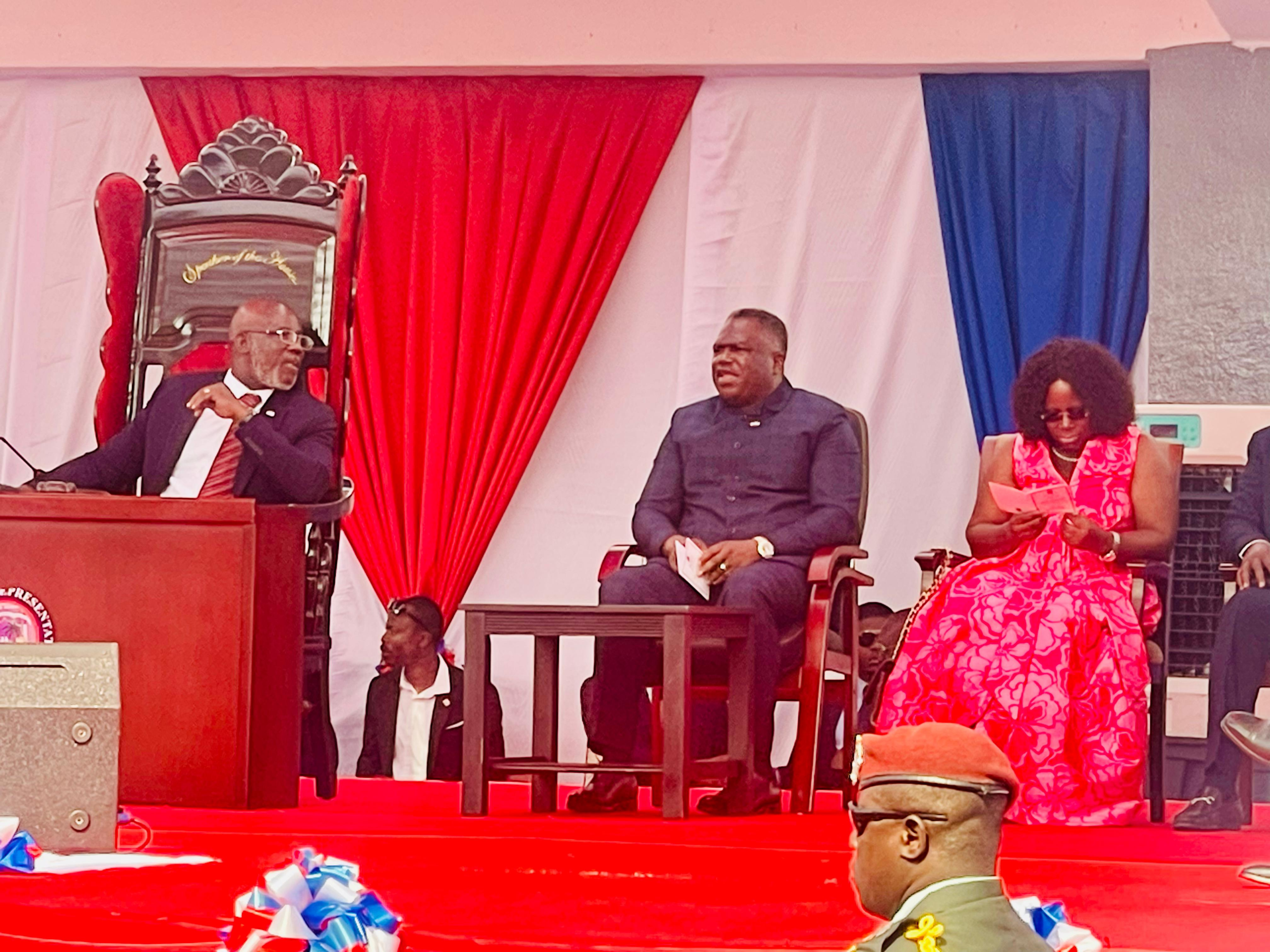
Delivering his State of the Nation Address on Monday, President Boakai told lawmakers that disciplined fiscal management, sound economic policies, and stronger partnerships have begun restoring stability and confidence in the Liberian economy.
“As of 2024, the economy showed resilience, with steady growth, declining inflation, stronger reserves, and renewed momentum across key sectors,” Boakai said.
Growth Exceeds Forecasts, Inflation Drops Sharply
According to the President, Liberia’s 5.1 percent growth in 2025 exceeded both the 4.6 percent forecast and the 4.0 percent growth recorded in 2024, driven largely by strong performance in mining, agriculture, fisheries, and services.
Mining expanded by 17 percent, while exports surged by 31.5 percent to approximately US$2.1 billion.
Inflation, he disclosed, fell to 4 percent by December 2025, the lowest level in more than two decades, down from 10 percent when his administration took office in 2024.
“These achievements signal effective monetary and fiscal policies,” the President said.
Stronger Reserves, Stable Currency
President Boakai reported that gross international reserves increased from US$475 million in 2024 to US$576 million in 2025, while net international reserves exceeded IMF targets, potentially reaching US$280 million by year-end.
Since September 2025, the foreign exchange market has remained stable, supported by fiscal discipline, improved liquidity management, and strong export earnings. The Liberian dollar appreciated by at least 3 percent against the US dollar.
IMF Targets Met, Donor Support Reaffirmed
Boakai said Liberia met nearly all IMF Performance Criteria in June 2025, reaffirming the government’s commitment to macroeconomic reforms under the Extended Credit Facility (ECF).
Despite a sharp cut in donor support in mid-2025 that disrupted social and economic programs, the government instituted emergency fiscal controls and protected spending in health and education.
Reaffirmed donor commitments for 2025 totaled US$381 million, including US$63 million in direct budget support, while nine financing agreements worth US$334.98 million were concluded to support infrastructure, human capital, and natural resource management.
Record Domestic Revenue, Supplemental Budget Ahead
Calling last year’s donor shock a “wake-up call,” President Boakai said the administration accelerated domestic revenue reforms, yielding historic results.
For FY2025, total revenue reached US$885.8 million, exceeding the target by US$5.1 million, while domestic revenue alone hit US$847.7 million, the highest ever recorded in Liberia.
That figure represents a US$148 million increase over 2024, the largest single-year gain in the country’s history. Over two years, domestic revenue has risen by US$235.7 million.
On the back of the strong performance, Boakai announced that a supplemental budget will be submitted to the Legislature next month—the first in many years.
Debt, Spending, and Reforms
Public debt stood at US$2.8 billion as of December 2025, with US$1.2 billion in domestic debt and US$1.6 billion in external debt. The government paid US$120.1 million in debt service in 2025 and remains largely current on its obligations.
The President disclosed that reforms are underway, including tighter tax exemptions, enactment of the Tax Expenditure Bill, and preparations to implement a Value-Added Tax (VAT) by 2027.
Investment Deals, Jobs, and Cost-of-Living Relief
Boakai highlighted approximately US$4 billion in committed investments, including agreements with ArcelorMittal Liberia and Ivanhoe for the Yekepa–Buchanan rail corridor, alongside plans to reactivate the Putu Iron Ore Mine.

In the energy sector, eight new petroleum agreements signed in 2025 could attract US$800 million in investment.
On cost-of-living relief, the President said prices of essential commodities have eased, with 25kg bags of rice selling at US$14.50, flour at US$35 per 100lb, and fuel stabilizing at around US$4 per gallon.
He warned businesses against price exploitation, stating:
“Businesses that exploit consumers will be held accountable.”
Jobs and Outlook
The President reported that over 70,000 short- and medium-term jobs were created in 2025, with the Youth Entrepreneurship and Investment Bank expected to support 30,000 youth-led businesses, generating more than 120,000 jobs.
Looking ahead, Boakai projected growth above 5 percent in 2026, with average growth of about 6 percent between 2026 and 2028, driven by infrastructure investment, agriculture, and private-sector expansion.
The President’s address continues.