Author: Diko D Andrew | Published: 3 hours ago
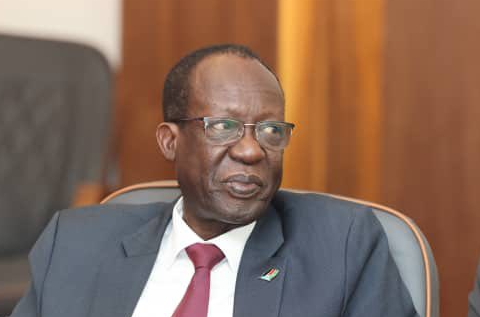
FILE PHOTO: Minister of Labour, James Hoth Mai – Courtesy of OPPU
JUBA, South Sudan (Eye Radio) – The Ministry of Labour, in collaboration with international development partners, has announced a major push to strengthen migrant worker policies to ensure the protection of their rights within South Sudan.
Over the weekend, a high-level engagement brought together key stakeholders from various states and administrative areas. The meeting focused on aligning South Sudan’s workforce policies with regional and international standards, specifically focusing on fair recruitment and the prevention of discrimination.
Speaking at the conclusion of the event, the Minister of Labour, Gen. James Hoth Mai, reaffirmed the government’s commitment to modernizing labour governance.
“The Ministry of Labour is committed to aligning labour governance with international standards, including fair recruitment, non-discrimination, and decent work,” Minister Hoth stated. He added that organizing migrant workers is a key part of the country’s commitment to the IGAD Migration Policy Framework and the Free Movement Protocol. “Strengthening unions is part of building a transparent, accountable, and rights-respecting labour system.”
The Undersecretary at the Ministry of Labour, Deng Tong, echoed these sentiments, drawing on the historical experience of South Sudanese citizens who lived abroad as refugees.
“Most of us South Sudanese grew up in foreign countries and were protected; now that you have come to our country, we will accord you the same protection and support,” Tong said. He also reminded migrant workers of their obligations, adding, “As a regulator, I urge you to comply with the laws of South Sudan so that the Ministry is in a good position to protect you.”
Representing the International Labour Organization (ILO), Adia Awil praised the dedication of the participants, noting that their presence on a Sunday demonstrated a deep commitment to the cause.
“The ILO remains committed to supporting capacity-building for workers’ unions and labour institutions in the country,” Awil emphasized.
The engagement is expected to lead to a more robust framework for labour migration, ensuring that South Sudan remains a fair and regulated environment for all workers, regardless of their origin.