Chairman of the Senate Committee on Aviation, Dr AbdulFatai Buhari, has declared that Joint Accounts Committee and lack of financial autonomy are the major factors hindering development at the local government level.
Buhari, who represents Oyo North on the platform of All Progressives Congress, APC, explained that JAC allows state governments to manage funds meant for local councils and this often leads to misappropriation or diversion of funds meant for local government projects.
The lawmaker made these assertions while delivering a lecture at the grand finale of 3rd anniversary of Ibadan Mega Voice on Sunday.
The event was attended by Balogun of Ibadanland, Oba Tajudeen Abimbola Ajibola, Chief Executive Officer of Eternal Home Cemetery, Dr Adebukola Kadiri, member representing Egbeda/ Ona Ara federal constituency, Akin Alabi, Governor, Agbekoya Farmers Society of Nigeria, Oyo State Chapter, Chief Ashagidigbi Olatunde Bello and Aare Onibon Olubadan-designate, Oloye Abiola Iyiola.
In the lecture titled ‘Local government autonomy in Nigeria: The impact, prospects and challenges’, Buhari said that the absence of autonomy produces adverse outcomes at the local government level.
He said that many local governments in Nigeria suffer from stunted development because of their dependence on state governments as a result of JAC system.
He lamented that this has reduced local governments to mere administrative agents rather than autonomous development institutions.
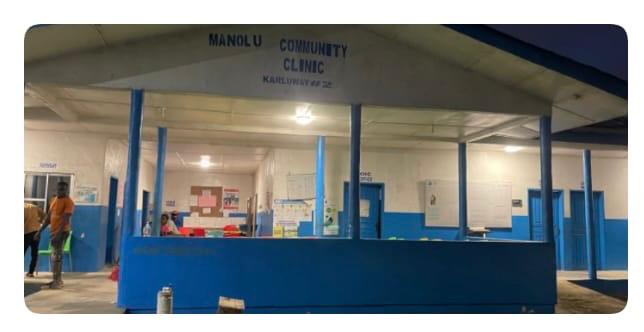
Buhari said, “Conversely, the absence of autonomy produces adverse outcomes. Many local governments in Nigeria suffer from stunted development because of their dependence on state governments. For instance, local councils in Ebonyi State were unable to complete primary health centre projects because state governments withheld funds from the joint account.
“Similarly, in Oyo State no local government has completed and commissioned 5 kilometers inner road since 2019, political interference in council affairs has led to poor budget execution, non-implementation of projects and abandoned projects.
“The broader implication is that local governments, designed to be the engines of grassroots development, are reduced to administrative extensions of state ministries. This systemic dependency has eroded public confidence in the local government system and weakened Nigeria’s broader developmental framework.
“Financial dependence is another critical challenge. The joint account system allows state governments to manage funds meant for local councils, often leading to misappropriation or diversion. This has reduced local governments to mere administrative agents rather than autonomous development institutions; such financial dependence has rendered local councils “fiscally impotent and administratively irrelevant.
“Furthermore, limited internal revenue generation capacity restricts autonomy. Many local governments rely almost entirely on statutory allocations and fail to explore creative ways of increasing internally generated revenue. Without financial independence, autonomy remains theoretical.
“The absence of transparent auditing systems and citizen participation platforms creates loopholes for mismanagement. State governments often justify their control by citing corruption and inefficiency at the local level, creating a paradox where over-regulation further weakens performance.”