By Foday Moriba Conteh
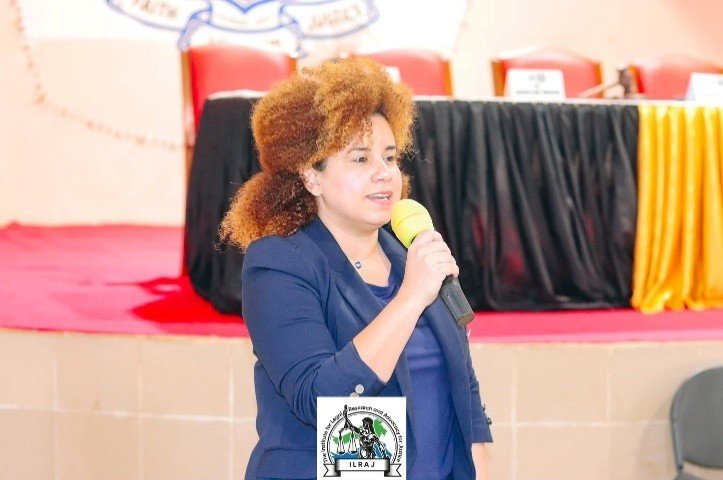
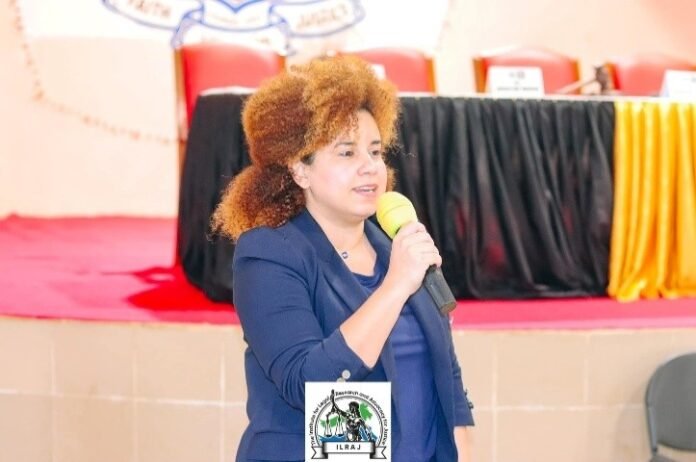
The Institute for Legal Research and Advocacy for Justice (ILRAJ) has issued a strongly worded position paper on the Constitution of Sierra Leone (Amendment) Bill 2025, warning that several proposed changes could undermine democratic governance and entrench ruling-party dominance if left un-amended.
Presenting its position in a press statement, ILRAJ said Sierra Leone’s 1991 Constitution, reinstated after years of one-party rule and civil war, was designed to prevent concentration of power and safeguard multi-party democracy. However, the organization cautioned that the country’s constitutional history shows how amendments can be manipulated for political expediency, citing the 1978 Constitution that ushered in one-party rule and the controversial revival of district block proportional representation during the 2023 elections.
ILRAJ recalled that the disputed 2023 multi-tier elections, which returned President Julius Maada Bio with 56.17 percent of the vote, exposed deep flaws in the electoral system. The opposition All People’s Congress rejected the results, alleging irregularities in tabulation and census data. International observers, including the European Union and the Carter Center, also raised concerns over voter registration, turnout figures and transparency. The crisis was later addressed through the October 2023 Agreement for National Unity and the Tripartite Committee, which produced 80 reform recommendations in July 2024.
According to ILRAJ, the 2025 Amendment Bill, while claiming to address electoral issues, departs significantly from both the Tripartite Committee’s recommendations and the earlier Cowan Constitutional Review Committee proposals, raising fears that it could be used to consolidate political power rather than strengthen democracy.
ILRAJ acknowledged that the Bill introduces some positive changes, including renaming the Electoral Commission as the National Electoral Commission (NEC), setting higher qualification standards for commissioners and creating a broad-based Search and Nomination Committee. However, it criticized the absence of explicit non-partisanship requirements, such as bans on party affiliation or cooling-off periods for former politicians, warning that this gap could allow partisan capture of the Commission.
The organization noted that allowing independent presidential candidates could widen political participation, but warned that vague requirements on “financial capacity and community support,” to be defined later by law, risk creating economic barriers that favour wealthy elites and ruling-party interests. ILRAJ cautioned that without clear constitutional safeguards, this provision could undermine genuine political competition.
ILRAJ expressed concern over the Bill’s formal introduction of proportional representation and the deletion of Section 38A, which previously allowed temporary electoral arrangements. It argued that these changes were made without the broad national dialogue recommended by the Tripartite Committee, risking partisan imposition of an electoral system that could skew outcomes in favour of the ruling party.
The organization also criticized the proposed reduction of the presidential election threshold, warning that lowering the bar for first-round victory could produce leaders with weak mandates and distort the principle of equal voting power across districts.
ILRAJ described provisions allowing Parliament to remove a President or Vice-President following expulsion from their political party as particularly dangerous in a highly polarised political environment. While acknowledging the need to clarify procedures following past legal controversies, the group warned that such clauses could be abused to unseat elected leaders through internal party disputes rather than democratic processes.
While welcoming efforts to speed up the resolution of election petitions, ILRAJ criticized the proposed three-day filing window for petitions as unrealistically short and inconsistent with international standards. It also raised concerns that assigning administrative notification duties to the Chief Justice could blur the separation of powers and undermine judicial independence.
ILRAJ said fixing election dates could improve predictability but questioned the choice of November, citing risks linked to holiday periods and logistical challenges. The group further stressed that amendments affecting entrenched constitutional provisions must comply strictly with Section 108 of the Constitution, including parliamentary supermajorities and approval through a national referendum.
Overall, ILRAJ acknowledged the Bill’s stated intentions to improve electoral integrity and inclusivity, including provisions for gender representation. However, it warned that without substantial revisions, the Bill could become “a blueprint for one-party dominance,” echoing the authoritarian precedents of the past.
The organization urged Parliament to halt or fundamentally revise the Bill, calling for inclusive national dialogue, strict adherence to past reform recommendations and where necessary, public referendums to ensure that constitutional changes strengthen rather than weaken Sierra Leone’s democracy.