By Ibrahim Sesay
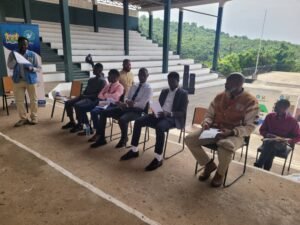
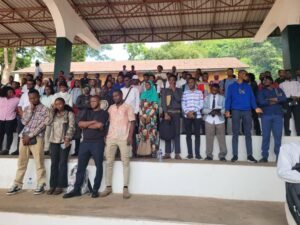
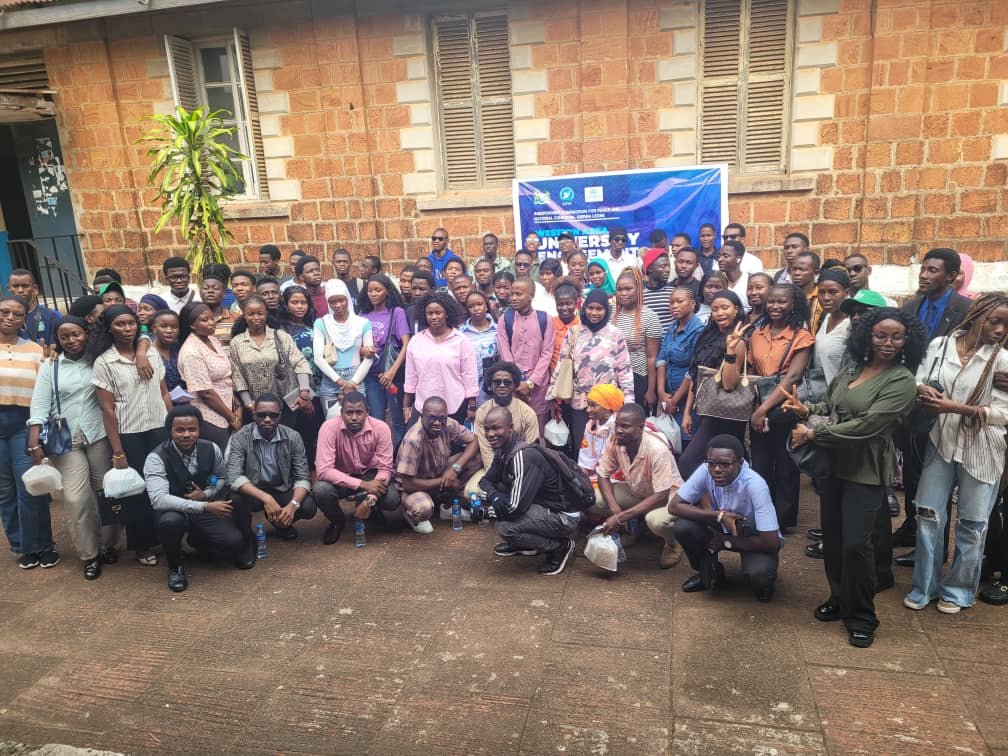
The Independent Commission for Peace and National Cohesion (ICPNC) has on Tuesday, December 16, 2025 convened a university engagement forum at the Fourah Bay College (FBC) Amphitheatre, bringing together students from Fourah Bay College, the Institute of Public Administration and Management (IPAM), Limkokwing University, Milton Margai Technical University, Freetown Polytechnic to discuss the role of students in promoting national peace and social cohesion.

The event, which was held under the theme: “Students as Catalyst for National Peace and Social Cohesion,” featured a panel discussion that explored youth inclusion in decision-making, campus governance and peaceful means of resolving conflicts within institutions of higher learning.
Opening the engagement, the Deputy Registrar of Fourah Bay College, Brima Bah, thanked ICPNC for selecting the university, describing the choice as appropriate given the diversity of students on campus. He noted that institutions of learning bring together people from different backgrounds who learn to coexist beyond the lecture rooms.
“For students to take responsibility as catalysts for peace and cohesion there cannot be a better place than an environment like this,” Brima Bah said, adding that students must become agents of peace and change in society.
Responding to a question on the extent to which young people are included in Government decision-making, Salifu Sesay, a civil engineering student at FBC, said youth participation remains limited. He highlighted that young people are often only engaged during political campaigns, with little consultation on policies that affect them afterward.
Salifu Sesay cited the recent decision to abolish class representatives on campus as an example of poor consultation, noting that students were not adequately engaged before the policy was implemented. While acknowledging that the administration may have its reasons, he emphasized the need for dialogue, urging students to pursue peace and constructive engagement rather than confrontation.
Final-year law student at FBC, Victor Samuel Bob Smart, offered a slightly different perspective by commending President Julius Maada Bio for appointing young people to key governance positions. He described the development as a step in the right direction. He called on young people to reflect on their own preparedness and contribution to governance.
“We as young people must ask ourselves what we have done to be included,” Victor Samuel Bob Smart said, encouraging students to adopt growth mindsets and move beyond partisan divisions. He also highlighted the practical challenges posed by the absence of class representatives, particularly in coordinating academic activities.
Addressing measures being put in place to ensure peace and cohesion on campus, the Acting Warden of Students, Pastor Fareed Bangura, said the administration maintains regular engagement with students beyond election periods. He dismissed claims that consultations only occur during elections, noting that he personally meets with student groups almost every month to address concerns.
On the abolition of class representatives, Pastor Fareed Bangura explained that the decision was taken at a higher administrative level, emphasizing that while students have rights, those rights can be temporarily withheld if their exercise leads to violence or actions that undermine the institution’s image.
He added that although students were not formally consulted, several attempts had been made over the past two years to conduct elections, with continuous engagements aimed at reaching consensus.
During the recommendation session, Pastor Fareed Bangura called for a review of outdated university laws and urged students to reprioritize their purpose on campus.
Salifu Sesay reiterated the need for students to utilize existing institutional structures to address grievances instead of resorting to violence.
Contributing from Milton Margai Technical University, John Bobson Massah noted that peace begins at the individual level, stating that students must first be at peace with themselves before they can promote peace within their institutions and society.
The ICPNC engagement concluded with a call on students to see themselves as key actors in fostering dialogue, tolerance and social cohesion both on campus and nationally.