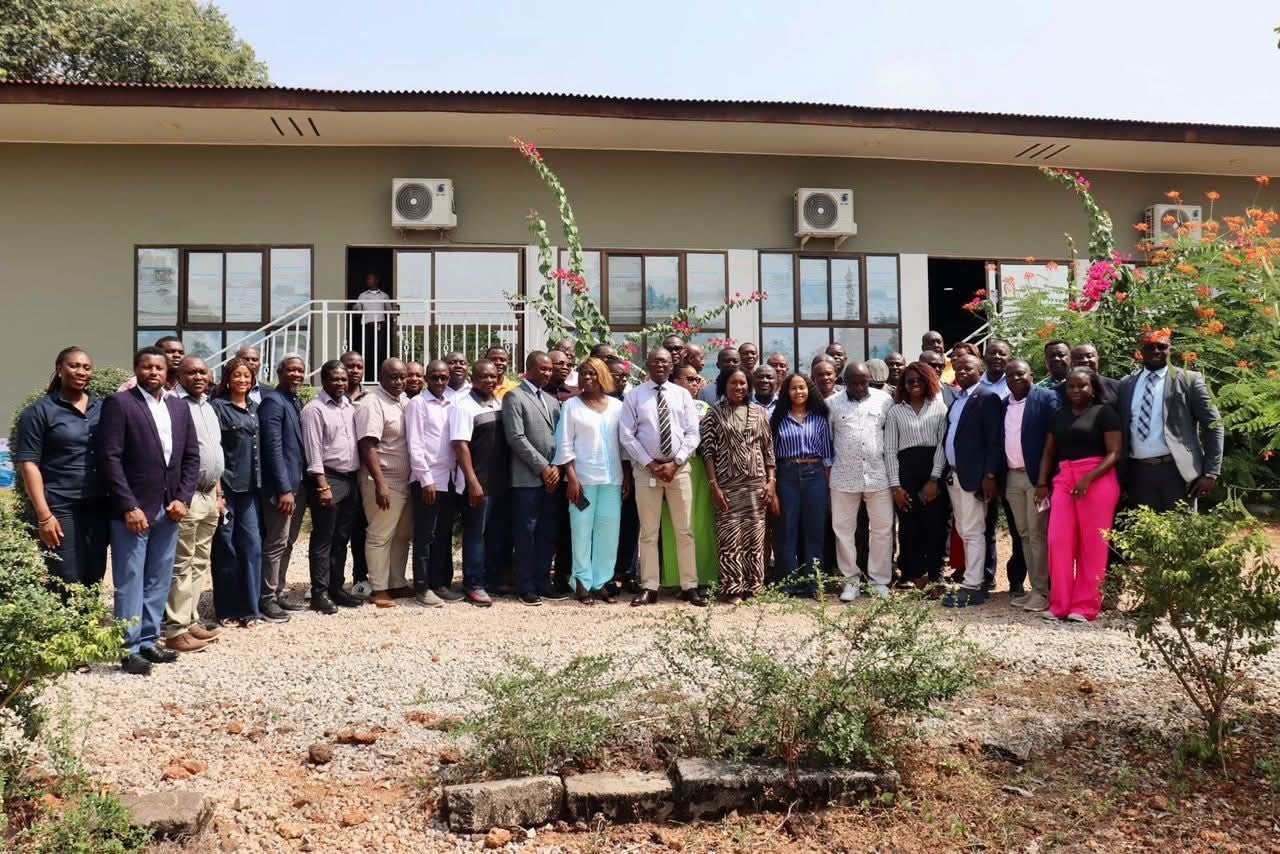
The Leadership and Senior Management staff of the Ministry of Finance on Thursday, January 15, 2026, commenced a three-day Strategic Management Retreat aimed at reviewing the Ministry’s performance in 2025 and repositioning it to roll out key economic policies for 2026.
The retreat is expected to assess the achievements and challenges recorded in 2025 while also examining the Ministry’s Strategic Plan for 2024–2026, with a focus on strengthening domestic revenue mobilization and improving service delivery across the country.
Opening the retreat, Financial Secretary, Matthew Dingie, welcomed participants and described the engagement as a timely platform to re-examine the Ministry’s overall performance as well as that of its various departments.
According to him, the retreat provides an opportunity for leaders to reflect on lessons learned, identify gaps and outline practical strategies that will guide the Ministry’s work throughout 2026.
He acknowledged that 2025 presented significant challenges but praised the economic management team for ending the year on a strong note, noting that Sierra Leone achieved almost all its macroeconomic targets.
Financial Secretary, Mathew Dingie, commended staff of the Ministry of Finance and other institutions within the broader economic management team for their commitment to meeting benchmarks and targets agreed with development partners; efforts he said have the potential to unlock additional avenues for resource mobilization.
He further stressed that the Ministry of Finance has the primary responsibility of mobilizing resources required to fund Government programmes and national development projects.
It was against that backdrop, he explained, that the retreat adopted the theme: “Repositioning the Ministry of Finance to Enhance Domestic Revenue Mobilization for Sustainable Economic Stability and Service Delivery.”
The Financial Secretary urged Directors and Senior Technical Staff to develop strong policies and programmes for 2026 that will directly support the Government’s national development drive, particularly the Big Five agenda, which remains a key priority in the administration’s reform and delivery framework.
In her statement, Deputy Minister of Finance I, Kadiatu Allie, described the retreat as a period of deep reflection on the Ministry’s successes and challenges, and an opportunity to identify ways of improving institutional performance going forward.
She said the engagement should further strengthen leadership responsibility around accountability and transparency, while helping to assess progress made in key areas of public finance management.
Deputy Minister, Kadiatu Allie, highlighted several focus areas for discussion during the retreat, including budget credibility and processes, debt management, revenue mobilization, the deepening of financial and macroeconomic reforms and improved expenditure management.
She also called for stronger and more impactful social spending in critical sectors such as education, health, agriculture and support to local councils, noting that sound economic management must translate into improved outcomes for citizens.
The retreat, which lasted three days, featured presentations and discussions on leadership development, professionalism and institutional reforms. Participants will also review the Ministry’s strategic plan and ongoing economic programmes being implemented with development partners.
Key sessions include presentations on the attributes of good leadership and professionalism by consultant Modupe Taylor-Pearce, deliberations on the revised Civil Service Code and Rules and discussions on administrative and policy priorities expected to shape the Ministry’s 2026 operational direction.