By Synthia Lateu
Health experts in Cameroon say HIV treatment has significantly improved in recent years, but the rise of faith-based organisations claiming to “heal” the disease continues to undermine progress.
According to Scot Midi Ndedi, Littoral HIV Coordinator at the Presbyterian Church in Cameroon (PCC), the obstacles come not only from patients but also from social influences where stigma and misinformation remain widespread.
“Faith-based organisations are now one of our biggest challenges because they claim they can heal HIV,” he said. “We face a lot of difficulties counselling patients and bringing them back to treatment because these organisations often tell them they are healed.”
He urged the government already working in synergy with traditional rulers and pastors to hold such groups accountable.
Midi added that not all patients tolerate HIV medications well, and those experiencing side effects often struggle to stay on treatment. “Some patients complain they can’t even take the medication,” he said.
Because HIV has no cure and is managed through daily antiretroviral therapy, Liki Winifred, HIV Care and Treatment Support Supervisor, says sustaining patients’ hope remains a tough task.
“You find patients who tell you they are tired of taking medications. They ask, ‘Does it mean I will be on treatment for life?’ Others ask, ‘If I stop, what will happen to me?’” she recalled, adding that in such situations, she shows empathy and encourages them to continue.
Midi explained that the introduction of Dolutegravir in 2018, 2019 and 2020 has changed the dynamics of HIV treatment in Cameroon. The drug, he said, has fewer resistance barriers and works rapidly.
“When you start taking Dolutegravir, the viral load drops within three to four months. It’s very effective,” he noted, speaking as Cameroon marked World AIDS Day on December 1.
Across Cameroon, 17,673 people tested HIV positive in 2024, according to the World Health Organization, reflecting a decline from previous years. But despite this drop, the government cautions that the country still faces a generalised epidemic, with low prevalence in the general population but significantly higher rates among key populations.
As the Littoral region commemorated this year’s International Day to Fight Against HIV/AIDS, celebrated alongside Cameroon’s Month of HIV Awareness, the Coordinator of the Regional Technical Group for the Fight Against AIDS, Nicole Ntamack Yongo, noted progress in that part of the country.
She said the region has about 91,800 people living with HIV, and 93% have been tested. Some 72,300 people are currently on treatment. The region’s HIV prevalence stands at 2.4%, with seropositivity continuing to improve in 2024.
“This progress is evidence of the efforts made by the Cameroonian government and its bilateral partners,” she said. “The strategies implemented by different HIV response actors are being respected by the people living with HIV.”
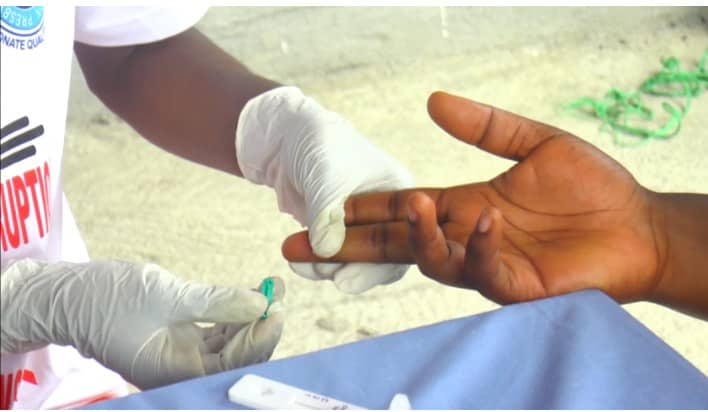
Health actors say continued awareness-raising, testing, and treatment campaigns remain essential as Cameroon works toward achieving national HIV control targets.
Spread the love