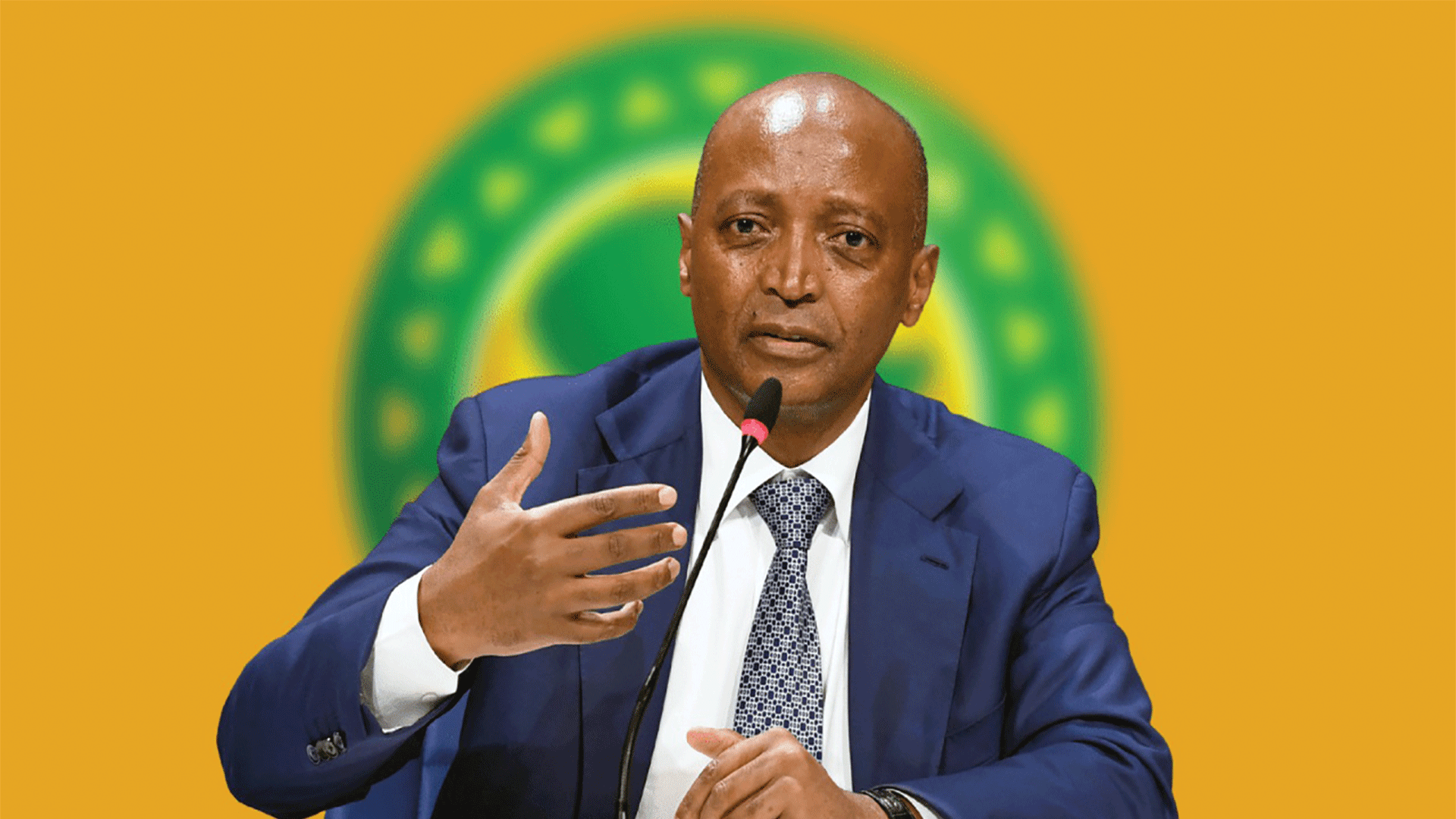
The Confederation of African Football (CAF) is undergoing a financial transformation that is reshaping the landscape of football across the continent. At the center of this change is CAF President Patrice Motsepe, whose leadership has ushered in a period of unprecedented investment and reform.
One of the most striking developments is the annual financial contribution of $1 million (approximately P13, 373, 320.00) that CAF now provides to each of its 54 member associations, a figure that is five times the previous allotment of $200,000 (around P2,674,664.00) per association. This leap in funding marks a significant milestone in African football, signaling a commitment to strengthening the game at all levels.
To appreciate the magnitude of this increase, one must consider the historical context. Before Motsepe’s tenure, CAF’s financial support to member associations was modest and often insufficient to meet the growing demands of football development across Africa. The previous annual allocation of $200,000 per member association was a fraction of what is now on offer. This financial constraint limited the ability of many associations to invest adequately in infrastructure, youth development, and competitive programs. Motsepe’s reforms have not only quintupled this support but also introduced a more strategic approach to resource allocation aimed at sustainable growth.
Patrice Motsepe, a South African billionaire and mining magnate, took office as CAF president in 2021. His business acumen and commitment to transparency have been pivotal in reversing CAF’s financial woes. When Motsepe assumed leadership, CAF was grappling with a deficit of $45 million. Through rigorous financial management, increased commercial partnerships, and enhanced revenue streams, Motsepe has steered the organization back to profitability, with a reported net profit of $9.48 million for the 2023-2024 financial year. This turnaround has laid the foundation for the increased funding now being disbursed to member associations.
Central to CAF’s improved financial health are reforms in competition scheduling and prize money. Motsepe has aligned CAF’s tournament calendar with the global football calendar, reducing conflicts with European club commitments and enhancing the marketability of African competitions. Prize money for flagship events like the Africa Cup of Nations (AFCON) has seen a dramatic boost, with the 2025 winner’s purse rising to $10 million, double the amount awarded in previous editions. These changes have attracted new sponsors and expanded broadcasting rights deals, generating significant additional revenue.
Broadcasting rights, in particular, have become a major revenue source for CAF. The 2025 AFCON tournament is projected to generate nearly $193 million in total revenue, with approximately $47 million stemming from media rights. This influx is critical not only for CAF’s coffers but also for the member associations that benefit from the redistributed funds. Enhanced media coverage has also elevated the profile of African football globally, creating new commercial opportunities for players, clubs, and national teams.
The increased funding from CAF is designed to address multiple facets of football development across Africa. Beyond the direct financial support to member associations, Motsepe’s administration has prioritized youth football, women’s football, and grassroots initiatives. Investments in these areas are seen as essential for building a competitive and inclusive football ecosystem. For instance, CAF has earmarked substantial resources for youth football development programs, which aim to nurture talent from an early age and provide pathways to professional careers.
This financial uplift comes at a crucial time for African football, which is gaining prominence on the world stage. South Africa’s qualification for the 2026 FIFA World Cup symbolizes the continent’s growing competitive stature. The increased resources from CAF will help member associations like SAFA to not only maintain their competitive edge but also to build sustainable football ecosystems that can thrive long after the tournaments end.
Motsepe’s reforms also extend to governance and transparency within CAF. His leadership style emphasizes zero tolerance for corruption and the reinvestment of funds into football development rather than administrative overheads. This approach has garnered praise from many corners of the football community and has helped restore confidence in CAF as a credible and effective governing body.
Looking ahead, the new funding model sets a precedent for African football’s future. By substantially increasing financial support to all member associations, CAF under Motsepe is fostering a more level playing field where even smaller associations can aspire to compete and develop their football programs. This inclusivity is crucial for the long-term growth of the sport across Africa, ensuring that talent from every corner of the continent has the opportunity to shine.
The P13.4 million annual funding per member association marks more than just a financial increase; it reflects a broader vision for African football led by Patrice Motsepe. His reforms have revitalized CAF’s finances, enhanced the competitive allure of its tournaments, and prioritized investment in the future of the game. For South Africa and its fellow member associations, this financial boost offers a new chapter filled with promise, ambition, and the chance to elevate African football to new heights on the global stage.
This growing financial muscle could well be the catalyst that propels African football into a new era of excellence, visibility, and pride. The era of modest funding is over. Under Motsepe’s stewardship, African football is stepping boldly into a future where its potential can finally be fully realized.
Post Views: 59