Analysts have highlighted stalled budgetary progress and pre-election politicking as some of the top risks to the upward review in the growth projections for Nigeria in 2026, as done by the International Monetary Fund in the past week.
The PUNCH reported that the International Monetary Fund projected that Nigeria’s economy will grow by 4.4 per cent in 2026 in the January 2026 edition of its biannual World Economic Outlook. According to its latest report, the IMF hinged growth across sub-Saharan Africa on Nigeria, as the sub-region is expected to strengthen to 4.6 per cent in 2026 and 2027.
“Growth is also expected to accelerate in sub-Saharan Africa, from 4.4 per cent in 2025 to 4.6 per cent in 2026 and 2027, supported by macroeconomic stabilisation and reform efforts in key economies,” the report partly read.
The IMF’s 2026 revised growth projection for Nigeria of 4.4 per cent broadly aligns with Afrinvest’s estimate of 4.3 per cent as captured in its 2026 Macroeconomic Outlook Report.
The projections by Afrinvest were predicated on what it considered to be ongoing strategic private-sector investments in telecommunications (5G network investments by MTN Nigeria and Airtel Africa), oil & gas (Dangote refinery expansion and Tony Elumelu’s acquisition of a majority stake in SEPLAT), agriculture (KONIG Agriculture Ltd’s $42.0m mid-term investment in Ondo State), and finance & insurance (sector-wide recapitalisation) alongside carry-trade inflow prospects (with Nigeria’s elevated yields expected to attract high-yield-seeking foreign portfolio investors from Advanced Economies), which will be pivotal to Nigeria’s economic narrative in 2026.
EnterpriseNGR, a member-led professional policy and advocacy group, also projected a 4.49 per cent growth, which it said reflects a broad-based expansion across services, agriculture, trade, and telecommunications.
Highlighting the risks to the upward review, Afrinvest, in its weekly market research, said, “We are concerned that poor management of global geopolitical alignments, heightened pre-election politicking, and stalled budgetary progress (with the proposed N58.2tn 2026 budget yet to be ratified and passed) could materially undermine the growth outlook, given other subsisting structural constraints such as insecurity and weak infrastructure.
“The projected subdued global trade outlook for 2026 (with volume growth weakening to 2.6 per cent from 4.1 per cent in 2025) could further hurt Nigeria’s macroeconomic prospects, given that net receipts from crude oil, which account for about 85.0 per cent of total exports, are expected to contribute roughly 35.6 per cent of the FG’s targeted N34.3tn in budgeted revenue.
“Overall, we emphasise that effective fiscal management, de-escalation of the domestic political environment, and the rollout of people-centric policies with the potential to drive sustainable and inclusive growth will be paramount for Nigeria to navigate evolving global and domestic risks in the immediate and near term.”
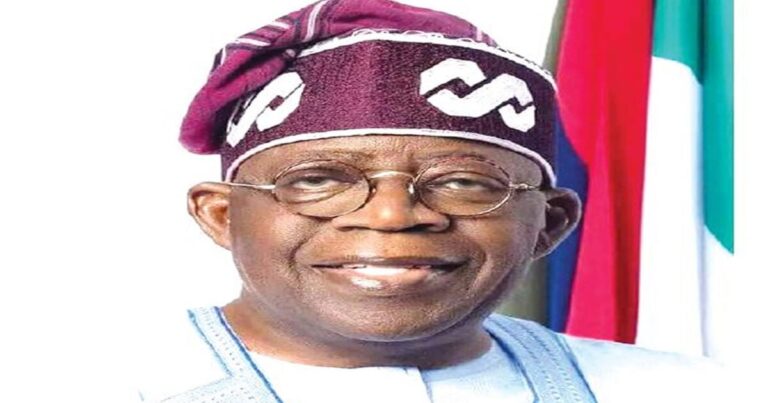
The PUNCH reports that President Bola Tinubu presented a 2026 Appropriation Bill of N58.18tn to the National Assembly, and the budget has yet to be passed into law. Expected revenue stood at N34.33tn, capital expenditure is estimated at N26.08tn, while recurrent non-debt expenditure stands at N15.25tn. Debt servicing is projected at N15.52tn, with a budget deficit of N23.85tn.
EnterpriseNGR also holds a positive view of the oil & gas sector, saying, “The oil sector is also anticipated to make modest gains with improved security and operational stability. This assumes continuity of recent reforms in fiscal management, foreign exchange liberalisation, and infrastructure investment. Nigeria’s crude oil production is expected to average 1.5 million barrels per day in 2026. Brent crude prices are projected to remain in the $61 per barrel range, with Nigerian Bonny Light crude typically trading at a slight premium due to its high quality. This balances production capacity, security considerations, and global market trends, while also factoring in the impact of domestic refining and planned production expansion.
“Nigeria’s oil sector is set for steadier performance in 2026, aided by domestic refining expansion and stable prices.”