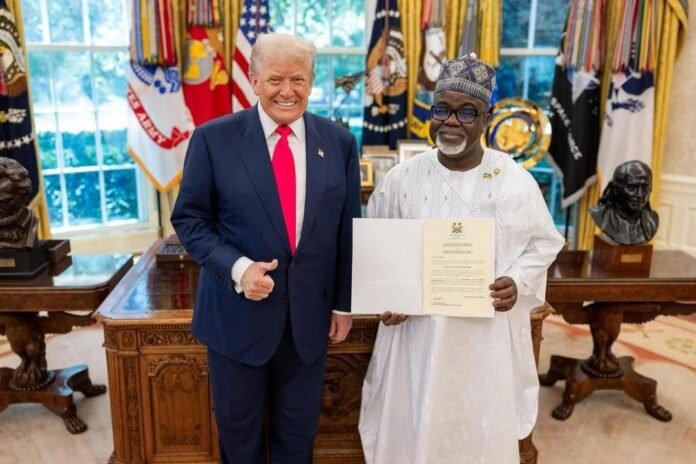
Sierra Leoneans in the United States are reeling from a new wave of immigration restrictions after President Donald Trump announced a “permanent pause” on migration from what he describes as “third world countries,” placing Sierra Leone among 19 nations now classified as “countries of concern.” The move has sparked widespread anxiety among families, students, workers and the broader diaspora community, many of whom already face visa uncertainties and stalled immigration processes.
The latest clampdown follows the November 27, 2025, shooting near the White House involving an Afghan national, an incident that U.S. authorities say triggered a reassessment of vetting and green card issuance policies. Although Sierra Leone had no connection to the incident, the nation once again finds itself caught up in sweeping immigration actions that place additional strain on its citizens.

While many Sierra Leoneans abroad view these developments as unfortunate, analysts argue they are the predictable result of years of limited diplomatic engagement in Washington, D.C. Despite longstanding warning signs, including sanctions dating back to 2017, successive Governments have failed to build a strong, strategic presence capable of advocating for Sierra Leonean nationals in times of heightened scrutiny.
The U.S. designation of Sierra Leone as a “recalcitrant country” more than eight years ago, due to insufficient cooperation over deportations, opened the door to recurring visa sanctions. Restrictions were expanded in June 2025, affecting B-1/B-2 visitor visas, F and M student visas, J exchange visas and most immigrant visas. Only immediate relatives and limited special categories were exempted.
With the latest directive, U.S. Citizenship and Immigration Services (USCIS) is now reviewing green cards previously issued to Sierra Leoneans;a measure that could lead to revocations or removals, particularly for those flagged over visa overstays or documentation concerns. The policy affects a portion of the 3.3 million green card holders from the newly labeled “countries of concern,” intensifying fears of arbitrary detentions and deportations.
The consequences are immediate and deeply personal. Students seeking education in the United States face rejections that derail their academic ambitions and weaken Sierra Leone’s future human capital. Entrepreneurs and professionals who rely on U.S. travel to strengthen partnerships find their plans stalled. Tourism, business exchanges and remittances, vital pillars of the national economy are expected to decline as a result of the tightened rules.
Families are perhaps the hardest hit. Immigrant visa suspensions have delayed reunifications, leaving loved ones separated indefinitely. Many Sierra Leoneans say the stigma of being grouped among countries portrayed as high-risk has damaged their dignity and international standing. These restrictions also intensify brain drain, pushing skilled professionals to pursue opportunities in regions with more welcoming immigration policies.
Observers warn that Sierra Leone’s predicament is not inevitable. Several nations previously subjected to U.S. visa sanctions, including Ghana, succeeded in securing partial relief through strategic diplomacy and cooperation on deportation agreements. Others have hired U.S. lobbying firms to open channels with the White House, Congress and key policy influencers.
By contrast, Sierra Leone’s diplomatic footprint in Washington remains thin. The embassy struggles with limited resources and staffing gaps, partly attributed to appointments driven by political loyalty rather than competence. The absence of lobbyists, policy advisers and consistent engagement with American institutions has left Sierra Leone without the leverage necessary to negotiate exemptions or mitigate punitive measures.
Diplomatic experts argue that proactive engagement with the Trump administration, particularly on issues of security cooperation, deportation compliance and enhanced vetting, could help shift perceptions and potentially secure targeted waivers for Sierra Leonean nationals.
As thousands of Sierra Leoneans confront an uncertain future in the United States, pressure is mounting on the Government to adopt a more assertive foreign policy stance. Strengthening the embassy, recruiting skilled personnel, engaging diaspora leaders and investing in lobbying networks are among the urgent actions recommended to restore Sierra Leone’s credibility and safeguard its citizens.
Sierra Leone cannot afford to remain passive, critics warn. Without decisive diplomatic intervention, the nation risks continued marginalization in U.S. immigration policy; at great cost to its people, its economy and its international reputation.
For many families affected by the latest restrictions, one message is clear: the price of political inaction has become too high. Only strong representation in Washington can help reverse their fortunes.