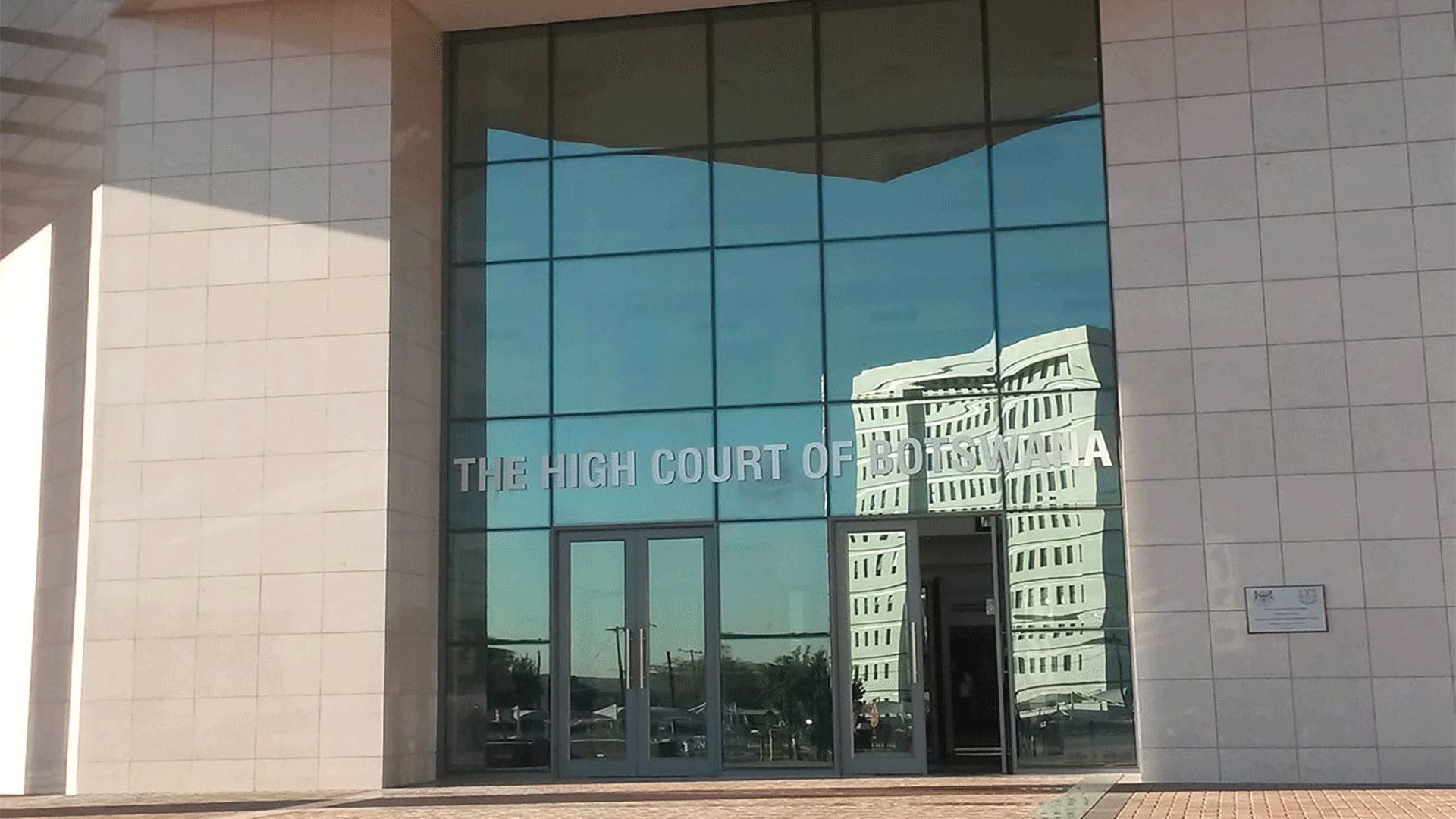
In the inheritance dispute between Dolly Kwelagobe and Masego Mokubung, culminating in an appeal against an eviction order issued by the magistrate’s court, the High Court has clarified that a title deed does not constitute definitive proof of ownership.
Presiding Judge Michael Moatlhabi held that, although a title deed constitutes prima facie evidence of ownership, the ultimate question of ownership remains a factual matter subject to verification or contestation through further evidentiary submissions.
The dispute arose from an order dated 15 September 2023, compelling the appellant, Ms. Kwelagobe, to vacate the property in question. Court documents reveal that Ms. Mokubung claims rightful ownership of the parcel by virtue of inheritance from her deceased mother. She presented a Fixed Period State Grant dated 3 December 2015 as documentary evidence of her title. Moreover, Mokubung contended that she originally acquired the property on behalf of her mother.
Conversely, Kwelagobe challenged Mokubung’s claim, asserting that it was her late father who purchased the property from the previous owner. She characterized the registration of the title deed in Mokubung’s name as “furtive and spurious,” maintaining that ownership rightfully belongs to her father rather than to Mokubung.
In addition to contesting ownership, Kwelagobe raised a procedural objection, questioning the jurisdiction of the Magistrate’s Court. She argued that the court lacked authority to adjudicate the matter due to the value of the property exceeding the pecuniary limits prescribed under Section 19 of the Magistrates’ Court (Amendment) Act.
Addressing these contentions, Kwelagobe stated, “The title deed’s existence is not even the one in dispute, but it is how it was acquired and who was then the true owner before the parties laid claim to the property. The appellant denies that the respondent is a bona fide owner; the appellant lays claim to the property as well, just like the respondent, and says she has witnesses. This makes it clear that a dispute of fact arises.”
Kwelagobe urged that the appropriate course was to remit the matter for a full trial to resolve the factual disputes, cautioning the court against mechanically applying the presumption that the holder of a title deed is the unassailable owner of the property.
Court records further disclose that Mokubung asserted in her pleadings that the title deed constituted the best evidence of ownership. She also indicated that her siblings acknowledged her as the rightful owner, supported by resolutions endorsed by the customary court and police.
Judge Moatlhabi observed that Mokubung’s stance was that the requirements of rei vindicatio do not entail a valuation of the disputed property and, therefore, the magistrate’s court lacked pecuniary jurisdiction.
“However, the two issues for determination are each exclusively dispositive, and having found that this matter needs to be referred to trial, it is dispositive of what was before this court,” the judge concluded.
Ultimately, Motlhabi found that given the material disputes of fact concerning the property’s acquisition, the matter could not be resolved on the basis of affidavits alone and must proceed to a full trial for thorough adjudication.
Post Views: 174