Staff Reporter
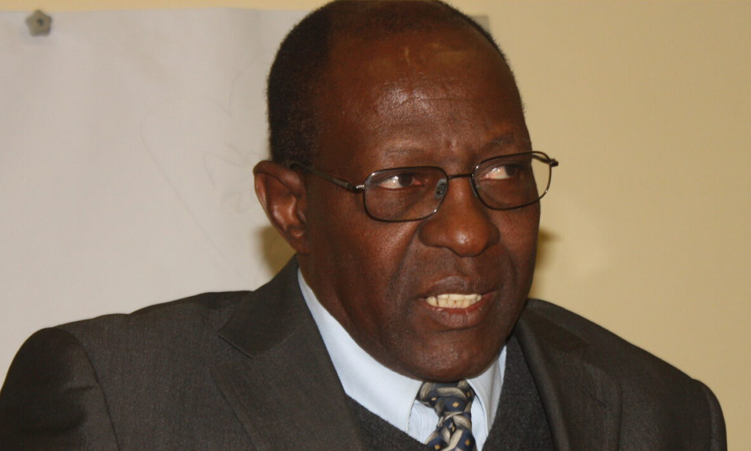
Dr Kaire M. Mbuende, Director-General of the National Planning Commission (NPC) of Namibia, said that, as the largest producer of uranium in Africa and the third-largest in the world, Namibia cannot shy away from the prospect of generating nuclear energy, especially when its raw materials fuel nuclear power plants around the globe.
Dr Mbuende made these remarks at the World Economic Forum Annual Meeting, held in Davos, Switzerland, during a high-level session on the Future of Nuclear Energy in Africa.
“There has been a wide-ranging debate in Namibia about the prospects for the development of the nuclear industry. The initial impetus came from the need to diversify the mining sector and to add value to the country’s mineral resources, including uranium, of which we are a major producer. The need for energy security has also been a crucial consideration. Energy is a driver of economic development and an indicator of the social and economic progress of any nation. As such, we regard access to affordable energy as a right to which all our people are entitled. Unfortunately, less than 60% of our population has access to electricity,” Dr Mbuende said.
He added that, as a result, Namibia imports 60% of its electricity supply from South Africa through the Southern African Power Pool. The locally generated capacity is made up of hydro (72.3%), solar (24.6%), coal (1.6%), and wind (1.1%).
“With rising energy demands in our neighbouring country, coupled with recurrent droughts due to the effects of climate change, Namibia could face energy insecurity if we do not take drastic measures. We are making efforts to optimise the use of solar and wind in our energy mix. The emerging oil and gas sector, along with hydrogen, could also help mitigate the energy deficit in Namibia. Nuclear energy generation has become a serious option that we are pursuing vigorously. To this end, we have developed a national strategy that encompasses the broader scope of the nuclear industry,” Dr Mbuende said.
He added that this strategy includes creating an appropriate governance structure, institution-building, human resource development, and establishing the viability leading to the commissioning of key nuclear projects, such as nuclear power.
“We are committed to ensuring that every step we take in developing the sector is in full compliance with the guidelines of the International Atomic Energy Agency (IAEA),” Dr Mbuende said.
He concluded by sharing that Namibia is excited by the advent of Small Modular Reactors, which are more flexible, safer, and more economical.
“To the best of our knowledge, two such reactors have been in operation for a couple of years, and many more are at various stages of development in several countries and will come online in the near future. We are keen to learn from the pioneers in this regard, rather than trying to reinvent the wheel. We intend to develop this sector in close collaboration and partnership with those who have proven knowledge and experience in the sector, as well as with financiers. We are committed to working with other African countries to share best practices, with a view to overcoming teething problems,” Dr Mbuende added.