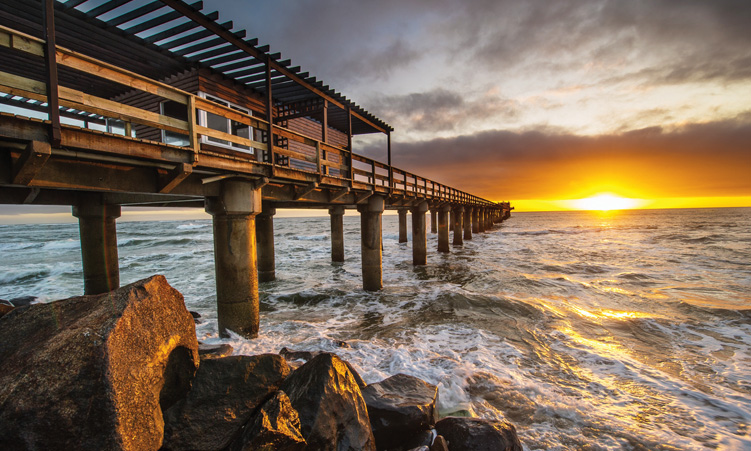
The road cuts across Namibia in long, patient lines from the central plateau, down into the Namib, west to the Atlantic, and finally north, where the land begins to speak in inherited names.
It is a country that resists haste. To move through it slowly is to be confronted, not comforted.
The Japanese philosophy of Kintsugi teaches that broken things are repaired with gold, not to erase damage, but to honour it.
The cracks are not hidden; they are made visible, strengthened. Travelling across Namibia recently, that philosophy felt less like metaphor and more like method. Each landscape offered a distinct condition for healing, and each place of rest along the way became part of the work. This was not escape. It was a deliberate leaving, in order to return whole.
Four places. Four geographies. A pilgrimage disguised as a road trip.
The Central Plateau: Recognising the Break
The journey began inland, where elevation has a way of reordering perspective. At Waterberg, the land rises abruptly, layered in reds, greens and ochres that feel almost excessive in their scale. Walking its trails, the body becomes aware of its limits quickly. Breath shortens. Thought slows.
The plateau does not soothe. It reduces. Against formations that have watched centuries pass without remark, personal urgency loses its authority. Problems do not disappear, but they stop pretending to be permanent. I hiked through lush green corridors, baboons behaved like they owned the place (which, frankly, they do) and birds sang in overlapping registers, as though competing for airtime.
In Kintsugi, this is the first stage: recognising the break. Before repair is possible, fragmentation must be seen clearly. The central plateau offers that clarity. It confronts visitors with their smallness not insignificance, but proportion; and in doing so, creates the first conditions for honesty.
The Namib Desert: Cleaning The Fractures
From the plateau, the road descends into the Namib, where excess gives way to restraint. The desert is precise. Nothing here survives without adaptation.
At Gondwana’s Namib Desert Lodge, the openness of the plains does quiet work. Days unfolded without urgency. Sitting on a veranda at dusk, watching shadows stretch across sandstone, my body began to slow simply because the land allowed nothing else. Desert Grace introduced a different discipline – one of intentional privacy.
The architecture contains the vastness just enough to turn reflection inward, offering stillness that feels structured rather than overwhelming. At Dune Star Camp, I spent a night beneath an unbroken sky of endless stars, here, exposure became the lesson. With no walls to lean against, humility arrived easily.
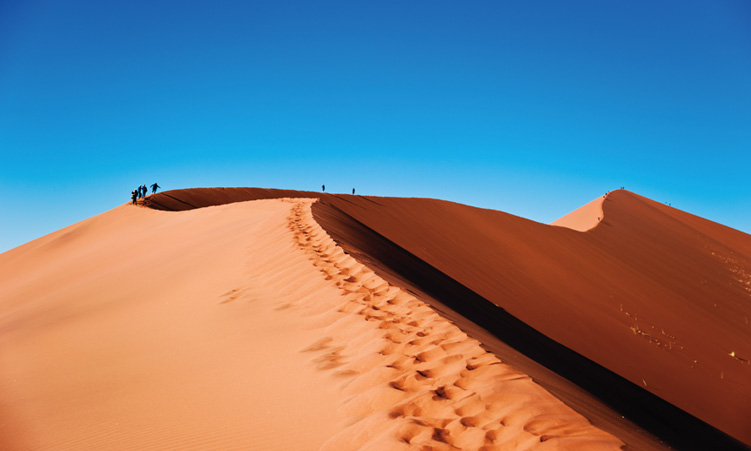
In Kintsugi, broken pieces are cleaned carefully before gold is applied. The desert performed this function without ceremony. It striped away performance, denial and noise. Climbing dunes at Sossusvlei reinforced the point: progress is incremental, resistant, often uncomfortable. Endurance here was not romantic. It was being negotiated, step by step. I’ve learned that stillness, in the desert, is not absence. It is discipline.
The Coast: Joining What Was Separated
Swakopmund arrived as contrast. Cool air replaced the heat. Movement replaced restraint. Staying at The Delight placed me close to the Atlantic without spectacle. Mornings began quietly; a cup of coffee, a low sky, along the sound of waves. The ocean moved constantly, unconcerned with effort or outcome.
I went to the ocean like one goes to an old confidant. I spoke about how long it had been since we last spoke – because grief, God and oceans all seem to understand being ignored and loving you anyway. I sat for hours, doing nothing. Which sounds indulgent until you realise how bad we are at it.
In Kintsugi, this is the joining stage, where fragments are aligned carefully, not forced into symmetry. The coast taught the same lesson. Sitting for hours by the sea, doing nothing, revealed how unfamiliar, unstructured time has become; and how necessary. Resistance softened. Thoughts passed through rather than settled. Healing here was not dramatic. It is cumulative. Flow replaced force.
The North: Pouring The Gold
Returning north was the final act. The place of origin. The place of naming. The place where identity is not theorised but inherited. Passing Oshivelo, my chest tightened in a familiar, unexplainable way – my body recognised what language arrived late to name.
“Ondathika kegumbo”. I have arrived home.
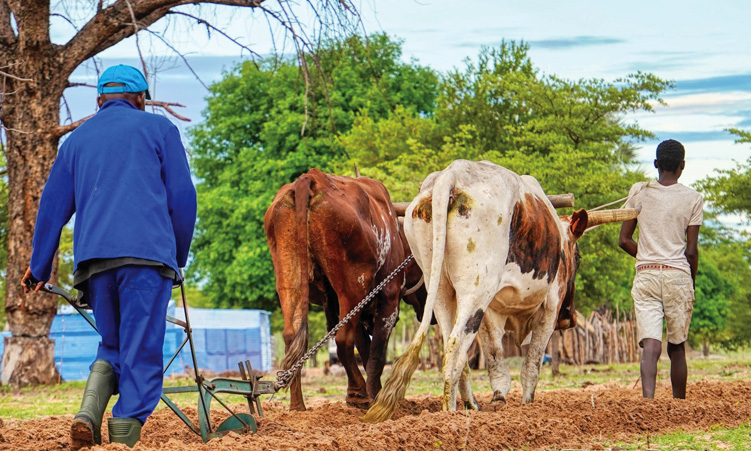
Staying at King Nehale Lodge, on the edge of Etosha, the experience was one of threshold. Wildlife moved freely. Silence carried weight. Time had altered what memory tried to preserve. People I once knew were gone. Places had shifted. Yet belonging remained, not as comfort alone, but as responsibility. Standing barefoot, connected to the land, something aligned.
The gold was poured into the cracks. This was the final stage of Kintsugi; not restoration to the original, but transformation into something more durable, more useful, something more beautiful.
Namibia’s landscapes do not ‘fix’ people. They hold them, long enough, quietly enough for something truer to emerge. From the confronting scale of the plateau, through the disciplined stillness of the desert, the releasing movement of the coast, and the grounding responsibility of home, the country demonstrates what Kintsugi insists upon: that becoming whole does not require perfection, only honesty.
To say ondathika kegumbo is not to claim completion. It is to acknowledge readiness. The cracks remain. But now, they hold gold.
In an age of information overload, Sunrise is The Namibian’s morning briefing, delivered at 6h00 from Monday to Friday. It offers a curated rundown of the most important stories from the past 24 hours – occasionally with a light, witty touch.
It’s an essential way to stay informed. Subscribe and join our newsletter community.

The Namibian uses AI tools to assist with improved quality, accuracy and efficiency,
while
maintaining editorial oversight and journalistic integrity.
Stay informed with The Namibian – your source for credible journalism. Get in-depth reporting and opinions for
only N$85 a month. Invest in journalism, invest in democracy –
Subscribe Now!