By: James Kamara-Manneh
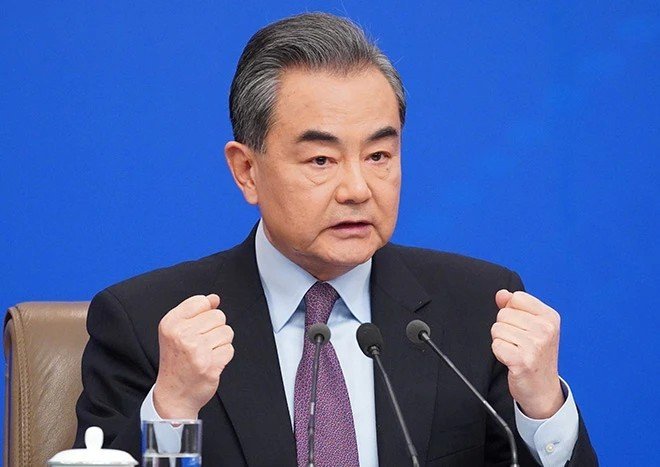
China has once again underscored the centrality of Africa in its foreign policy as Member of the Political Bureau of the CPC Central Committee and Minister of Foreign Affairs of the People’s Republic of China, H.E. Wang Yi, concluded his first overseas trip of the year to Africa. The visit marks the 36th consecutive year that a Chinese Foreign Minister has chosen Africa as the starting point of China’s annual diplomatic engagement an enduring tradition that Beijing says reflects profound friendship, strategic trust and long-term commitment to the continent.
Speaking after the visit, Chinese Foreign Ministry Spokesperson, Mao Ning, emphasized that the annual Africa-first diplomatic practice embodies China’s consistent policy of sincerity, equality and mutual respect in its relations with African countries. She noted that while some
portray Africa as a “forgotten continent,” China views Africa as a continent of hope, opportunity and shared future, and continues to prioritize Africa in its global diplomatic outreach.
According to Mao Ning, Foreign Minister Wang Yi provided a comprehensive account of the outcomes of the visit in an interview with Chinese media, highlighting that China-Africa relations are guided by the principle of “sincerity, real results, amity and good faith” proposed by President Xi Jinping. Those values, she stressed, remain the defining features of China-Africa exchanges and cooperation. “Africa and China are good partners that can rely on and trust each other,” she noted.
During his engagements with African leaders, Foreign Minister Wang Yi elaborated on the recommendations for formulating China’s 15th Five-Year Plan, adopted at the Fourth Plenary Session of the 20th CPC Central Committee. He emphasized that the plan not only charts China’s future development path but also opens up new opportunities for Africa and other developing countries.
Wang Yi reaffirmed China’s role as an engine of global economic growth and expressed China’s readiness to act as a booster for Africa’s development and revitalization. He noted that the concept most frequently raised by African partners during the visit was zero-tariff
treatment, describing it as a hallmark of China-Africa cooperation in the new era.
China’s zero-tariff initiative, he said, represents a concrete step toward voluntarily expanding unilateral opening-up, demonstrating China’s willingness to shoulder greater international responsibilities and deepen high-standard openness. Through that policy, China’s vast market
is expected to become a genuine opportunity for African economies. Wang Yi invited African countries to “board the express train of China’s development” and work together toward shared modernization.
A major highlight of the visit was the 9th China–African Union Strategic Dialogue, held on 8 January 2026 at the African Union Headquarters in Addis Ababa. The dialogue was co-chaired by H.E. Mahmoud Ali Youssouf, Chairperson of the African Union Commission and H.E. Wang Yi. On the same occasion, both leaders jointly attended the opening ceremony of the 2026 China–Africa Year of People-to-People Exchanges, signaling a renewed emphasis on societal, cultural and human connectivity. The two principals exchanged views on a wide range of issues, including China-Africa joint efforts to advance modernization, global governance, zero-tariff treatment, the International Organization for Mediation and the Outlook on Peace and Development in the Horn of Africa.
Both sides noted that China and the African Union, as key members of the Global South, share broad consensus on major international and regional issues. They underscored the importance of safeguarding the legitimate rights and interests of developing countries and reaffirmed their commitment to mutual support on core interests and major concerns.
China and the African Union reiterated the imperative of upholding a global order based on international law, including respect for sovereignty and territorial integrity, and the peaceful settlement of disputes. In that context, both sides expressed concern over recent developments in the Bolivarian Republic of Venezuela, reaffirming that the principles of the Charter of the United Nations and international law must be upheld.
The African Union side reaffirmed its firm commitment to the One-China principle, recognizing that there is but one China in the world, that Taiwan is an inalienable part of China’s territory, and that the Government of the People’s Republic of China is the sole legal
Government representing the whole of China. The AU further expressed firm support for all efforts by the Chinese Government to achieve national reunification.
The dialogue also focused on enhancing alignment between China’s 15th Five-Year Plan and the Second Ten-Year Implementation Plan of the African Union’s Agenda 2063, as well as the commitments under the Forum on China–Africa Cooperation (FOCAC).
Both sides agreed to strengthen communication, coordination and mutual support in their respective major initiatives. On the African side, these include Agenda 2063 and its flagship projects, notably Silencing the Guns by 2030 and the African Continental Free Trade Area
(AfCFTA). On the Chinese side, they include the Global Security Initiative, the Global Governance Initiative and the proposed International Organization for Mediation.
Reaffirming their shared commitment to tangible outcomes, the Chairperson of the African Union Commission and the Chinese Foreign Minister pledged to promote the effective implementation of all signed cooperation agreements and memoranda of understanding. They also agreed to explore the full potential of practical cooperation between China and the African Union, with a view to delivering concrete and lasting benefits to the peoples of Africa and China.
The visit, observers note, further consolidates the comprehensive strategic partnership between China and Africa, reinforcing a shared vision of modernization, peace, development and South–South solidarity in an evolving global landscape.