According to ICG’s Senior Analyst Daniel Akech, recent military advances by opposition forces and allied militias are being accompanied by political messaging that exploits long-standing grievances between the country’s two largest communities, the Dinka and the Nuer. This dynamic, he warns, risks transforming a power struggle among elites into a broader ethnic confrontation.
The latest surge in violence, he says, follows President Salva Kiir’s dismantling of the 2018 peace agreement, which had established a fragile unity government based on power sharing with opposition leader Riek Machar.
Kiir’s decision in March 2025 to place Machar under house arrest, followed by treason charges later in the year, effectively collapsed the deal. Machar, who is Nuer, had served as first vice president under the agreement, while Kiir is from the Dinka community.
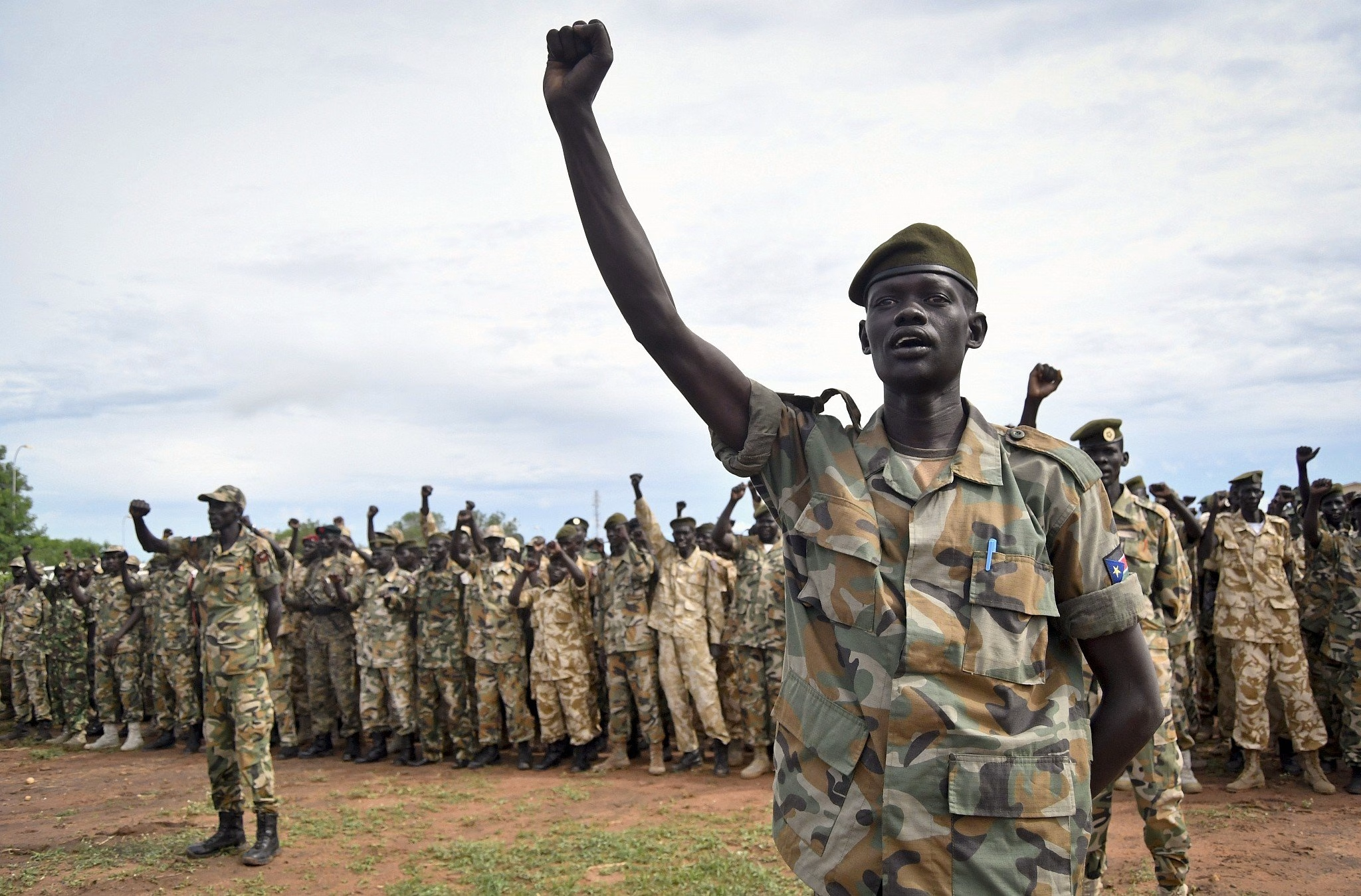
Since then, opposition forces have launched rapid offensives in traditionally Nuer-dominated areas, including Upper Nile and Jonglei states. Towns such as Waat, Yuai and Pajut have fallen in quick succession, and fighters are now threatening Bor, the Jonglei state capital and a symbolic Dinka stronghold just 200 kilometres north of Juba.
Clashes have also spread to oil-producing areas in Unity state and to parts of Central and Eastern Equatoria, underscoring the widening geographic scope of the conflict. Although both Kiir and Machar are weaker than they were a decade ago—Kiir due to internal purges and a severe fiscal crisis, and Machar due to isolation and restricted communications—the violence is gaining momentum on the ground.
“The danger is not only military escalation, but political mobilisation that increasingly takes on a tribal dimension,” Akech said. “Both sides are incentivised to rally support by framing the conflict in ethnic terms, particularly between Dinka and Nuer communities.”
Such rhetoric, analysts warn, could reignite cycles of communal violence that once led to mass atrocities, displacement and famine. The current opposition coalition itself is fragmented, comprising Machar loyalists, community militias and independent commanders, raising the risk that local grievances and inter-communal rivalries will spiral beyond the control of national leaders.
Regional involvement is further complicating the crisis. Uganda has already deployed troops to support Kiir’s government, while growing suspicion surrounds possible backing of the opposition by Sudan’s Armed Forces or their allies. Any deeper regional entanglement could further harden ethnic alignments inside South Sudan.
As fighting intensifies, observers caution that the collapse of the peace deal has removed the last political guardrails preventing a descent into identity-based war. With armed