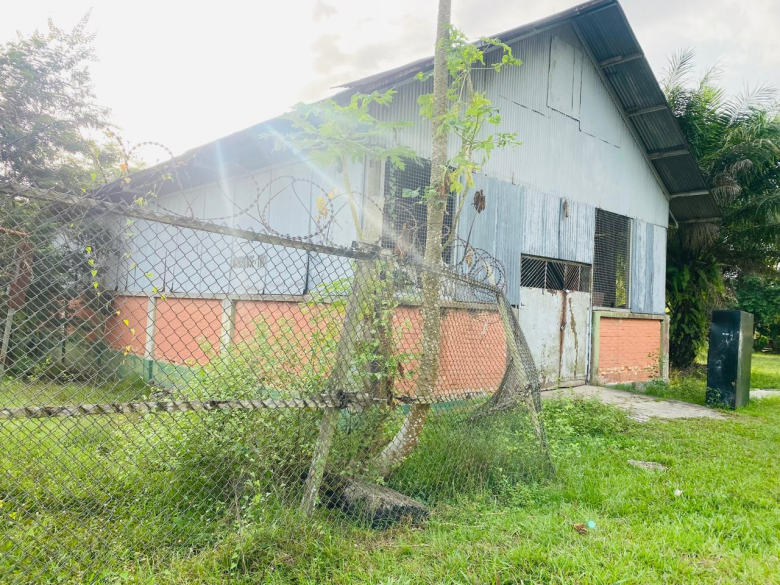
Margibi County – The once-prestigious Booker Washington Institute (BWI), long regarded as Liberia’s model center of excellence in Technical and Vocational Education and Training (TVET), is today a shadow of its former self. Much of its historic infrastructure lies abandoned, walls crumbling, and the institution appears largely forgotten after years of neglect by successive administrations.
By: Yawah Y. Jaivey, [email protected]
The Booker Washington Institute, a public post-secondary institution located in Kakata, Margibi County, was founded in 1929 as the Booker Washington Agricultural and Industrial Institute. It was Liberia’s first agricultural and vocational school, established with assistance from American partners and named after renowned American educator Booker T. Washington.
The institution, once a cornerstone of technical and vocational education that molded generations of young Liberians, now stands as a decaying reminder of lost priorities.
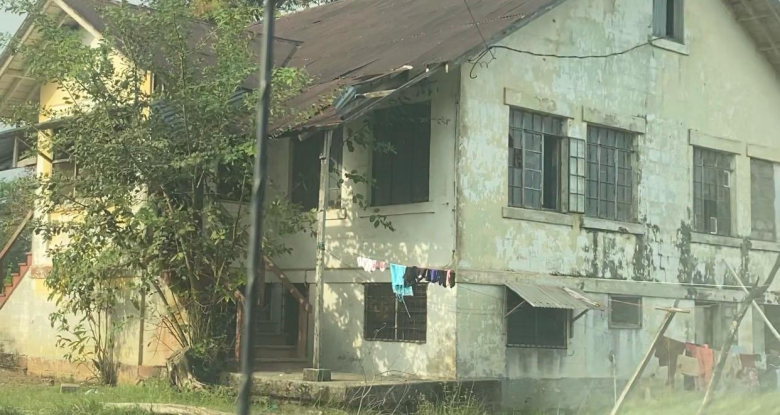
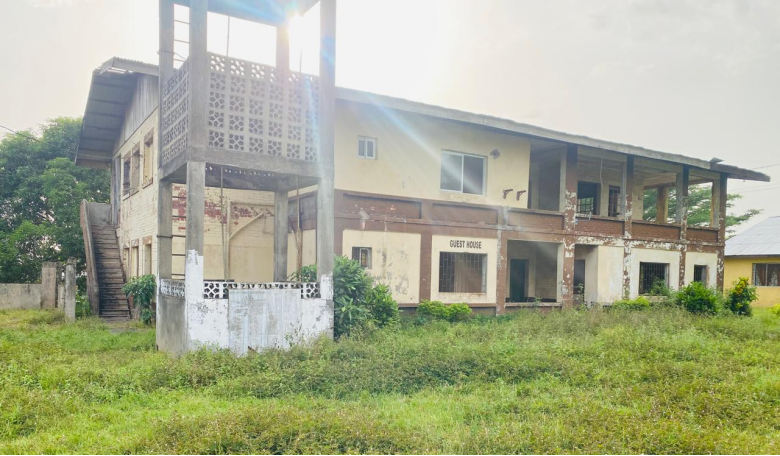
A FrontPage Africa reporter who toured the campus over the weekend observed widespread deterioration across several prominent structures. Among them is the principal’s residence, commonly known as the “Kudar Jerrie House,” as well as buildings that housed deans overseeing the boarding female students. These structures bear deep cracks, broken windows, and an eerie silence that hangs heavier than history. Moss creeps up the walls, paint peels away, and courtyards are littered with fallen leaves, untouched as grass steadily engulfs the grounds.
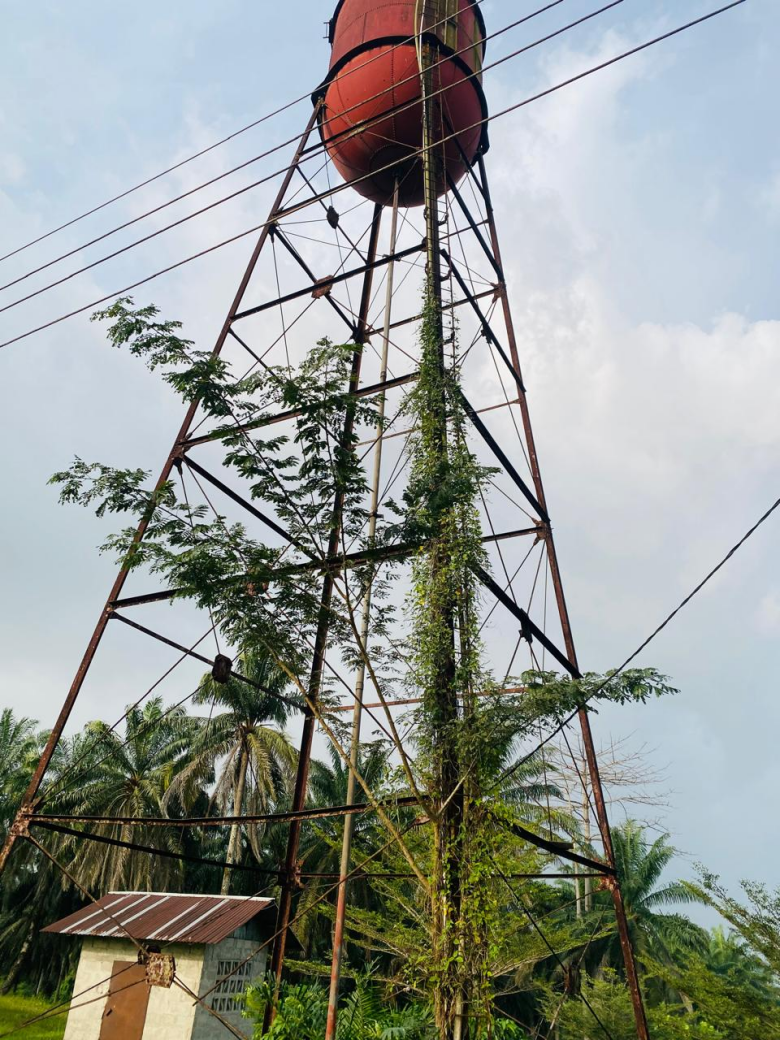
The investigation further revealed that both the boys’ and girls’ dormitories are in visibly poor condition. The campus water tower has not been painted in decades, and the school kitchen appears to have been nonfunctional for many years.
In addition, a dormitory destroyed by fire more than two decades ago has never been repaired or rebuilt. The historic Graham Hall appears frozen in time, untouched by any meaningful renovation. An annexed dormitory under the Agricultural and Skills Training Program (ASTP), whose foundation was laid more than thirty years ago, remains incomplete.
The FPA’s investigation found that the business manager’s residence is in ruins, while the “New York” and “Germany” residences—once intended to house instructors—are in deplorable condition.
Alumni Voice Growing Alarm
Mr. J. Ebenezer Kolliegbo, an alumnus of BWI, who recently visited the campus, echoed growing frustration over the school’s state, describing the scene as shocking and marked by unmistakable signs of apathy.
“Yesterday, I had the opportunity to visit the campus of Booker Washington Institute, and I was deeply saddened by the level of decay across the campus,” Mr. Kolliegbo said.
Continuing, he stated: “While it would be unfair, at least for now, to place blame on the current administration, the state of the institution is alarming and reflects years of neglect by successive past administrations.”
He stressed that the deteriorating condition of BWI should concern every alumnus, policymaker, and Liberians who values education and national development.
Rather than rushing to draft legislation to elevate BWI to a four-year university. Lawmakers should first focus on restoring the institution to its pre-war standards—reviving its infrastructure, academic environment, and institutional dignity,” he urged.
Mr. Kolliegbo further recommended the urgent mobilization of former students and alumni to engage in meaningful, results-driven infrastructure development on campus, rather than investing in symbolic or “monumental” projects that fail to address the institution’s most pressing needs.
Administration Silent
Efforts by FrontPage Africa to obtain a comment from Dr. Nancy T. Freeman, Principal of the Booker Washington Institute (BWI), were unsuccessful.
When contacted by phone, a woman who identified herself as Hannah Dennis, Dr. Freeman’s special assistant, requested that questions be submitted via SMS or WhatsApp. Despite multiple follow-ups, no response had been received as of publication.
BWI has been under heightened scrutiny from President Joseph Nyuma Boakai, who in 2025 dissolved the boards of the Booker Washington Institute, the Central Agricultural Research Institute (CARI), and William V.S. Tubman University, retaining only statutory members in keeping with the laws governing their appointments.
President Boakai further directed that, in the interim, the relevant sector heads overseeing each affected institution serve as Acting Chairpersons until the boards are formally reconstituted. He reiterated his administration’s commitment to ensuring efficiency, accountability, and results-driven governance across all sectors.
Meanwhile, in January this year, President Boakai reappointed the remaining members of the Booker Washington Institute Board to enable them to complete their unexpired terms.