Author: Diko D Andrew | Published: 5 hours ago
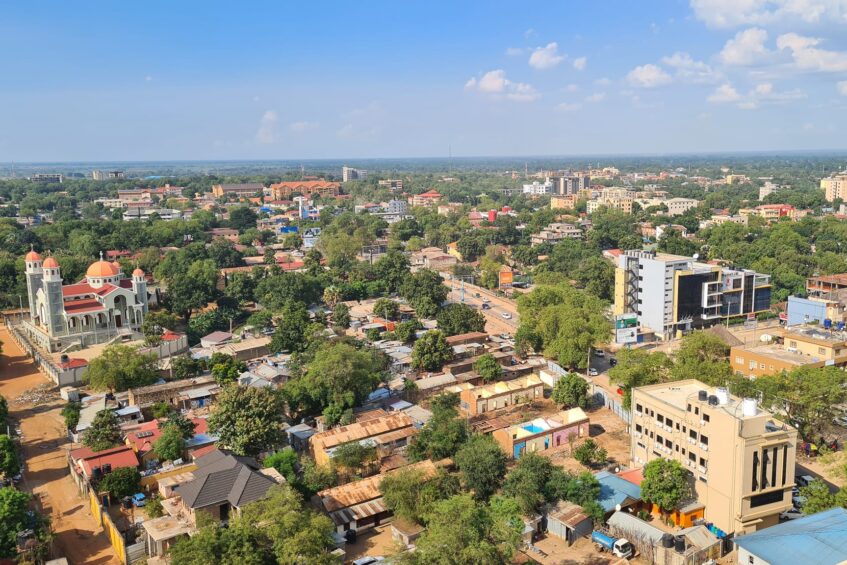
Aerial view of Juba city. (Photo: Charles Wote).
Disagreements over authority and coordination in the regulation of hotels emerged on Monday during talks between the Ministry of Wildlife Conservation and Tourism and the Juba City Council.
The discussions brought together the Undersecretary at the Ministry of Wildlife Conservation and Tourism, Peter Loro Alberto, and Juba City Council officials led by Mayor Christopher Sarafino Wani, and focused on tax collection, hotel registration, and the implementation of the Tourism Act 2024.
Addressing the meeting, Undersecretary Peter Loro Alberto raised concerns over what he described as a lack of coordination between the two institutions, warning that actions taken against hotels could discourage investment in the tourism sector.
“There is no link between the ministry and the Juba City Council. If this coordination mechanism was in place, this mess would not be there,” Alberto said.
Another official in the Ministry whose name Eye Radio couldn’t verify in shared audio criticized the closure of hotels, arguing that such measures were harming investor confidence and the country’s image.
“Our issue is the closure of the hotels. What your people are doing in the hotel industry is scaring our investors. If we continue to threaten investors, the image of South Sudan will be spoiled, and there will be no investment in tourism and hospitality,” he added.
Alberto also noted that revenue collection from the hotel sector has been inconsistent over the years, blaming weak coordination between authorities.
In response, Juba City Council Mayor Christopher Sarafino Wani defended the council’s actions, saying they fall within its legal mandate at the city level.
“As far as the hotels are concerned, the responsibility of Juba City Council is a territorial jurisdiction responsibility,” Wani said. “The fees and levies being collected are within the mandate of the city council.”
The meeting underscored the need for clearer coordination between national and local authorities to ensure proper regulation of the hotel industry while avoiding measures that could discourage investment in South Sudan’s tourism sector.