The Umbrella for Democratic Change (UDC) government has officially stepped into the global cannabis economy, though not in the way many might have anticipated. With the release of the Cannabis Regulations in the Extraordinary Government Gazette on January 12, 2026, Botswana has taken a decisive legal and economic stride, one that unlocks opportunities in industry, science, and export markets, while unequivocally shutting the door on recreational use.
Anchored by the Cannabis Act of 2025, these newly published regulations establish a rigorously controlled framework that treats cannabis not as a casual social commodity, but as an agricultural, industrial, and scientific resource. The government’s stance is crystal clear: cannabis in Botswana is not legal for casual use, personal possession, or open retail trade. Instead, it is permitted strictly within a tightly regulated system that prioritizes state oversight, compliance, and economic objectives.
In essence, cannabis is now legal in Botswana exclusively for licensed operators and for narrowly defined, authorized purposes. The government gazette stipulates that individuals may not cultivate cannabis at home; businesses are barred from selling it over the counter; and possession outside the regulatory framework remains a criminal offense. Far from a liberalization, this legislation embodies a measured, technocratic approach designed to harness economic potential while carefully managing social and public health risks.
A leading model of control on the continent
The regulations, enacted under the Cannabis Act of 2025, represent one of Africa’s most comprehensive cannabis control regimes. Every stage of the value chain, from cultivation and processing to transportation, research, distribution, import, and export, requires prior approval from the National Cannabis Control Authority (NCCA).
Each activity demands its own license, complete with specific conditions, renewal terms, and penalties for non-compliance. This multi-layered licensing system ensures traceability, prevents diversion to illicit markets, and maintains the country’s international credibility, especially in export-related ventures.
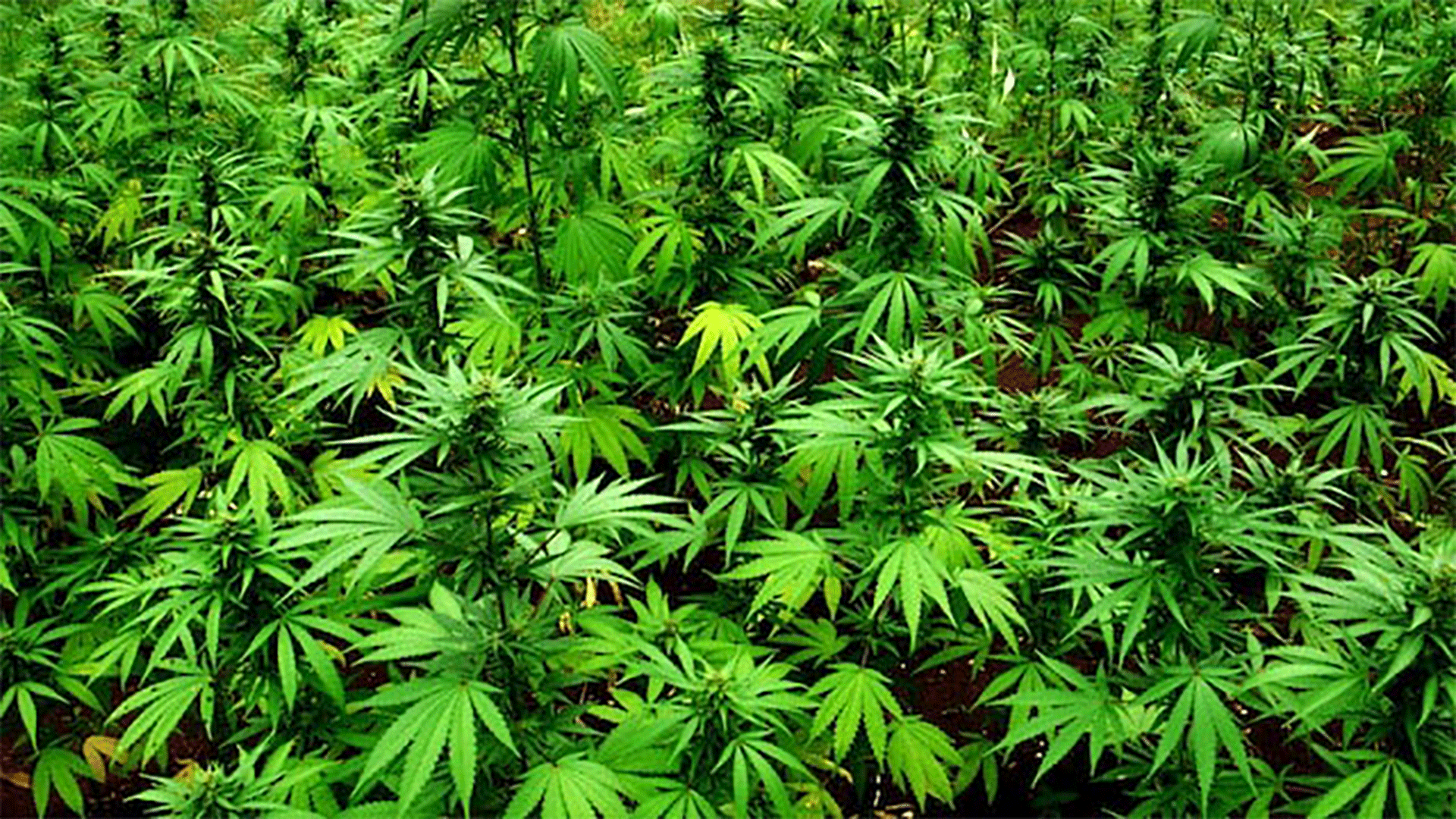
Cannabis cultivation is restricted to licensed entities within clearly defined categories, including commercial cultivation, nurseries, and seed production. Applicants face a stringent approval process far more rigorous than typical agricultural licensing. Required submissions include detailed site maps with GPS coordinates, police security clearances, crop management plans, THC testing protocols, environmental and social impact assessments, and proof of financial capability.
Licenses are valid for three years, but approval does not grant immunity from oversight. Inspectors retain the right to enter licensed premises at any reasonable time, underscoring the government’s commitment to continuous supervision rather than occasional compliance checks.
Hemp, Reimagined
A pivotal element of the regulations is the distinction between medicinal cannabis and what the law terms industrial cannabis. Industrial cannabis corresponds to what is globally recognized as industrial hemp, characterized by its low psychoactive content, with tetrahydrocannabinol (THC) capped at 0.7 percent—higher than some jurisdictions, yet well below intoxicating levels.
Industrial cannabis is intended for fiber production, seed, oil extraction, industrial processing, and scientific research. It is not meant for smoking or recreational use. Any crop exceeding the THC limit is deemed non-compliant and must be reported and destroyed under official supervision.
Rather than establishing a separate, more permissive hemp law, Botswana has chosen to incorporate hemp within the broader cannabis framework. This decision reflects regulatory prudence and a determination to avoid loopholes that might undermine enforcement.
Processing, transport, and research
Beyond cultivation, the regulations provide for manufacturing and processing under distinct licenses, covering both industrial and medicinal activities. These include oil extraction, cannabinoid profiling, fiber processing, and pharmaceutical preparation.
Manufacturing facilities must meet stringent requirements regarding security infrastructure, staffing, quality control systems, and financial capacity. Licenses may last up to five years but remain subject to suspension or revocation if conditions are violated.
Transportation is classified as a high-risk activity, reflecting concerns about diversion and theft. Licensed vehicles must feature enclosed, locked compartments, electronic security systems, and comprehensive chain-of-custody documentation. Routes, drivers, quantities, and destinations require prior approval, and cannabis cannot be transported alongside non-cannabis goods. Transport licenses are valid for only one year, highlighting the sector’s intense scrutiny.
Research holds a central role in the regulatory framework. Separate licenses exist for industrial and medicinal cannabis research, encompassing agronomic trials, breeding programs, cannabinoid extraction, toxicology studies, and product development. Independent laboratories must meet international accreditation standards and remain structurally separate from licensed producers. Every batch of cannabis must be traceable, tested, and certified.
Export prospects without guarantees
Import and export of cannabis products are permitted but strictly controlled and aligned with international conventions. Each shipment requires specific authorization, thorough documentation, and approved routes.
While the legislation opens the door to export markets, success is not assured. Botswana’s ability to compete will hinge on quality, price, compliance, and reliability in a global market already dominated by established producers.
Post Views: 395