- Further alleges abuse of the ex parte process by DCEC, DPP
- Says properties acquired through inheritance, lawful transactions
- States that most of the assets were bought before political office
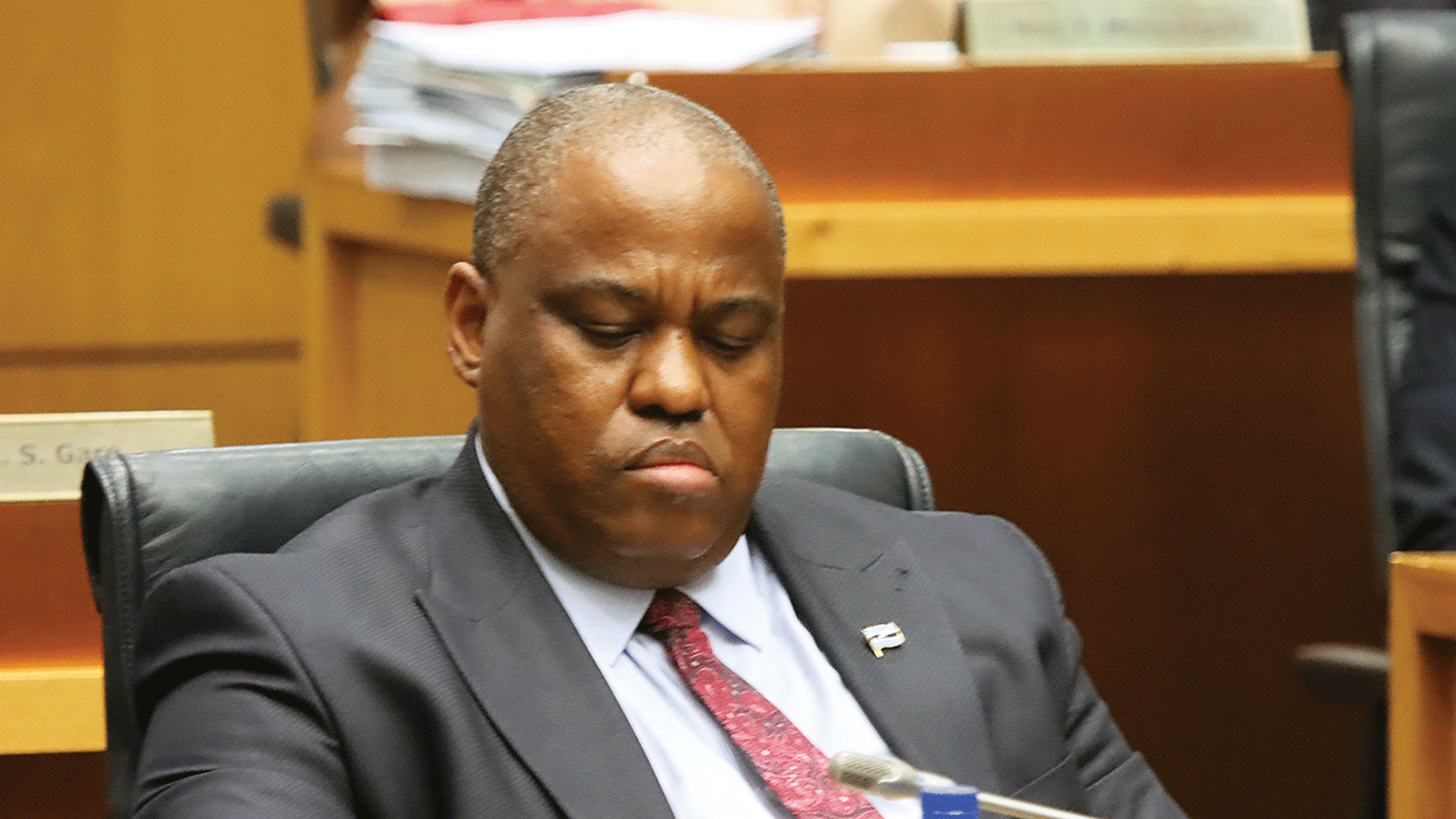
The legal battle involving former Minister Kefentse Chewingie Mzwinila has erupted into a fierce contest over the integrity of judicial processes, with Mzwinila leveling serious accusations of “dirty hands” and abuse of the ex parte process against the Directorate of Public Prosecutions (DPP) and the Directorate of Corruption and Economic Crime (DCEC). At the heart of the dispute is the alleged unlawful retention and seizure of his assets, which Mzwinila claims have been pursued through illegal means, including forum shopping and non-disclosure of critical facts to the courts.
Mzwinila’s defense draws heavily on established Botswana case law that underscores the principle of “clean hands”, a doctrine insisting that any litigant seeking judicial relief must approach the court without any taint of impropriety. This principle was eloquently cited in the unreported case of Odirile Sento (aka Vee Mampeezy) vs Goldwing Proprietary Limited, where the court held that “no polluted hand shall touch the pure fountains of justice.” The doctrine forbids litigants from manipulating court processes to their advantage while simultaneously violating court orders or engaging in parallel legal actions designed to multiply proceedings and confuse judicial outcomes.
Central to Mzwinila’s argument is the claim that the DCEC’s continued possession of seized property, despite court orders directing their return, constitutes a breach of judicial authority and an abuse of the court’s discretion. The former minister accuses the prosecuting bodies of initiating multiple proceedings in different forums over the same assets, a tactic known as forum shopping, which courts generally frown upon for its potential to waste judicial resources and produce contradictory rulings. This behavior, according to Mzwinila’s legal team, undermines the equitable basis upon which judicial discretion is exercised and taints the legitimacy of the application to restrain his assets.
The case further delves into the misuse of the ex parte process, a legal procedure allowing one party to seek urgent court orders without notifying the other side. Citing the 2020 ruling by Justice Moroka in the Phuu No case, Mzwinila’s defense highlights that ex parte applications carry a strict duty of full disclosure of all material facts. Moroka J emphasized that failure to disclose relevant information, even if not done with malicious intent, can lead to the rescission of such orders. Mzwinila’s team contends that the DPP and DCEC deliberately withheld information about ongoing proceedings and previous seizures, thereby misleading the court and securing an order under false pretenses.
A particularly striking element of Mzwinila’s defense is the allegation that the prosecuting authorities failed to disclose that they already possess extensive financial records and electronic devices seized during a raid in June 2025, which include accounting software and detailed financial data. This omission, they argue, is critical because the DCEC’s case rests on the assertion that Mzwinila and his associates failed to account for the source of their assets. Yet, the authorities have not revealed whether they have audited or analyzed this data to substantiate such claims, raising questions about the factual basis of their allegations.
Legal scrutiny also extends to the accusation that Mzwinila influenced public tender awards while serving as a minister. The defense rigorously challenges this claim, pointing to Botswana’s Public Procurement Act of 2021 and constitutional provisions which clearly separate political officeholders from procurement decisions. According to the Act, procurement duties rest solely with designated officials and committees within government ministries, such as Permanent Secretaries, who are appointed by the President independently of ministers. This legal framework, the defense asserts, makes any ministerial interference not only illegal but structurally impossible, a point underscored by the absence of any evidence implicating procurement officials or tender processes in the prosecution’s filings.
The matter of individual property assessment arises as a critical legal standard in this case. Citing the precedent set by the MOTSHOME vs DPP case, the court must examine each property claimed as proceeds or instruments of crime on its own merits and evidence, rather than lumping assets together. Mzwinila’s legal team presents detailed evidence that multiple properties were acquired well before his political career began, some by inheritance, others through lawful transactions. These properties include plots in prominent areas such as Phakalane, Mogoditshane, African Mall in Gaborone, and several other locations, all documented with title deeds and acquisition dates that negate any suspicion of being proceeds of crime.
The defense further notes that certain assets targeted for restraint, including shares in various entities, were not even addressed in the prosecutorial affidavits, and no investigator has attested to believing these assets are related to criminal activity. This lack of specific allegations or evidence, they argue, should result in the discharge of any restraining orders affecting those properties, with costs awarded against the prosecuting authorities for their overreach.
A cornerstone of Mzwinila’s rebuttal is the claim that the prosecuting authorities’ conduct amounts to an abuse of process, both in their failure to comply with existing court orders and in their strategic use of the courts to pursue parallel and overlapping litigation. This approach, according to legal principles upheld in Botswana courts, risks undermining the administration of justice by promoting duplicative proceedings and encouraging litigants to withhold or selectively disclose information to secure favorable outcomes without due process.
In closing, Mzwinila’s defense calls for the dismissal of the application to restrain his assets with costs awarded on an attorney-and-client scale, underscoring the seriousness with which they view the alleged misconduct by the DPP and DCEC. They urge the court to mark its displeasure at what they describe as a calculated effort by prosecuting authorities to circumvent legal safeguards, avoid scrutiny, and exert undue pressure on a former public official through procedural abuse.
This case highlights broader concerns within Botswana’s legal and political landscape about the balance between necessary anti-corruption measures and the protection of individual rights and due process. The tension between aggressive prosecution of corruption and the rights of those accused is playing out in courts across Africa, reflecting a global challenge in governance and justice systems.
As the matter unfolds, the judiciary faces a critical test of its independence and ability to uphold the rule of law impartially. The outcome will not only determine the fate of Mzwinila’s assets but could set significant precedents for how Botswana’s courts handle allegations of corruption, the limits of prosecutorial power, and the sanctity of procedural fairness in high-stakes political cases.
Post Views: 400