The political landscape in Botswana is undergoing dramatic shifts as the Umbrella for Democratic Change (UDC) intensifies efforts to consolidate power ahead of the 2029 general election. At the heart of this unfolding drama lies a high-stakes battle for influence, one where the Botswana Congress Party (BCP) finds itself on the defensive against what it describes as a systematic campaign of recruitment and co-optation by the UDC. The stakes are nothing less than the future shape of Botswana’s democracy, and the tactics employed could redefine the nature of political competition in the country.
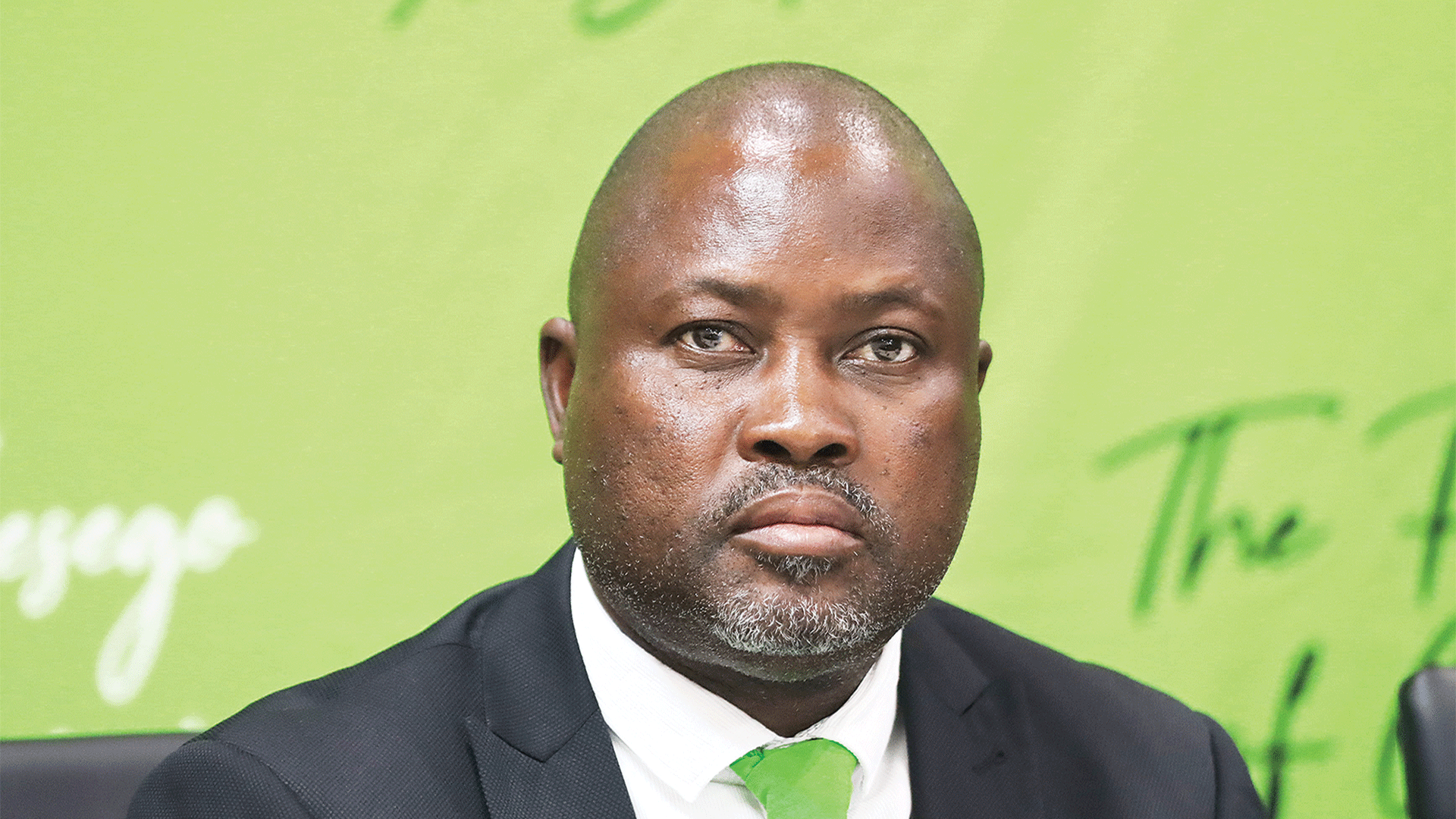
Following the watershed 2024 elections, which saw the UDC rise to power and the long-dominant Botswana Democratic Party (BDP) ousted after nearly six decades, Botswana’s political dynamics have been upended. The BCP, which secured a notable 13 parliamentary seats in that election, now faces what its leadership describes as a concerted attempt by the UDC to sway opposition figures through government appointments and other incentives. This recruitment drive, according to BCP Secretary-General Keretetse Kekgonegile, is allegedly orchestrated from the highest levels of government, including the Office of the President, and targets opposition leaders with lucrative offers designed to fracture the opposition ranks and weaken the BCP’s parliamentary presence.
The BCP’s concerns are grounded in recent developments. Several opposition figures have reportedly accepted government posts, including Sedirwa Kgoroba, a former BCP parliamentary candidate known for his vocal criticism of UDC leadership. Meanwhile, rumors swirl around other key opposition MPs, such as Reuben Kaizer of Selibe Phikwe West, who has publicly denied any intentions to defect or accept inducements. These attempts to draw opposition members into government roles are framed by the UDC as merit-based efforts to attract skilled professionals to public service. Yet, from the BCP’s perspective, these actions represent a strategic ploy to undermine the opposition’s cohesion and electoral strength.
This unfolding saga echoes a pattern familiar in many competitive democracies where ruling parties seek to co-opt opposition through patronage and appointments. The UDC’s recruitment strategy appears designed not only to weaken the BCP but also to consolidate UDC power by diminishing the opposition’s capacity to challenge the government effectively in the run-up to the 2029 elections. The tactic, while potentially effective in the short term, risks alienating opposition supporters and reinforcing the resolve of those who view such moves as undermining democratic principles.
In response, the BCP has committed to a robust counterstrategy aimed at shoring up party unity and fortifying its organizational structures nationwide. The party’s 2026 agenda is ambitious: intensifying the “Going South” campaign to recover ground lost in the southern regions during the 2024 election, hosting a National Elective Conference in Mogoditshane to renew leadership and strategy, and revitalizing its regional, constituency, ward, and cell branches to ensure tighter control and loyalty among members. These steps reflect a recognition that internal cohesion and grassroots mobilization will be key to resisting the UDC’s recruitment onslaught.
The broader implications for Botswana’s democratic health are profound. Kekgonegile says fragmentation of the opposition through inducements and co-optation risks weakening democratic oversight and accountability, as a strong opposition is crucial for holding government power to account. “If the BCP can resist these pressures and emerge more united, it could strengthen Botswana’s multiparty democracy by presenting a credible alternative to the ruling UDC. Conversely, if the opposition splinters under pressure, the UDC could consolidate power with fewer checks and balances,” Kekgonegile opines.
The 2024 elections marked a historic turning point in Botswana’s political history. After decades of BDP dominance, the UDC’s victory signaled a new era of political competition. Yet, this shift has not come without challenges. The UDC government’s efforts to deliver on electoral promises are being closely watched, and its recruitment tactics have sparked controversy and suspicion among opposition ranks. The political atmosphere is charged, with both sides acutely aware that the next few years will determine whether Botswana’s young democratic experiment deepens or falters.
The BCP’s defensive posture is informed by historical lessons from Botswana and other African democracies, where ruling parties have often used patronage and co-optation to neutralize opposition threats. The party’s leadership is keenly aware that resisting such pressures requires not only strategic planning but also maintaining strong ideological commitment and party discipline among its members. The upcoming National Elective Conference will be a critical moment for the BCP to reassert its identity and rally its base.
As the 2029 general election approaches, the contest between the UDC and the BCP will test the resilience of Botswana’s democracy. The opposition’s ability to resist co-optation and present a united front will be crucial in ensuring a vibrant multiparty system. At the same time, the ruling party’s approach to governance and power consolidation will shape the nature of political competition and democratic accountability in the years to come.
The choices made by the UDC and the BCP over the next several years will not only determine electoral outcomes but also set precedents for the country’s democratic trajectory. Whether the opposition can withstand the pressures of recruitment and inducements, and whether the ruling party can govern inclusively while respecting democratic norms, will be the defining political story in Botswana as the nation moves toward 2029.
Post Views: 415