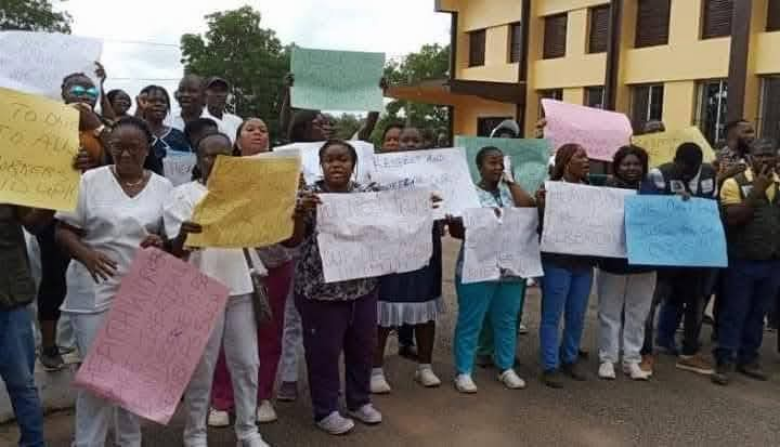
Ganta, Nimba County – Approximately 91 nurse anesthetists from across Liberia are set to launch a “go-slow” strike action starting Thursday, January 15, 2026, in a bold demand for a significant salary increment amid ongoing economic hardships.
By D. Franklin Doloquee/ Nimba County
Mehnpaine Saye Dolo, President of the Nurse Anesthetists Association of Liberia, told FrontPage Africa (FPA) that the action will be indefinite until the Government of President Joseph Nyuma Boakai and Vice President Jeremiah Koung addresses their grievances.
“This is not a partial slowdown; it’s a full work stoppage,” Mr. Dolo emphasized.
“We are essential to every major surgery in the country, yet we’re treated as an afterthought,” he stated. Nurse anesthetists, highly trained specialists who administer anesthesia, monitor vital signs during operations, and manage post-surgical recovery, currently earn a base salary of US$600 monthly.
After government taxes, loan deductions, and other withholdings, their take-home pay often dwindles to around US$400.
Mr. Dolo highlighted the stark mismatch: “We handle life-or-death responsibilities in operating rooms at facilities like the Jackson F. Doe Memorial Hospital here in Nimba, Phebe Hospital, and the national referral center at Redemption Hospital, G. W. Harley Hospital in Sanniquellie, Nimba County among others. Our work demands precision under intense pressure, yet our pay barely covers basics like food, rent, and school fees for our children amid Liberia’s rising inflation.”
The association demands a salary hike to at least US$1,000 per month, aligning closer to regional standards in West Africa and reflecting their advanced certification requirements, which include years of nursing training plus specialized anesthesia programs.
Liberia’s healthcare workforce has long grappled with low pay. A 2024 Ministry of Health Report noted that frontline workers like nurse anesthetists earn 40-50% less than their counterparts in neighboring countries like Ghana or Sierra Leone, contributing to chronic shortages and brain drain.
With only 91 nurse anesthetists serving Liberia’s 15 counties, many concentrated at the understaffed Liberia Government Hospital in Monrovia. The strike threatens to paralyze surgical services nationwide. These professionals are the backbone of operating theaters, preparing patients, ensuring safe anesthesia delivery, and responding to emergencies like airway complications or cardiac events.
Without them, surgeons cannot proceed with elective procedures, C-sections, trauma surgeries, or even routine appendectomies.
The ripple effects could be dire. Hospitals across the country, from bustling urban centers like Monrovia to rural outposts in Nimba and Lofa counties, may halt all non-emergency operations starting January 15.
Health experts warn this could lead to treatment delays, increased patient suffering, and preventable deaths, echoing the 2023 physicians’ strike that backed up thousands of cases and strained emergency wards.
Meanwhile, the Ministry of Health has not yet responded to requests for comment, though sources indicate emergency meetings are underway. As the strike looms, patients scheduled for surgery face uncertainty, underscoring Liberia’s fragile healthcare system still recovering from the 2014-2016 Ebola Crisis and recent economic pressures.