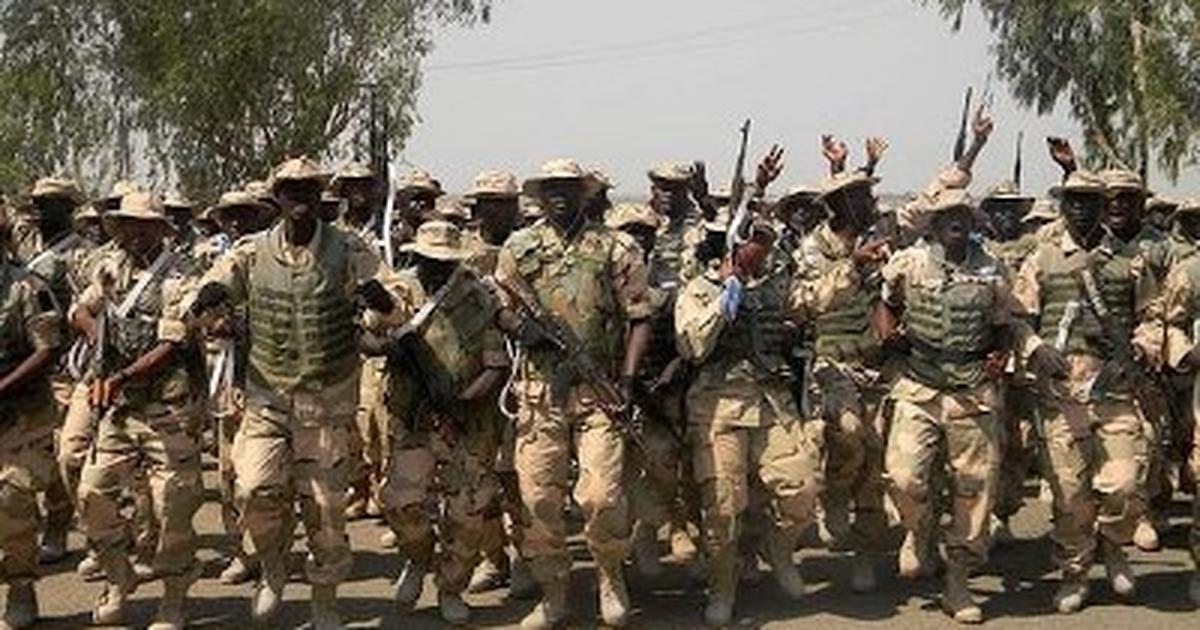
January 15 is celebrated annually as Nigerian Armed Forces Remembrance and Celebration Day. This day honours the supreme sacrifice made by fallen heroes of the Nigerian military. It recognises the sacrifices of serving soldiers and veterans who have fought under challenging climatic, psychological, social, and physical conditions to protect and defend the territorial integrity of the Nigerian state. The date also marks the end of hostilities between the Nigerian state and the secessionist Republic of Biafra, following the latter’s surrender on January 15, 1970.
While the AFRD has gained symbolic recognition among members of the Nigerian military community and the public, who acknowledge and appreciate the Nigerian military’s contributions to the nation’s unity and existence, the activities surrounding it are still predominantly military in nature: ceremonial parades, official wreath-laying rituals, and events held in military barracks. For the average Nigerian citizen, it is just another national day that has no deep reflection, appreciation, or symbolic meaning. Therefore, this article argues and advocates for its declaration as a national public holiday. Doing so would help highlight the sacrifices and service of the Nigerian military to the broader civilian public and would foster a greater sense of appreciation and civil-military cooperation.
One, declaring the AFRD as a national public holiday could strengthen national unity during this period of increased social mistrust, insecurity, and division. It also has the potential to improve civilian-military relations. This is particularly important given the strained relationship between the Nigerian military and its citizens, evidenced by human rights abuses carried out by the military, many of which have not only occurred during the current democratic era but also extend back to the decades of military rule in the country. Nonetheless, it is important to establish January 15 as a national public holiday to properly recognise and appreciate the service and sacrifices of serving personnel and veterans.
While AFRD is often seen as mainly a military event, the impacts of Nigeria’s diverse low-intensity armed conflicts have also affected civilian communities, whose safety relies on military efforts. This supports making AFRD a shared national celebration that goes beyond the military and includes civilians, whom the military is meant to protect. Therefore, a public holiday like AFRD, similar to the October 1 Independence celebrations, can foster a sense of national ownership, belonging, and unity. It can also motivate private and civil society groups to organise commemorative events through partnerships with established military charities, such as the Nigerian Legion, the Retired Army, Navy and Air Force Officers Association, the Defence and Police Officers Associations, various Officers’ Wives Associations, the Military Wives Association, and other social groups dedicated to protecting their interests. These efforts help raise public awareness about AFRD and celebrate the patriotism and sacrifices of the Nigerian military.
Declaring the day a national holiday would engender public reflection and support for the sacrifices of Nigerian military families: wives and children of serving officers and men, wives, and caregivers of wounded personnel and disabled soldiers, widows of fallen heroes, veterans suffering from wounds gotten from combat, and other post-combat disorders. It would also generate calls for more accountability, transparency on the human costs of military operations and activities, and their impact on families and military communities. It would humanise military personnel in the eyes of civilians, and honour veterans and their families, as Nigerian veterans often return from service to a society that barely acknowledges their sacrifice, facing unemployment, trauma, and neglect.
A public holiday would further create an avenue to bring more national attention to the needs of serving soldiers and veterans, encourage policy discussions on welfare and rehabilitation of veterans, and provide a platform for fundraising and veteran-support initiatives, as is done in advanced militaries.
Like other militaries with remembrance days, such as the United States (Veterans Day and Memorial Day), the United Kingdom (Remembrance Sunday), and Ghana (Veterans Day), which set aside dedicated national holidays or nationwide observances to honour their fallen soldiers and veterans, Nigeria, with the memory of a civil war, a sterling peacekeeping history, and an ongoing internal security challenge, has even greater justification to do likewise.
A national AFRD holiday would place Nigeria within this global tradition of respect and remembrance for its military. Nigeria’s diversity is in its strength, and the Nigerian military remains one of the most ethnically diverse institutions in the country. A publicly declared National Day of Remembrance and commemoration would foster collective support for the Armed Forces, increase civilian support for the military services, as was recently done when the NA, the NN, and the NAF opened their gates to civilians to celebrate their annual ceremonies.
A publicly declared National Day of Remembrance and Commemoration would promote collective support for the Armed Forces and enhance civilian appreciation of the military services. This has recently been demonstrated by the increasing civil–military engagement and peacebuilding efforts of the Nigerian military, especially in areas like South-East Nigeria, where the Nigerian Army has been involved in providing medical outreach, road construction, sanitation projects, education support, rehabilitation of orphanages, and other social support initiatives to counter the activities of neo-Biafran separatists.
More notable examples of civil-military engagement include recent ceremonial celebrations of the Nigerian Navy and Nigerian Air Force, during which they opened their gates to civilians through facility tours, ship visits, and various interactive activities.
This was most notably exemplified by the Nigerian Air Force’s nationwide “Come See Your Air Force” and the Nigerian Navy Ship Tours, which received wide attendance, rekindled trust, and national pride in the Nigerian military.
The AFRD deserves broader public and national celebration, beyond digital spaces and social media hashtags and posts, to extend further into civilian spaces and life across elementary, secondary, and tertiary institutions, government, religious and financial establishments, recreational and hospitality centres, and ultimately to the hearts of individual citizens instilling a shared sense of responsibility to honour and publicly commemorate the Armed Forces of Nigeria.
The Nigerian government should declare this day a national public holiday. This would serve to publicly celebrate the occasion, promote national appreciation for active soldiers and veterans, and honour the ultimate sacrifices made by fallen heroes defending the nation’s integrity and sovereignty.
Ajala is a researcher specialising in military sociology, death studies, conflict, peace, and security and a visiting research fellow at the Centre for Death and Society at the University of Bath, England