By Amin Kef (Ranger)
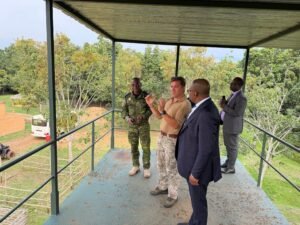
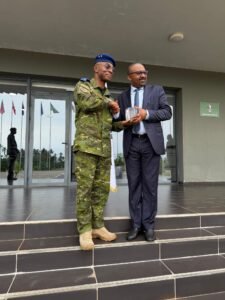
The Vice President of the Republic of Sierra Leone, Dr. Mohamed Juldeh Jalloh, has led a high-level delegation of senior security sector officials to the International Counter-Terrorism Academy (AILCT) in Jacqueville, Côte d’Ivoire, as part of sustained efforts to strengthen regional security cooperation and enhance Sierra Leone’s counter-terrorism and peacekeeping capabilities.
The visit, undertaken on Thursday, January 8, 2026, reflects Sierra Leone’s growing commitment to regional and international collaboration in addressing evolving security threats across West Africa. During the mission, Vice President Jalloh and his delegation held extensive bilateral engagements with senior officials of the Ivorian Government, including the Minister of Defence, Téné Birahima Ouattara, and the Minister of the Interior and Security, General Vagondo Diomandé, as well as other top defence and security authorities.
Discussions centred on strengthening the regional security architecture through structured intelligence sharing, regular exchanges between security institutions and capacity-building support for specialized units. Both sides explored opportunities for joint training programmes, harmonization of counter-terrorism tactics and improved coordination in responding to cross-border security threats, including violent extremism, organized crime and terrorism.
The delegation also visited the International Counter-Terrorism Academy, a joint initiative of the French and Ivorian Governments that has become a continental centre of excellence for counter-terrorism training. The academy provides advanced training for special forces, law enforcement agencies, judicial officials, intelligence professionals and strategic researchers from across Africa, equipping them with modern tools and operational skills to confront complex security challenges.
Vice President Dr. Mohamed Juldeh Jalloh described the visit as a strategic engagement that underscores Sierra Leone’s proactive approach to security diplomacy. He noted that the mission aligns with the broader vision of Julius Maada Bio to deepen regional cooperation, promote African-led security solutions and strengthen the country’s role in peacekeeping and conflict prevention.
“This mission aligns with His Excellency President Julius Maada Bio’s broader vision of deepening regional security cooperation and bolstering Sierra Leone’s peacekeeping and counter-terrorism capabilities,” the Vice President stated following the meetings. He emphasized that sustained collaboration, knowledge exchange and institutional capacity development are essential to safeguarding peace and stability in the sub-region.
Sierra Leone’s engagement in Côte d’Ivoire forms part of a wider diplomatic and security strategy by the Bio administration to address rising insecurity in parts of West Africa. As Chair of the Authority of Heads of State and Government of ECOWAS, President Bio has consistently called for enhanced regional solidarity, collective security mechanisms and stronger partnerships to confront threats that transcend national borders.
Vice President Dr. Mohamed Juldeh Jalloh also expressed profound appreciation to the French Government and the Government of Côte d’Ivoire for their support and commitment to regional peace and stability. He noted that international partnerships remain vital to building resilient security institutions and ensuring long-term stability across the region.
Observers say the visit represents a significant step in strengthening the emerging “security corridor” among West African states, reinforcing trust, interoperability and shared responsibility in combating terrorism and violent extremism. The mission further positions Sierra Leone as an active and credible partner in regional security initiatives, aligned with continental and international efforts to promote peace, stability and sustainable development.
The outcomes of the engagement are expected to translate into enhanced cooperation, improved training opportunities for Sierra Leonean security personnel and deeper institutional ties with regional partners, as the country continues to invest in proactive security diplomacy and regional stability.