Author: James Atem Kuir | Published: 56 minutes ago
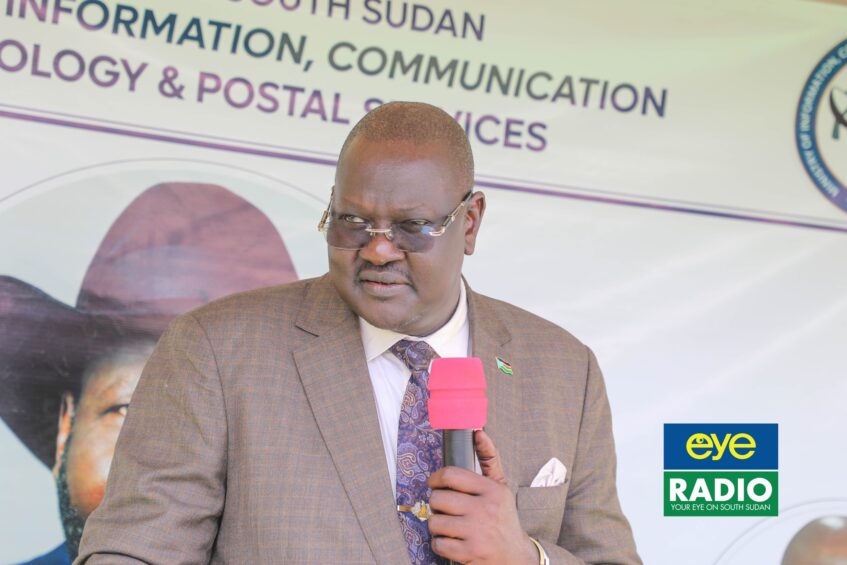
Minister of Information Ateny Wek Ateny speaks at his reception at Telecom House, Gumbo-Sherikat, on Saturday, December 6, 2025. Photo credit: Awan Moses/Eye Radio
The Minister of Information, Communication, Technology and Postal Services, Ateny Wek Ateny, says the number of mobile subscribers in South Sudan has increased by over 3 million this year, with internet users rising from 1.3 million to nearly 2 million.
Ateny revealed the figures during his reception ceremony at the Telecom House in Gumbo-sherikat yesterday, which was attended by senior government officials.
The event also served as a farewell to his predecessor and current Minister of Justice, Michael Makuei Lueth.
At the ceremony, Ateny said the number of mobile phone subscribers has increased from 1.39 million in 2024 to 4.47 million in 2025.
He added that internet users also increased by 0.9 million this year, up from 1.3 million in 2024.
“The ministry, through the National Communications Authority, NCA, has recorded remarkable growth this year. Internet users in South Sudan have surged from 1.3 million users in 2024 to 1.9 million users in 2025, demonstrating increased demand and expanding access to digital services,” Ateny announced on Saturday.
“Similarly, mobile phone subscribers grew from 1.39 million to 4.47 million over the same period, reflecting rapid mobile network expansion and growing digital adoption across the country,” he added.
He said the growing internet penetration and mobile network connectivity has made it easier for citizens to communicate, learn, engage, and conduct business.
He vowed that his administration will continue expanding internet and mobile phone connectivity to citizens in towns and villages across the country.
“Internet penetration and mobile network connectivity have progressively increased, giving our people more pathways to communicate, learn, engage, and conduct business. But this progress must not slow down.
“My administration in this ministry will work tirelessly to ensure that connectivity becomes not a privilege but a right and an accessible service for every citizen, whether in the towns or the most remote villages,” he asserted.