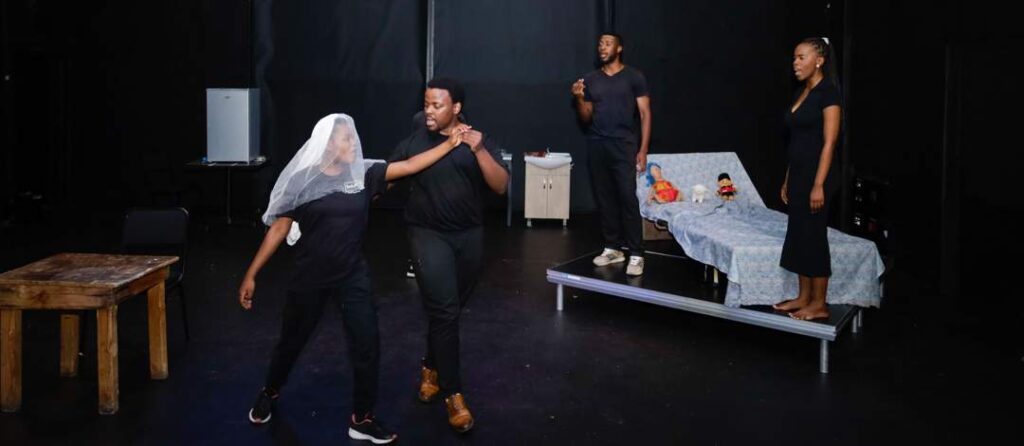
- Director Leila Henriques describes Medea, the 2 400-year-old story, as essentially “a breakup where children are used as bargaining chips.”
- Gofaone Bodigelo, who plays Medea, connects the character to modern displacement.
- The production runs from 27 to 30 November at The Market Theatre for four performances only.
The Windybrow Arts Centre’s production of Medea is coming to The Market Theatre, directed by Leila Henriques.
When the curtain rises on this production, audiences are set to witness more than just a classical revival.
They will encounter a 2 400-year-old story that speaks directly to contemporary South African realities, brought to life by a cast who discovered star parallels between ancient Greek tragedy and modern-day Johannesburg.
Finding contemporary truth in ancient text
For Gofaone Bodigelo, who plays the titular character, embodying Medea required looking beyond the mythic elements to find recognisable human truth.
“She is no different from a woman that is displaced in contemporary South Africa,” Bodigelo explains. “For whatever reason, seeking asylum, running from a war-ridden country or just moving in hopes of a better life. There are threads in Ancient Greek literature that still live in today’s society.”
The actor found herself connecting Medea’s journey to universal experiences of betrayal and displacement. “The fight and sacrifices she made to keep her family together. Dealing with betrayal from a partner. Feeling desperate, helpless and then finding strength in the midst of it all to then take agency,” she reflects on the character’s emotional arc.
Set in a drought-stricken Johannesburg, the reimagined story explores how Jason, crushed by debt, abandons Medea for financial security, triggering her devastating revenge.
Grounding ancient emotions in modern reality
Thingo Mcanyana, who plays the Nurse in the production’s chorus, took a similarly grounded approach to her emotionally complex character. Rather than trying to recreate ancient Greece, she anchored the Nurse in South African emotional reality.
“Her whole world is built around the children; she’s the one practically raising them, protecting them, and absorbing the fallout of their parents’ conflict,” Mcanyana explains.
“Once I understood that my version of the Nurse is a woman who carries emotional labour without any power, the character stopped feeling distant or mythic.”
The actor found connections between the Nurse’s position and contemporary caregivers. “She’s caught between two adults destroying their relationship while she tries to protect the children who can’t make sense of any of it. That dynamic is not ancient; it’s common today.”
Modern men, ancient pressures
Londa Mkhize, who portrays Jason, discovered uncomfortable parallels between his character’s struggles and contemporary South African life. “Jason is navigating ambition, survival, and the pressure to secure a future in an uncertain world. Those themes are very familiar in South Africa, where people often feel forced to make difficult choices between personal relationships and economic stability.”
The actor wants audiences to understand Jason’s complexity rather than simply condemning him. “I hope that audiences see Jason not as a villain, but as a human being trying, sometimes desperately, to survive and succeed. His choices are painful and often selfish, but they come from fear, ambition, and a belief that he’s doing what’s best for his future.”
The wisdom of youth
One of the production’s most innovative elements is its teenage chorus from Windybrow’s After School Drama Programme.
Bodigelo found working with these young performers illuminating.
“Chorus acts as commentary, and knows where the story is going and essentially how it comes to an end. Having the teenagers play a chorus emulates the position they hold in society. The youth see everything and comments on social media; they are not just bystanders, and sometimes they are more aware of the ills in society than the adults. They are woke!”
Navigating emotional intensity safely
Given the play’s psychological demands, the production team implemented careful safety measures. “Each day we began with thorough warm-ups and ended each day with de-roling sessions,” the director Leila Henriques said.
“The play is a rollercoaster, particularly for Medea. Together, we examined every moment so that there are clear markers and boundaries for her to play within.”
For Mcanyana, the most challenging moment was the messenger speech describing the deaths of the king and Jason’s bride. “I had to see what she saw — the curiosity, the brief excitement, and then the sudden descent into horror. Once I stopped treating it like a report and started embodying the shock and tragedy through the Nurse’s eyes, the scene shifted.”
Classical theatre’s eternal relevance
The experience has changed Mkhize’s perspective on classical theatre. “This production showed me that classical stories are not old, they’re eternal. When you place a play like Medea in Johannesburg, suddenly the emotions, politics, and family tensions feel incredibly current.”
He emphasises that the power lies not in the style but in human truth. “I’ve realised that classical theatre isn’t about style; it’s about human behaviour. If anything, this process has made me appreciate how these ancient texts can speak directly to modern audiences when we trust the truth of the story and let it breathe in the world we live in now.”
Speaking to South African audiences
Director Leila Henriques said that the play, first performed in 431 BC, captures modern complexities of love, betrayal, immigration and gender politics, describing it as essentially “a story of a breakup where children are used as bargaining chips.”
The production’s relevance to contemporary South African audiences is undeniable, dealing with themes of xenophobia, family fragmentation, and emotional dysregulation that resonate today.
The production is a collaboration between Windybrow Arts Centre and Kwasha! Theatre Company, and Playground collective, with cast including Gofaone Bodigelo, Londa Mkhize, Thingo Mcanyana, Jack Mabokachaba, Natasha Dube, Malcom Moloi, Andile Ngoboza and Privilege Ndhlovu.
As Mkhize concludes, “If anything, this process has made me appreciate how these ancient texts can speak directly to modern audiences when we trust the truth of the story and let it breathe in the world we live in now.”
ALSO READ | Award-winning ‘Afropocalypse’ returns to Market Theatre after festival win