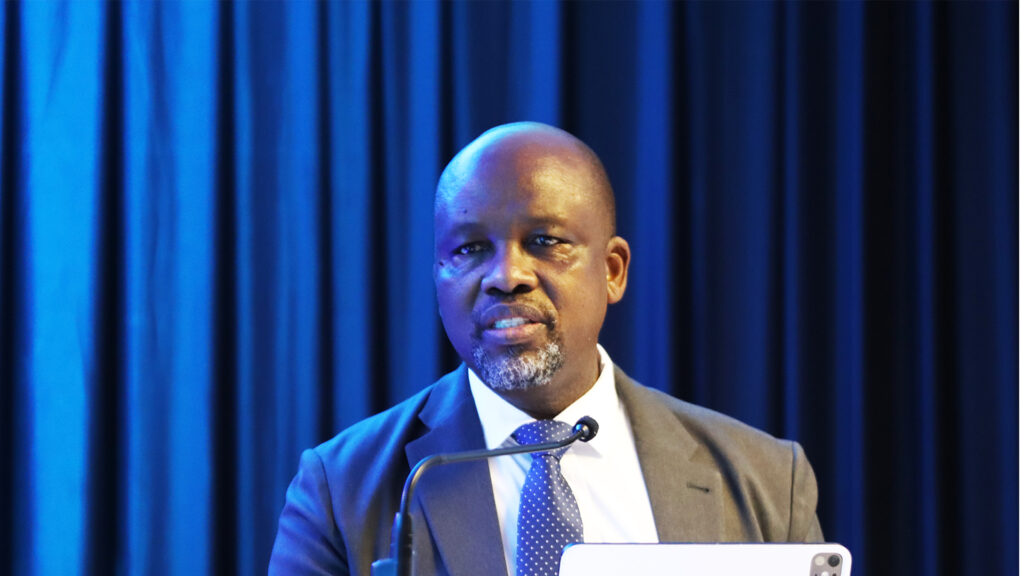
The botswana institute of chartered accountants (bica) has proudly introduced the bachelor of commerce in chartered accountancy, a pioneering program developed in collaboration with botswana accountancy college (bac), arthur portland, ba isago university, botho university, university of botswana, and my pal accountancy and fintech college. The official unveiling took place at the bica headquarters in gaborone on november 27, 2025.
This launch ceremony, attended by industry leaders and media representatives, represents a pivotal moment in botswana’s commitment to reinforcing the pipeline of professional accountants and elevating the nation’s financial sector to global competitiveness.
In his welcome address, bica chief executive officer mr. Oaitse gabadirwe called this day a historic milestone for botswana’s accountancy profession. He asserted that this qualification was meticulously crafted to bolster botswana’s economic competitiveness by cultivating a robust, homegrown cadre of chartered accountants. “a strong economy needs a strong professional body,” he declared, underscoring bica’s mandate to spearhead national skills development within the finance and accountancy sectors.
Mr. Gabadirwe emphasized that the new program offers world-class technical instruction, ethical grounding, and professional preparedness, arming students to make impactful financial decisions and uphold integrity across industries. Designed explicitly as a seamless feeder into the botswana chartered accountancy qualification, the degree provides learners with a clear pathway toward chartered accountant status. He extended sincere gratitude to all partner institutions involved in the qualification’s design and delivery.
Paying tribute to former bica ceo ms. Verily molatedi, mr. Gabadirwe credited her visionary leadership as the driving force behind this program’s inception. He hailed the new qualification as a strategic national asset that guarantees a steady flow of highly skilled accounting professionals, thereby reducing dependence on foreign expertise. He urged employers to welcome graduates of this program, describing them as competent, workplace-ready, and aligned with both national priorities and global standards. He also called on the media to amplify this achievement to the nation, ensuring “no one is left behind,” and encouraged stakeholders to recognize the program as a powerful vehicle for empowerment and economic advancement.
Mr. Eugene mwaba, director of the school of finance and professional studies at botswana accountancy college, highlighted the bachelor of commerce in chartered accountancy as a crucial solution to botswana’s severe shortage of locally trained accounting professionals. He explained that the program provides an accelerated, structured route to the botswana chartered accountancy qualification, significantly shortening the time needed to achieve full chartered accountant status. Mr. Mwaba noted the degree’s alignment with international standards, balanced with a clear focus on meeting the country’s economic demands, ensuring graduates possess both technical expertise and practical skills.
He also stressed the importance of collaboration, with bac working closely alongside bica and other partners to deliver a harmonized curriculum coupled with meaningful work experience. This cooperative approach, he said, guarantees consistency, quality, and relevance across all participating institutions. Mr. Mwaba described the initiative as a strategic effort that not only enhances graduate employability but also fortifies financial governance and national capacity, driving botswana’s long-term economic growth.
Delivering the keynote address, ms. Gosego motsamai, managing partner at kpmg, labeled the launch a decisive stride toward addressing botswana’s acute shortage of highly skilled accountants. She revealed that, despite strong national demand, only 55 chartered accountants have been locally qualified since 2011. This new degree is deliberately structured as a direct feeder to the botswana chartered accountancy qualification, aimed at expanding the pool of local professionals and reducing reliance on expatriates.
Ms. Motsamai also underscored the powerful institutional cooperation underpinning this qualification, developed collaboratively by bica, bac, ub, ba isago, botho university, my pal, and arthur portland. She emphasized that the program offers a rigorous, harmonized curriculum designed to equip students with the capabilities essential for professional excellence. This initiative, she concluded, represents a strategic investment in strengthening financial governance and underpinning botswana’s sustained economic advancement.
Tshepho nkile, head of finance at civil aviation and a bica chartered accountant alumnus, shared his experience and testimony. He noted that previous qualifications were based on foreign frameworks, creating a gap for accountants capable of addressing botswana-specific challenges. Nkile believes the new program is more efficient and will reduce the time to qualification. Reflecting on his own journey, he shared that the bica qualification took three years, blending classroom theory with practical training, including placements at audit and accounting firms. He affirmed that this program arrives at a critical juncture, enabling chartered accountants to play a pivotal role in accelerating national economic growth.
From the perspective of training and mentorship, mr. Besters mtonga, head of academics at arthur portland, emphasized the importance of practical experience in developing competent chartered accountants. Describing the launch as a historic occasion, he highlighted that the qualification aligns closely with established standards while being more focused, dynamic, and demanding than traditional academic programs. Mr. Mtonga acknowledged the program’s rigor, noting it demands discipline, commitment, and active student engagement. He stressed that success hinges on consistent practice, industry involvement, and the readiness of employers training programmes (etps) to elevate their standards. Mr. Mtonga concluded that the program’s relevance and adaptability promise long-term success and encouraged building a strong professional community.
Closing the launch, dr. Masego marima, a university of botswana lecturer, reaffirmed the critical role academic-industry partnerships play in shaping botswana’s future.
Post Views: 180